If you’re tired of pulling weeds every weekend, watching mulch wash downhill after every storm, or just staring at a yard that never quite looks right, you’re not alone.
The mulch vs rock landscaping debate comes up constantly, and for good reason. Both are popular ground cover choices. Both can look fantastic. And both have real strengths that make them the right call in the right situation.
But here’s the thing: there’s no universal winner. The best landscaping material for your yard depends on your climate, your plants, your budget, and how much upkeep you’re actually willing to do.
This guide covers everything: cost, maintenance, weed control, drainage, plant health, and design, so you can stop guessing and start planning.
Mulch is any material you spread over bare soil to protect and improve it. Most homeowners go with organic mulch, material that comes from living things and gradually breaks down into the soil beneath it.
The most common types:
What mulch actually does for your yard:
Mulch is especially valuable around trees, in flower beds, in vegetable gardens, and around foundation plants near your home. If you’re growing anything that needs consistent moisture and healthy soil, mulch is usually your best friend.
The one downside? It doesn’t last forever. Most mulch needs to be refreshed every one to three years. In hot, wet climates, it breaks down even faster. That means an ongoing cost, but also an ongoing soil benefit that keeps compounding year after year.
Rock landscaping uses stone, gravel, or crushed minerals as a permanent ground cover. It’s the go-to choice for homeowners who want a sharp, polished look that holds up for years without much attention.
Popular rock options include:
Why homeowners choose rock:
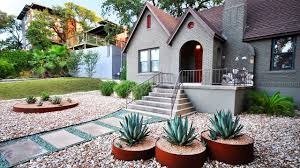
Rock is especially popular for front yards on modern homes, minimalist garden designs, commercial properties, and desert gardens with cactus and succulents. Once it’s installed correctly, it just sits there looking good while you do nothing to it.
One thing to keep in mind: rock absorbs and radiates heat. On a hot summer day, dark decorative stone can significantly raise the soil temperature beneath it. This matters a lot for plant health, something we’ll dig into further below.
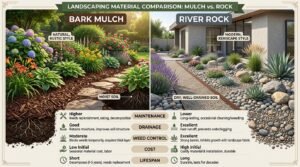
Here’s a quick side-by-side comparison of both materials across the factors that matter most:
Factor | Mulch | Rock |
Upfront Cost | Lower ($35–$110/cu yd) | Higher ($100–$350+/ton) |
Lifespan | 1–3 years before refresh | 10+ years |
Maintenance | Annual topdressing needed | Minimal once installed |
Weed Control | Good at 2–4 inch depth | Needs a weed barrier fabric |
Drainage | Retains soil moisture | Improves drainage |
Soil Temperature | Keeps roots cooler | Can increase soil heat |
Soil Health | Adds nutrients over time | No nutrient value |
Curb Appeal | Natural, warm, organic | Modern, clean, minimalist |
Best For | Plant-heavy yards, gardens | Dry climates, modern homes |
This is where most homeowners get a little surprised, especially when they run the numbers long-term.
Mulch costs:
Rock costs:
The long-term math:
Here’s what catches people off guard. Mulch is cheaper upfront, but it’s a recurring expense. Rock costs more initially, but over 10 years, the total cost difference is often smaller than expected, and in many cases, rock actually comes out ahead financially.
That’s a big reason why so many homeowners decide to switch from mulch to rock in high-traffic or hard-to-access areas. The upfront investment pays off in years of saved time and maintenance money.
Planning a more compact upgrade? Check out our guide on landscaping ideas for small yards for budget-friendly curb appeal ideas that work with either material.
Weed control is one of the top reasons people change their ground cover, and both materials can disappoint if they’re installed the wrong way.
How mulch handles weeds:
How rock handles weeds:
Both options work. Proper installation matters more than which material you pick.
This is where mulch has a clear advantage, at least for most plants.
Organic mulch holds moisture in the soil, buffers temperature swings between day and night, and slowly feeds your plants as it breaks down. For trees, flowering shrubs, and traditional garden beds, this combination is hard to beat. Spreading mulch in a wide, flat ring around a tree (never piled against the trunk) is one of the simplest things you can do for long-term tree health.
Rock can cause real problems for water-loving plants. On a hot summer day, dark decorative stone can heat up enough to stress plant roots and accelerate soil drying. That’s why you rarely see river rock or lava rock used as ground cover in vegetable gardens or around moisture-hungry plants like hydrangeas and azaleas.
That said, rock is genuinely the right call for the right plants. Succulents love the drainage and warmth. Cacti thrive surrounded by stone. Drought-tolerant ornamental grasses, lavender, rosemary, and other dry-climate plants all perform well in rock gardens because they actually prefer drier soil conditions.
Your local climate is one of the biggest factors in this decision.
Rock and gravel are the natural winners here. Xeriscaping with crushed granite, pea gravel, or river rock is popular across the Southwest, Arizona, and parts of Texas for a reason, these materials pair perfectly with drought-tolerant plants and reduce the need for irrigation. Rock doesn’t hold onto the scarce moisture that plants in these regions actually need in the soil. If you do use mulch in a hot, dry climate, go with a thick organic bark mulch that slows evaporation and protects roots.
In areas with heavy rainfall, drainage matters a lot. Mulch can become a soggy mess if it’s too thick or in a low spot, and it breaks down faster in wet conditions. Gravel or decorative stone around beds can actually improve drainage and prevent erosion on slopes. For garden beds with plants that like moisture, mulch still wins, just refresh it more frequently.
Mulch shines in colder regions because it acts as insulation for plant roots through the winter. A fresh layer of bark or cedar mulch in the fall helps protect perennials and shrubs from freezing and thawing cycles. Rock doesn’t offer that same root protection, though it does stay in place without washing away during spring snowmelt.
Mulch is the right choice when you want to:
Affordable mulch options like wood chips or shredded bark can completely transform a tired-looking bed for a few hundred dollars, making it one of the highest-value investments for homeowners watching their landscaping budget.
Rock landscaping is the better call when you want to:
White rock, river rock, flower beds, and crushed granite borders have become especially popular in modern home landscaping because they photograph well, stay tidy, and hold their look across seasons without fading the way dyed mulch can.
Absolutely, and honestly, this is what a lot of well-designed yards do.
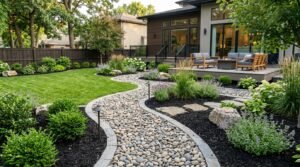
Mixing hardscape and softscape elements gives you the best of both worlds. A common approach is to use mulch in planted garden beds where soil health matters, and use decorative stone or gravel for pathways, borders, and transitional zones between beds. River rock along the edge of a mulched bed creates a clean, polished line that also keeps mulch from migrating onto the lawn.
You can also use landscape edging, metal, stone, or brick to separate rock and mulch zones cleanly. This keeps materials in their designated areas and makes the overall design look intentional.
Another popular combination: mulch around foundation plants with a stone pathway leading through the yard. The mulch keeps the plantings healthy and the soil moist, while the stone gives the design structure and makes it easy to navigate without stepping in beds.
Start by clearing weeds from the bed completely. Lay down a thin layer of compost if you want to improve the soil before mulching. Then spread your mulch two to four inches deep, consistent depth matters more than people realize. Keep mulch pulled back a few inches from plant stems and tree trunks. Piling mulch against a trunk (sometimes called a “mulch volcano”) traps moisture against the bark and slowly damages the tree. Rake it flat, edge the bed cleanly, and you’re done.
Grading comes first. The ground should slope slightly away from your home’s foundation to direct drainage outward. After grading, lay your weed barrier fabric and secure the edges with landscape staples. Overlap seams by at least six inches. Then pour and spread your rock to a depth of two to three inches, enough to cover the fabric fully and add visual weight without going overboard. River rock and pea gravel can shift with foot traffic, so edging helps keep them contained.
Smaller projects, a single flower bed or a front walkway border, are very DIY-friendly. You can order bulk mulch or landscape rock delivery and have it done in a weekend.
Larger projects are a different story. If you’re regrading your yard for proper drainage, installing fabric across a wide area, calculating exact material quantities for sloped or irregular beds, or managing a full front yard transformation, working with a professional landscaping contractor makes a real difference in the final result.
Professionals bring equipment, experience, and an eye for what works in your specific soil and climate conditions. They also handle the heavy lifting, literally, when tons of material need to be moved and placed precisely.
If you’re in the Charlotte area and want expert help figuring out the right materials and design for your property, our team at Landscaping Services in Charlotte, NC, can assess your yard and put together a plan that matches your goals and budget. We also offer Landscape Planning and Design Service for homeowners who want a full yard concept before committing to any materials.
Here’s a simple way to think about it.
Choose mulch if:
Choose rock if:
Combine both if:
Neither material is universally “better.” The best landscaping material for your yard is the one that fits your plants, your climate, your aesthetic, and the amount of time you actually want to spend maintaining it.