
Make an Appointment

Edit Template
Charlotte, North Carolina

Landscape Lighting in Charlotte, NC Outdoor Lighting for Paths, Patios, Trees & More

Landscape lighting can help define walkways, steps, patios, entrances, trees and other outdoor features after dark. A useful system depends on more than fixture count alone.

Fixture type, beam direction, brightness, controls, power, cable routes, hardscaping, irrigation, tree roots, glare and future plant growth can all affect the finished result.

Pathway LightingPatio LightingTree UplightingLow-Voltage Systems

Landscapers in Charlotte NC is an independent landscaping information and service-request website. Landscape lighting work is performed by independent providers where available.

Quick Answer

What Does Landscape Lighting Installation Include?

Landscape lighting installation can involve planning fixture locations, selecting suitable fixtures, identifying power and control locations, determining cable routes, installing compatible components, setting timers or controls, aiming lights and testing the completed system.

Before approving installation, confirm fixture quantity and type, transformer or power supply, controls, cable work, trenching, restoration, fixture aiming, electrical responsibilities, cleanup and any warranty terms actually offered.

Walkways & pathsSteps & grade changesPatiosTrees Planting bedsWalls & facadesDriveways & entrancesOutdoor living areas
Project Selection

Which Landscape Lighting Goal Fits Your Property?

Start with what you want the lighting to accomplish before choosing fixtures.

Your GoalLighting Approach to Consider
Define a front or backyard pathPathway lighting
Make steps easier to identifyStep or integrated hardscape lighting
Highlight a mature treeUplighting or selected downlighting
Add light around a patioPatio and outdoor-living lighting
Highlight stone, brick or textureGrazing or accent lighting
Add controlled light to planting bedsGarden or accent lighting
Define a driveway or entranceEntrance or driveway lighting
Improve an existing systemSystem evaluation, repair or expansion
Coordinate several outdoor areasLandscape lighting plan before installation

Already Know What You Want to Light?

Send the project location, photos, the areas you want illuminated and whether an existing lighting system is already present.

Request Landscape Lighting Help
Lighting Options

Landscape Lighting Options for Charlotte Properties

Different fixture placements create different effects. A useful plan combines only the techniques needed for the property instead of using the same fixture everywhere.

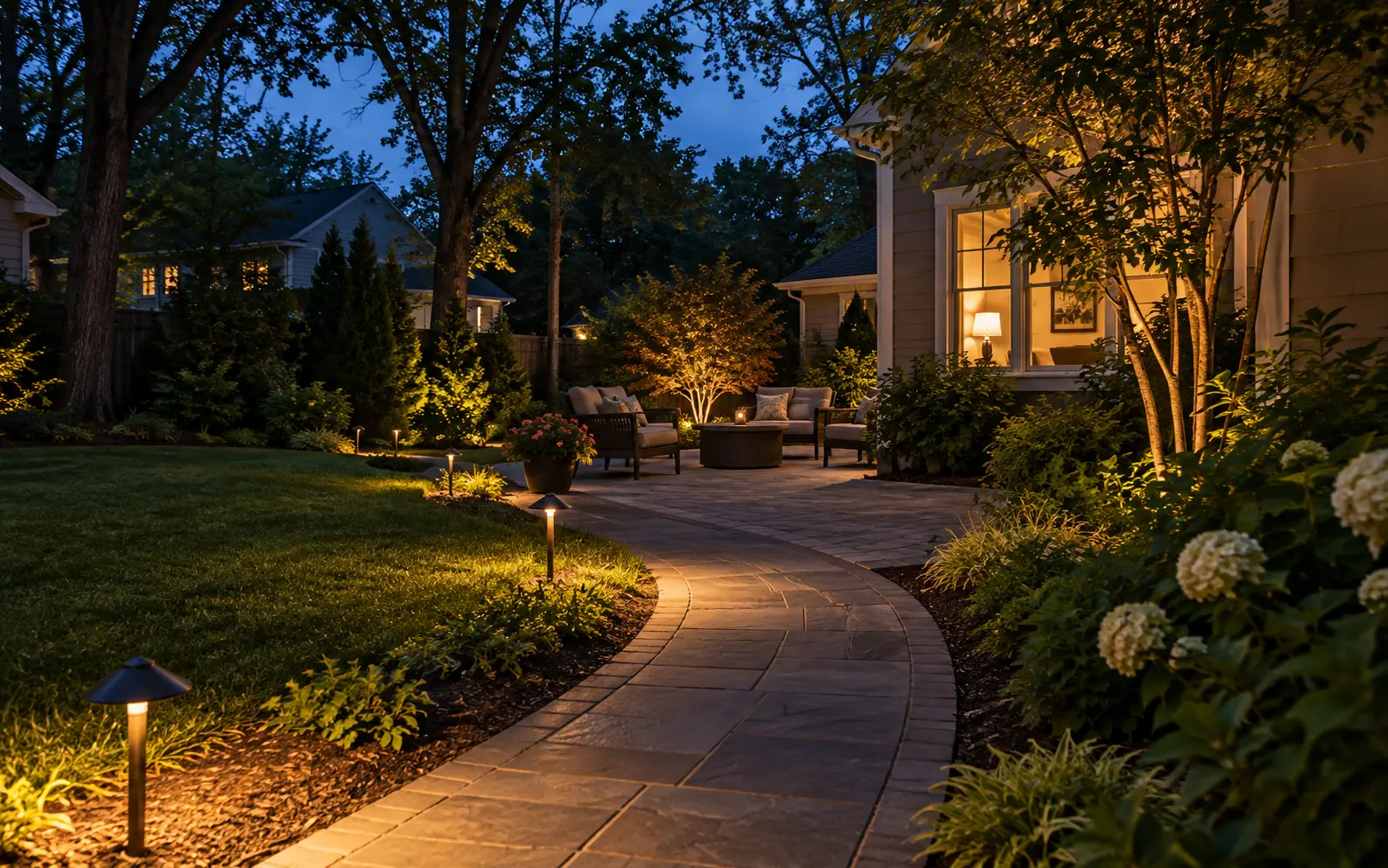
Warm pathway and patio landscape lighting around a residential Charlotte backyard
Illustrative pathway and patio lighting image.

Pathway and Walkway Lighting

Pathway lighting can help define routes between entrances, driveways, patios, gates, side yards and other outdoor-use areas.

Placement should consider path width, surrounding plants, nearby steps, existing street or house lighting and glare. Lights do not necessarily need to sit in a perfectly symmetrical row.

The goal should be controlled, useful illumination rather than turning a residential walkway into an overly bright corridor.
Step and Grade-Change Lighting

Steps and changes in elevation deserve special attention because users need to understand where one walking surface ends and another begins.

Possible approaches can include integrated fixtures, nearby path lights, low-level directional lighting or another suitable system.

Where wiring or integrated fixtures are planned, coordinate lighting before new walls, steps or patios are fully finished.

Patio and Outdoor-Living Lighting

Patio lighting should support how the space will actually be used. Dining, seating, grilling, steps, planting, walls and routes back to the house can all affect fixture placement.

A brighter patio is not automatically a better patio. Light direction, contrast and glare matter.

Driveway and Entrance Lighting

Lighting near a driveway, front walk or entrance can help define an arrival route after dark.

Consider existing porch lights, street lighting, vehicle movement, windows, planting, gates and glare toward drivers or neighboring properties.

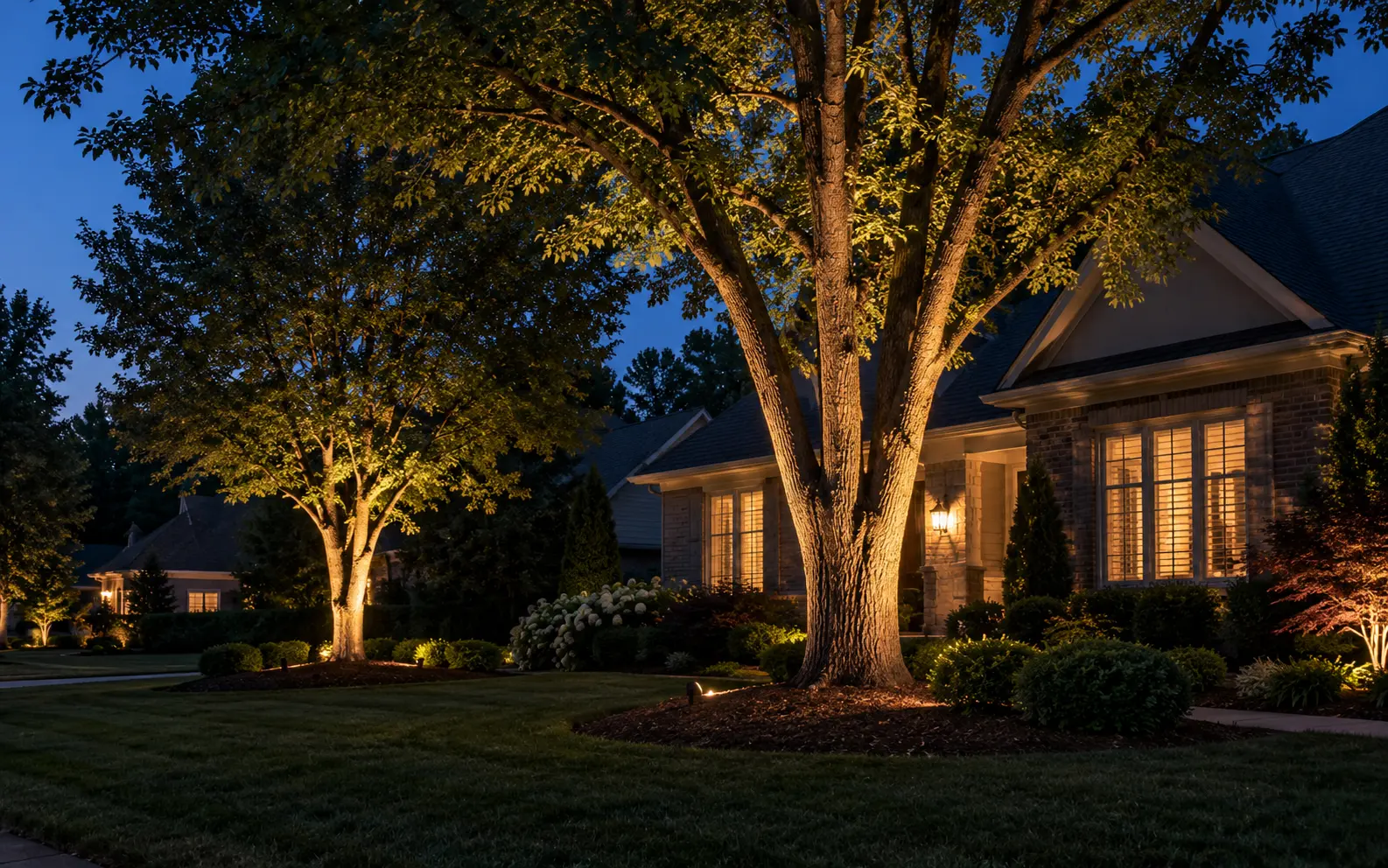
Tree uplighting and accent landscape lighting in a Charlotte residential yard
Illustrative tree-uplighting image.

Tree Uplighting and Accent Lighting

Uplighting can highlight the trunk, canopy or form of selected trees. Fixture distance, beam spread, tree size and viewing direction can change the result considerably.

Fixture placement should also consider mowing, mulch, roots, irrigation and future growth.

Garden and Planting-Bed Lighting

Planting-bed lighting can draw attention to shrubs, ornamental trees, texture or seasonal features.

Consider mature plant size, pruning patterns, mulch, irrigation, maintenance access and whether a fixture could eventually become hidden.

If the planting layout is still changing, coordinate lighting with Landscape Planning and Design.

Wall and Architectural Accent Lighting

Lighting may highlight stone, brick, columns, walls or selected architectural details. Grazing a textured wall creates a different effect from broadly lighting an entire facade.

Fixtures should be positioned to avoid unnecessary glare toward windows, normal viewing positions or neighboring properties.

Fixture Selection

What Should You Compare Between Landscape Lighting Fixtures?

Do not compare fixtures by appearance alone. The fixture should match the effect, location and system.

Light Output

Higher output is not always better. The amount of light should match the area and intended effect.

Beam Spread

A narrow beam can focus on a tree or detail. A wider beam can cover a broader surface.

Color Temperature

Different color temperatures can change the appearance of stone, plants, wood and exterior finishes.

Fixture Construction

Outdoor fixtures are exposed to moisture, soil, mulch, irrigation, weather and yard maintenance.

✓

Also compare intended use, outdoor suitability, system compatibility, replaceable lamp versus integrated LED design, manufacturer instructions and warranty terms actually offered.

Light Quality

More Fixtures Do Not Automatically Mean Better Lighting

A landscape lighting system should place light where it is useful and control it where it is not.

Use Contrast Intentionally

Useful lighting considers where light is needed, where it should stop, what users can see directly and how bright areas interact with darker surroundings.

Adding more fixtures can sometimes increase glare without improving how the outdoor area functions.

System Basics

How Does a Landscape Lighting System Work?

A lighting system includes more than the visible fixtures. Depending on the system, the main components can include fixtures, LEDs or lamps, cable, connectors, transformer or power supply and controls.

Fixtures

Different fixture types can be used for paths, trees, walls, steps and planting areas.

Light Source

LED systems should still be compared by output, beam spread, color appearance and intended use.

Transformer / Power

Many low-voltage systems use a transformer or compatible power supply sized for the proposed system.

Cable & Connections

Cable routes affect installation, maintenance and interactions with lawn, beds, roots and hardscaping.

Controls

Timers, photocells and compatible controls can determine when the system operates.

Aiming & Adjustment

Final aiming affects glare, balance, beam placement and how the system looks at night.

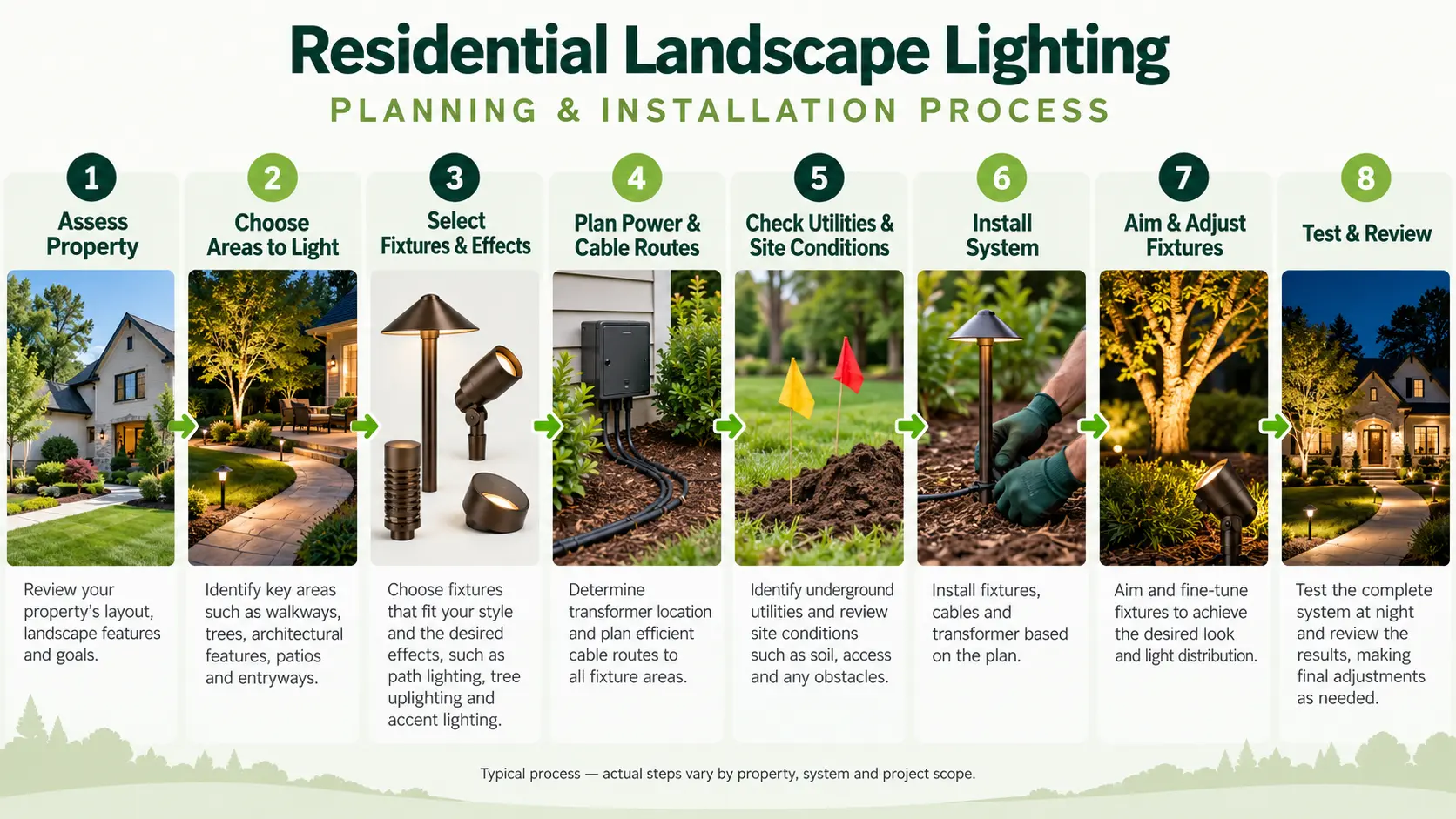
Landscape lighting planning process from property assessment through final aiming and testing
Typical process — actual steps vary by property, system and project scope.
01

Assess property

02

Choose areas to light

03

Select fixtures & effects

04

Plan power & cable

05

Check utilities & site

06

Install system

07

Aim & adjust

08

Test & review

Controls & Operation

Controls, Zones and Energy Use

Landscape lighting is easier to manage when the system can operate only where and when light is actually needed.

Timers

Timers can switch a system on and off at planned times instead of leaving exterior lighting operating longer than necessary.

Photocells

Photocells can respond to outdoor light levels and may be used for dusk-based operation depending on the equipment and system setup.

Separate Zones

Some systems can separate areas such as the front walk, patio, trees or side yard so every fixture does not need to operate together.

Compatible Smart Controls

Some equipment can support compatible smart controls or scheduling. Availability depends on the transformer, controls and overall system design.

i

Automatic controls can help reduce unnecessary operating time, but actual energy use depends on the installed equipment, fixture output, operating schedule and system configuration.

U.S. Department of Energy exterior-lighting controls guidance →

System Type

Low-Voltage, Solar or Line-Voltage Landscape Lighting?

Different outdoor-lighting systems suit different situations. This service page keeps the distinction brief so it does not compete with the site’s dedicated low-voltage guide.

System TypeTypical Consideration
Low voltageCommon in residential landscape applications and can support multiple fixtures from a compatible power supply
SolarAvoids many cable runs but performance depends on product, battery, sunlight exposure and placement
Line voltageMay be used for certain exterior-lighting applications and can involve different electrical requirements
i

Low voltage does not mean electrical requirements can automatically be ignored. North Carolina has electrical-contracting rules, including exemptions that can apply to certain low-voltage systems when specified conditions are met.

Confirm that regulated electrical work is handled by appropriately qualified or licensed professionals where required. View the North Carolina rules.

For detailed low-voltage information, use the Low-Voltage Landscape Lighting guide.

Service Boundary

Landscape Lighting Is Not the Same as Security Lighting

Landscape lighting is generally focused on paths, patios, steps, trees, planting areas, walls and selected outdoor features.

Large floodlights, motion-security systems, building-mounted security fixtures, cameras and broader security systems can involve a different service scope.

If a project includes both landscape lighting and security lighting, define the two scopes separately before comparing proposals.

Before Installation

What Should Be Checked Before Landscape Lighting Installation?

Good installation planning begins before cable is placed in the ground.

Existing Hardscaping

Document patios, walkways, driveways, retaining walls, steps and finished surfaces. Crossing existing concrete or pavers can complicate cable routing.

Existing Landscaping

Trees, shrubs, beds, roots, lawn and future plant growth can affect fixture locations and cable routes.

Irrigation

Identify sprinkler heads, irrigation lines and other watering equipment near the proposed installation area.

Available Power

Confirm where the system can receive power and whether the proposed location is suitable for the selected equipment.

Existing Lighting

Document porch lights, wall fixtures, driveway lighting, street lighting and other sources so the new system complements them.

Cable Routes

Consider lawn, planting beds, roots, hardscape crossings, drainage areas, future construction and places likely to be disturbed later.

Before Digging

Check Utilities, Electrical Requirements and Community Rules

Check Underground Utilities

Landscape lighting installation can involve excavation or trenching. North Carolina 811 advises submitting a locate request at least three full working days before excavation begins.

A utility locate does not automatically identify every privately installed system on a property, so known irrigation, private lighting, drainage and other site features should be discussed separately.

North Carolina 811 homeowner guidance →

Check HOA or Community Rules

Some Charlotte-area properties may be subject to HOA or community rules covering exterior fixtures, visible equipment, brightness, fixture placement or changes to areas facing streets or common spaces.

Check applicable architectural-review or exterior-lighting requirements before approving installation. If approval is required, confirm who is responsible for obtaining it.

Project Coordination

How Landscape Lighting Fits With Hardscaping and Landscape Installation

Coordinate With Hardscaping

A patio may need wiring routes before pavers are installed. Retaining walls may need fixture locations or conduit coordinated before wall construction is complete. Steps may need integrated lighting planned before the final finish.

Review Hardscaping in Charlotte when lighting and constructed outdoor features are part of the same project.

Coordinate With Planting and Sod

Trees can become focal points, shrubs can hide fixtures, new beds can create easier cable routes, and sod installation can affect when trenching should occur.

Review Landscape Installation when planting and lighting are being planned together.

Existing Systems

New Landscape Lighting System or Existing System?

Not every project starts with an empty property. Some homes already have fixtures, transformers, cable or controls.

Existing ConditionWhat May Need to Be Evaluated
No existing systemLayout, system type, power, controls and installation
Existing transformerCapacity, condition and compatibility
Some working fixturesWhether expansion or selective replacement makes sense
Several failed fixturesFixtures, cable, connections, power supply and system age
Outdated controlsTimer, photocell or compatible control options
Poor fixture placementRe-aiming, relocation or redesign
System no longer matches landscapingPlant growth, hardscape changes and new outdoor-use areas
Repeated failuresCable, connections, equipment or environmental causes
↔

Repair, Expand or Replace?

Repair may be worth evaluating when problems are limited. Expansion may make sense when the existing system works but new outdoor areas have been added. Replacement may be more practical when major components are incompatible, unreliable or no longer suitable for the property.

A proposal should explain what existing components will remain and what will be replaced.

Cost Factors

Landscape Lighting Cost in Charlotte

There is no single landscape-lighting price that applies to every Charlotte property. Cost depends on the actual system and installation conditions.

Cost FactorWhy It Matters
Number of fixturesMore fixtures increase equipment and installation scope
Fixture typePath, step, wall and accent fixtures can vary
Property sizeLarger areas may require longer cable routes or additional zones
Transformer or power supplyNew systems or expansions may require different capacity
ControlsTimers, photocells and compatible controls affect scope
Existing hardscapeCrossing patios, walls or finished surfaces can complicate installation
Soil and rootsExcavation conditions can affect cable routing
Existing systemReuse, repair or removal can change scope
Electrical workSome projects may require separate regulated electrical work
RestorationLawn, mulch or planting disturbed during installation may need restoration
Design complexityMultiple lighting effects or areas can increase planning and adjustment
Ongoing serviceMaintenance or future service should be quoted separately if offered
$

Do not compare only “price per light.” Ask what equipment and installation scope the quoted price actually includes.

Estimate Comparison

What Should a Landscape Lighting Estimate Include?

A useful proposal should make it possible to understand exactly what is being installed.

Fixture Quantity & Type

  • Number of fixtures
  • General fixture type
  • Intended use
  • Product details where applicable

Lighting Areas

  • Paths
  • Patios
  • Trees
  • Walls
  • Steps
  • Entrances / driveways

Transformer / Power

  • Equipment
  • Capacity
  • Location
  • Future expansion if relevant

Cable & Connections

  • Cable
  • Connectors
  • Trenching
  • Reuse of existing cable if proposed

Controls

  • Timers
  • Photocells
  • Compatible automatic controls
  • Control setup

Aiming & Adjustment

  • Fixture aiming
  • Glare review
  • Beam placement
  • Final nighttime adjustment where included

Existing-System Work

  • What stays
  • What is removed
  • What is reused
  • What is replaced

Restoration & Terms

  • Mulch/lawn restoration
  • Cleanup
  • Schedule
  • Payment terms
  • Change orders
  • Warranty terms where offered

Compare Scope, Not Fixture Count Alone

Two proposals for the same number of lights can include very different equipment, controls, cable work, restoration and aiming.

Request Landscape Lighting Help
Service Boundaries

What Landscape Lighting May Not Include

Depending on the project and provider, separate services may be required for major line-voltage electrical work, new circuits or outlets, electrical-panel work, security systems, cameras, major hardscape reconstruction, significant concrete or masonry cutting, major tree work, irrigation repairs, drainage work, landscape redesign, structural construction or advanced home-automation integration.

Do not assume those items are included simply because they affect the same outdoor area. Define responsibility before work begins.

Prepare Your Request

What Information Should You Prepare Before Requesting Landscape Lighting Help?

ZIP CodeAreas to LightPhotosExisting SystemPaths / StepsPatio / HardscapeTrees / PlantingsPower if KnownControlsTimelineBudget if Known

Photographs should show the wider property context, not only the exact location where one fixture might go.

For tree lighting, show the full tree and surrounding area. For pathway lighting, show the entire route. For patio lighting, show the patio, nearby landscape, steps and route back to the house.

If an existing system is present, include photographs of visible fixtures, transformer or control equipment where safely accessible.

What to Expect

How Does the Landscape Lighting Request Process Work?

01

Describe the Property

Provide the project location and the outdoor areas you want to illuminate.

02

Explain the Goal

Tell us whether the priority is paths, patios, steps, entrances, driveways, trees, planting beds, architectural accents or an existing system.

03

Add Photos

Photos can help explain the landscape, hardscape, access, existing lighting and potential cable routes.

04

Note Existing Conditions

Where relevant, include existing fixtures, transformer or power equipment, controls and known problems.

05

Provider Availability May Be Checked

The request may be shared where an independent provider is available for the project type and location.

06

Compare the Proposed Scope

Compare equipment, fixture quantity, controls, cable work, electrical responsibilities, restoration, aiming, schedule, payment terms and warranty terms where offered.

Submit Your Landscape Lighting Project

Include enough detail to make the first project discussion useful.

Submit Project Details
Avoidable Problems

Common Landscape Lighting Mistakes to Avoid

!

Using Too Many Fixtures

Excess light can increase glare and reduce useful contrast.

!

Ignoring Existing Light

Porch lights, wall fixtures, street lighting and nearby properties affect how much additional light is useful.

!

Choosing Fixtures Before the Effect

Start with what should be illuminated and why, then select the fixture.

!

Forgetting Plant Growth

Fixtures placed correctly today can become hidden as shrubs and trees mature.

!

Finishing Hardscape First

Patios, walls and steps can become harder to work around after construction is complete.

!

Ignoring Underground Conditions

Utilities, irrigation, roots and other underground systems can affect cable routing.

!

Comparing Only Fixture Count

A cheaper per-fixture proposal may exclude power equipment, controls, cable work or restoration.

!

Creating Glare

Fixtures should support the outdoor space without becoming the main thing users see.

After Installation

Landscape Lighting Maintenance After Installation

Outdoor lighting operates in a changing environment. Plants grow, mulch moves, soil settles and fixtures can be bumped during mowing, landscaping or other yard work.

Routine checks may include cleaning lenses, checking fixture aim, trimming vegetation blocking light, reviewing control settings, looking for damaged fixtures and checking for visible cable or connection problems.

Follow manufacturer instructions for the installed system and confirm what ongoing service, if any, is included or available from the provider.

Charlotte-Area Coverage

Landscape Lighting Requests Around Charlotte

The location section stays focused instead of turning the page into a long list of neighborhood names.

Charlotte Neighborhoods

Landscape lighting requests may come from areas such as Dilworth, Myers Park, Plaza Midwood, SouthPark and Steele Creek.

Nearby Charlotte Communities

Depending on project type and independent provider availability, requests may also be considered from Matthews, Pineville, Huntersville and Concord.

Include the project ZIP code when submitting a request so availability can be checked more accurately.

Note: Location names describe the geographic focus of this website. They do not represent offices, employees, crews or completed projects in those areas.

Charlotte Area

Neighborhoods
DilworthMyers ParkPlaza MidwoodSouthParkSteele Creek
Nearby Communities
MatthewsPinevilleHuntersvilleConcord
Request Project Help
Related Resources

Continue Planning Your Landscape Lighting Project

How to Install Landscape Lighting

Use this guide for DIY and installation-process questions instead of expanding those topics on this commercial service page.

Read the installation guide →

Low-Voltage Landscape Lighting

Use this resource for deeper information about low-voltage systems, transformers and common residential lighting concepts.

Read the low-voltage guide →

Landscape Planning and Design

Use this when lighting is one part of a broader property plan involving paths, patios, planting and other features.

Explore landscape planning →

Hardscaping

Use this when lighting needs to be coordinated with patios, retaining walls, walkways or outdoor steps.

Explore hardscaping →
Frequently Asked Questions

Frequently Asked Questions About Landscape Lighting in Charlotte

What is landscape lighting?

Landscape lighting is outdoor lighting used around features such as walkways, steps, patios, trees, planting beds, walls, entrances and other exterior areas. A system can include fixtures, cable, power equipment and controls depending on the project.

What type of landscape lighting is best for pathways?

The appropriate fixture depends on the walkway, surrounding landscape, existing light and desired effect. Path lights are common, but step lighting or directional fixtures may also be appropriate in some layouts.

Is low-voltage landscape lighting a good option for homes?

Low-voltage systems are commonly used for residential landscape lighting. Whether one is appropriate depends on the application, system design, available power, equipment and installation requirements.

Does low-voltage landscape lighting require an electrician in North Carolina?

North Carolina has specific electrical-contracting rules, including exemptions that may apply to certain low-voltage systems when specified conditions are met. Requirements depend on the actual system and scope, so regulated electrical work should be handled by appropriately qualified or licensed professionals where required.

Should I contact 811 before installing landscape lights?

Landscape-lighting installation can involve excavation. North Carolina 811 advises submitting a locate request at least three full working days before digging begins.

How much does landscape lighting cost in Charlotte?

Cost depends on fixture quantity and type, system size, transformer or power equipment, controls, cable routing, existing hardscape, site conditions, restoration and additional electrical work where required. Compare complete project scopes rather than price per fixture alone.

Can landscape lighting be added to an existing patio?

Often it can, but existing pavers, concrete, walls and cable access can affect the installation method and project scope. Lighting is generally easier to coordinate before major new hardscape work is completely finished.

Can an existing landscape-lighting system be expanded?

Possibly. Existing transformer capacity, cable condition, controls, fixture compatibility and the proposed additional system requirements should be evaluated first.

Can old landscape-lighting fixtures be repaired instead of replaced?

Some problems may be limited to individual fixtures, connections, controls or other components. The cause should be identified before deciding whether repair, expansion or replacement makes more sense.

Where should landscape lights be placed?

Placement depends on what should be illuminated, the viewing direction, existing lighting, plants, hardscape and glare. The goal should be useful, controlled light rather than illuminating every part of the yard.

Are more landscape lights better?

Not necessarily. Too many fixtures or poorly aimed fixtures can increase glare and reduce the contrast that makes landscape lighting effective.

Can landscape lighting be controlled automatically?

Many systems can use timers, photocells or other compatible automatic controls. Available options depend on the equipment and system configuration.

Does landscape lighting need maintenance?

Outdoor fixtures and landscapes change over time. Periodic cleaning, re-aiming, vegetation trimming, control adjustments and inspection for damage may be useful depending on the system.

Can an HOA affect landscape-lighting installation?

Yes. Some communities may have exterior-lighting or architectural-review rules. Property owners should check any applicable HOA or community requirements before approving installation.

How long does landscape lighting installation take?

Project timing depends on fixture quantity, property size, cable routes, existing hardscape, access, existing-system work and whether separate electrical work is required. The provider should confirm the expected schedule after reviewing the actual scope.

Start Your Project

Ready to Plan Landscape Lighting in Charlotte?

A useful landscape-lighting project starts with the property, not with a box of fixtures.

Identify the areas that need light. Understand existing paths, patios, driveways, walls, steps, trees and planting. Review available power and any existing system. Consider cable routes, irrigation, underground utilities, HOA requirements where applicable and future landscape changes.

Then compare proposals using the same scope: fixture quantity and type, transformer or power equipment, controls, cable installation, electrical responsibilities, restoration, aiming, cleanup, schedule, payment terms and warranty terms where offered.

Landscapers in Charlotte NC is an independent landscaping information and service-request website. Landscape lighting work is performed by independent providers where available. Provider availability, qualifications, electrical licensing where required, insurance, permits, pricing, warranties and service terms should be confirmed directly before hiring.

Better outdoor spaces start with the right plan—from landscape design and installation to hardscaping, lawn care, drainage, grading, and outdoor lighting.

© 2026 Landscapers in Charlotte, NC. All Rights Reserved.