Make an Appointment

Edit Template
Charlotte, North Carolina

Hardscaping in Charlotte, NC Patios, Walkways & Retaining Walls

Hardscaping creates the built parts of an outdoor space, from paver patios and walkways to retaining walls, steps, seating walls and other constructed features.

A successful project involves more than choosing a stone or paver. Existing grade, soil, drainage, access, base preparation, nearby structures, mature trees and water movement can all affect the finished result.

Paver PatiosWalkwaysRetaining WallsSteps & Grade Changes

Landscapers in Charlotte NC is an independent landscaping information and service-request website. Hardscaping work is performed by independent providers where available.

Quick Answer

What Does Hardscaping Include?

Hardscaping generally refers to the non-living, constructed parts of a landscape. A residential project may involve patios, walkways, outdoor steps, retaining walls, seating walls, selected driveway surfaces, borders and drainage coordination around built surfaces.

Before approving installation, confirm the dimensions, surface materials, demolition, excavation, base preparation, drainage, edge restraint, jointing, grade changes, cleanup, permit responsibility and any warranty that is actually offered.

If the main project involves trees, shrubs, sod or planting beds instead, review Landscape Installation in Charlotte.

Paver patiosWalkways & pathsRetaining wallsOutdoor stepsSeating & garden wallsHardscape bordersGrade transitionsDrainage coordination
Project Selection

Which Hardscape Project Fits Your Property?

Start with what you need the property to do before deciding which material or style you prefer.

Your Goal or ProblemHardscape Option to Consider
Create an outdoor seating or dining areaPatio
Build a stable route between areasWalkway or path
Manage a change in yard elevationSteps
Hold back soil or address a significant slopeRetaining-wall assessment
Define a patio or planting areaSeating wall or garden wall
Improve an existing damaged surfaceRepair or replacement assessment
Coordinate several outdoor featuresHardscape planning before installation

This table is not a final design or structural recommendation. Site conditions, grade, drainage, access and existing features can affect which option is appropriate.

Have a Hardscape Project in Mind?

Describe what you want to build and any current problems such as slope, standing water, damaged paving or difficult access.

Request Hardscaping Help
Hardscaping Services

Hardscaping Services for Charlotte Properties

Hardscaping can create useful outdoor areas, connect different parts of a property and help manage changes in grade. The right feature depends on how the space will be used and what the site can support.

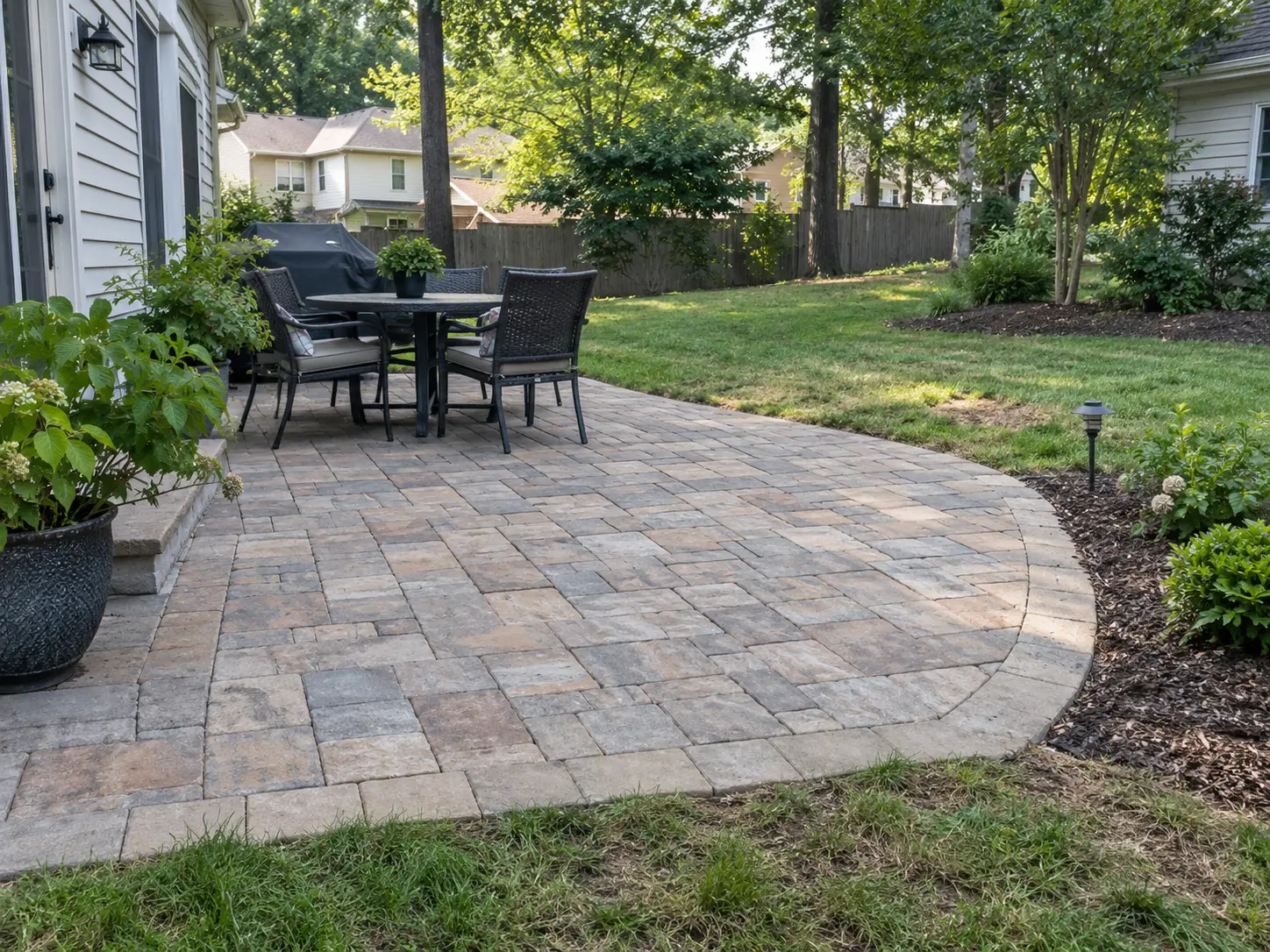
Paver patio installation with realistic edging and lawn transition in a residential yard
Illustrative paver-patio installation image.

Paver Patios

A patio can create a defined surface for outdoor seating, dining, grilling or general backyard use. Possible materials include concrete pavers, brick pavers, natural stone and poured concrete depending on the project.

Before choosing size or material, consider furniture placement, walking space, access from the house, door and step locations, drainage, lawn transitions, lighting, shade, nearby roots and future improvements.

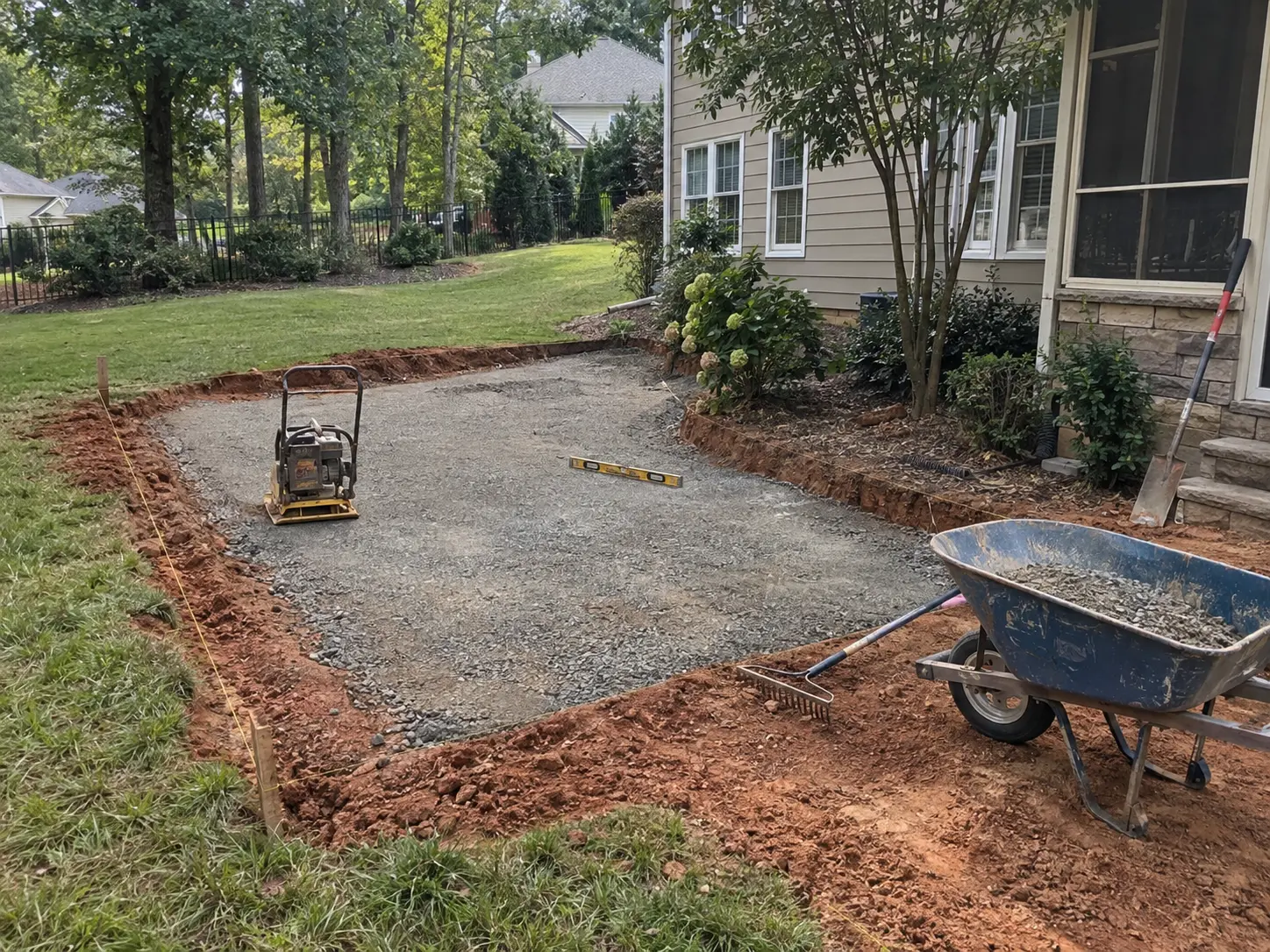
Excavation, base material, compaction, bedding, grade, jointing and edge restraint can all affect how the finished surface performs.
Walkways and Garden Paths

Walkways may connect the driveway and entrance, front and backyard, patio and lawn, gates, gardens or outdoor seating areas.

The width and layout should match how the route will actually be used. Material, slope, drainage, surface stability and transitions at each end should also be considered.

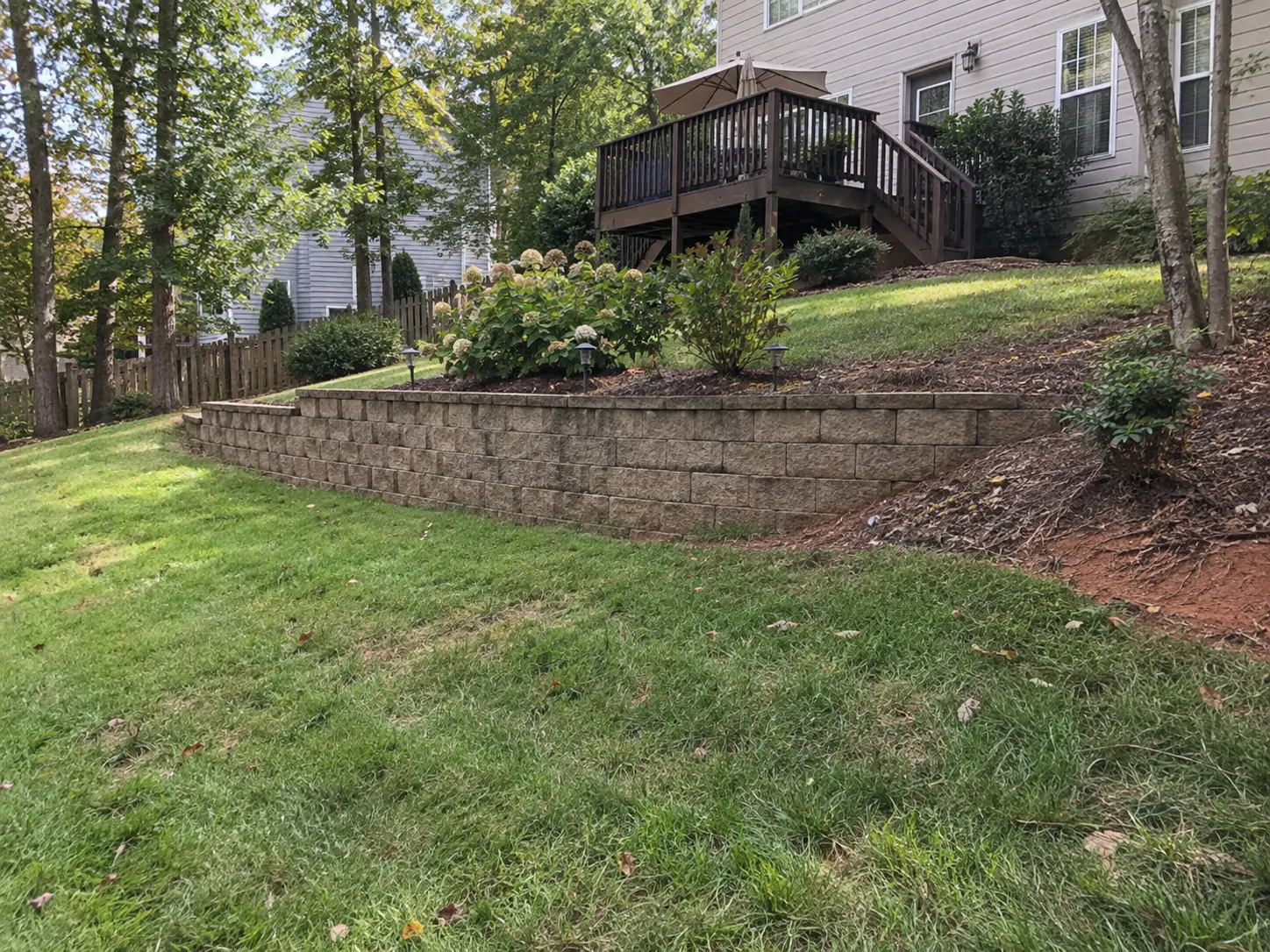
Residential retaining wall built into a sloped Charlotte yard
Illustrative retaining-wall image.

Retaining Walls

Retaining walls may hold back soil or help manage a change in elevation. A wall project can involve height, length, slope, soil, drainage, nearby structures, trees, utilities, easements and potential engineering or permitting requirements.

Water pressure behind a retaining wall can become an important performance issue, so drainage should not be treated as an afterthought.

The City of Charlotte currently lists retaining walls among project types that can require Individual Residential Lot Review.

Outdoor Steps and Grade Transitions

Steps may be needed where patios, walkways or yard areas sit at different elevations. Planning should consider rise and run, landing areas, drainage, adjacent walls, path width, lighting, visibility and transitions into lawn or planting.

Where applicable, railing or other code requirements may also need to be considered.

Seating Walls and Garden Walls

Low walls can define patios, planting areas and outdoor-use zones. Some mainly provide a visual boundary or seating, while others also retain soil.

If a wall supports a meaningful grade change, structural and drainage considerations can become more important than they are for a simple decorative border.

Paver Driveways and Hardscape Extensions

Vehicle areas experience different loads from patios and garden walkways. Clarify intended use, excavation, base requirements, surface material, edge restraint, drainage, transitions and applicable approvals.

Not every landscaping or hardscaping provider performs vehicle-rated paving, so capability should be confirmed before approving the scope.

Planning a Patio, Walkway or Retaining Wall?

Share the feature you are considering, approximate dimensions, photos, access conditions and any known slope or drainage concerns.

Request Hardscaping Help
Scope Clarity

Hardscape vs. Softscape: What Is the Difference?

Hardscape and softscape work together, but they serve different purposes. Keeping the scopes clear makes estimates easier to understand.

HardscapeSoftscape
PatiosTrees
Paver walkwaysShrubs
Retaining wallsPerennials
StepsGroundcover
Seating wallsSod
Stone or constructed surfacesMulch
Built landscape featuresLiving landscape materials
↗

For trees, shrubs, sod, planting beds and general yard renovation, use the Landscape Installation page. If you are still deciding where patios, walkways and planting areas should go, start with Landscape Planning and Design.

Before Installation

What Should Happen Before Hardscape Installation?

The visible paver, brick or stone is only one part of a hardscape project. Before installation begins, the property itself should be understood.

Hardscape site preparation with clay soil, grading and drainage conditions in Charlotte
Illustrative site-preparation image showing soil, grading and base conditions.

Identify Existing Conditions

Document lawn, planting beds, trees, concrete, old pavers, walls, fencing, irrigation, lighting, downspouts, drainage features and utility equipment. Decide what stays and what must be removed.

Check Slope and Grade

The finished elevation needs to work with door thresholds, foundations, lawn, beds, driveways, walkways, walls and drainage routes.

Understand the Soil

NC State Extension notes that Piedmont subsoils commonly contain relatively high clay content and that construction can leave compacted areas around homes. View the guidance.

Evaluate Drainage

Look for standing water, low areas, erosion, downspout discharge, soggy areas, existing drains and runoff crossing the proposed work area.

Consider Access

Gate width, side-yard width, fencing, slopes, paving, mature trees, steps and surfaces that need protection can all affect equipment choices and labor.

Before Digging

Check Utilities, Permits and Site Restrictions

Underground Utilities

Hardscaping frequently involves excavation. North Carolina 811 advises contacting 811 before digging so participating utility operators have time to mark affected underground facilities.

Clarify who is responsible for submitting the utility-locate request before work begins.

North Carolina 811 guidance →

Does Hardscaping Require a Permit in Charlotte?

Not every patio, path or decorative improvement follows the same approval process. The City of Charlotte specifically includes retaining walls among Individual Residential Lot Review project examples.

For larger projects, confirm whether the work affects retaining walls, drainage, easements, significant grading, protected trees, setbacks, flood-prone areas or existing stormwater infrastructure.

City of Charlotte residential review guidance →

Installation Process

Why Base Preparation Matters

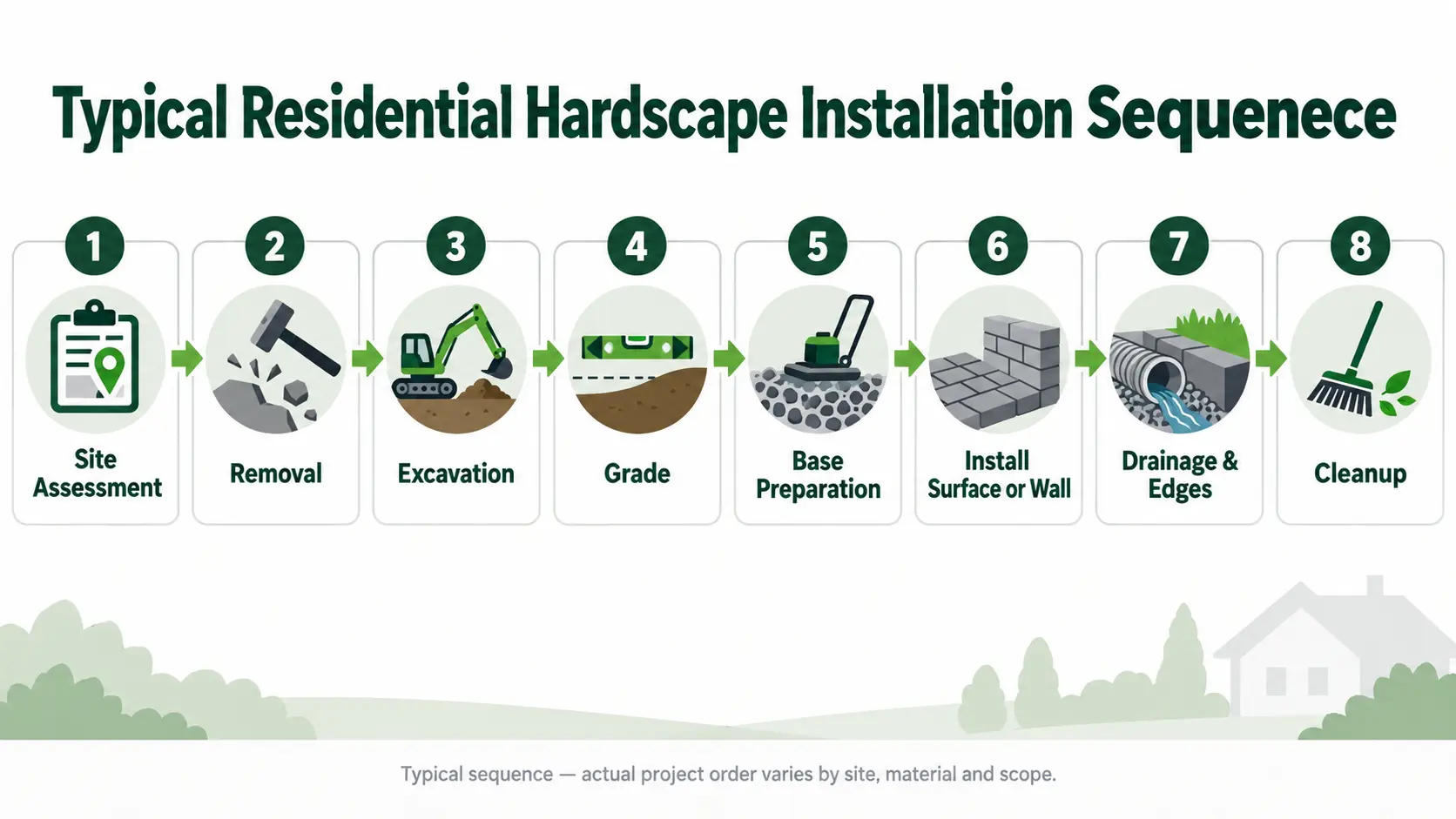
Most of the finished hardscape is visible. Much of the work supporting it is not. The exact installation system depends on the feature and material.

Hardscape installation process from site assessment through cleanup
Typical hardscape installation sequence — actual project order varies by site, material and scope.
01

Site assessment

02

Removal

03

Excavation

04

Establish grade

05

Base preparation

06

Install surface or wall

07

Drainage & edges

08

Cleanup

!

A walkway, patio, driveway and retaining wall should not automatically receive the same preparation. When comparing proposals, ask what happens below the finished surface, not only what will be visible on top.

Materials

Hardscape Materials: What Should You Compare?

Different materials create different appearances, installation requirements and maintenance needs. There is no single best material for every property.

Concrete Pavers

Patios, walkways and selected driveways. Compare pattern, color, base, joints and edge restraint.

Brick Pavers

Patios and walkways. Compare style, jointing, base and long-term maintenance.

Natural Stone

Patios, paths and steps. Compare thickness, variation, installation method and cost.

Flagstone

Paths and patio areas. Compare joint width, base, surface variation and accessibility.

Poured Concrete

Patios and walkways. Compare finish, control joints, drainage and future repair.

Segmental Wall Block

Retaining and seating walls. Compare height, drainage, reinforcement and wall purpose.

Gravel

Paths or selected low-traffic areas. Compare containment, accessibility, migration and drainage.

Planning Details

Planning Details That Affect Hardscape Performance

Material choice is only one part of the project. Drainage, wall construction, surrounding landscape work and future lighting can all affect how the finished hardscape functions.

Material Decision

Pavers vs. Concrete for a Patio

Pavers and poured concrete can both create a usable patio, but they look and behave differently. Pavers use individual units over a prepared base and can allow patterns, borders and individual-unit replacement. Concrete creates a continuous slab and can be finished in several ways.

The better option depends on budget, appearance, patio size, access, grade, base conditions, drainage, repair preferences and maintenance expectations.

Water Movement

How Hardscape and Drainage Should Work Together

A hardscape surface should not be evaluated only when the weather is dry. Ask where water will move during heavy rain.

Important relationships can include surface pitch, foundations, doors, lawn, planting beds, retaining walls, downspouts, existing drains, low areas and surrounding impervious surfaces.

Where significant drainage work is necessary, define that work separately rather than hiding it inside a vague “hardscaping” scope.

Wall Construction

Retaining Walls Need More Than Attractive Block

Visible wall units are only one part of a retaining-wall system. Depending on height and site conditions, important components may include excavation, compacted base, wall setback, drainage aggregate, drainage pipe, filter fabric, reinforcement, backfill and management of loads or surface water above the wall.

A small decorative wall and a wall supporting a significant slope are not equivalent. Compare proposals using the same type of wall and the same supporting work.

Project Coordination

How Hardscaping Fits With Landscape Installation

Hardscape construction often happens before nearby planting, sod or finishing materials. A larger project may move from layout and removal into grading or drainage work, then hardscape construction, followed by soil restoration, planting, sod, mulch, lighting coordination and cleanup.

Completing sod or delicate planting before heavy hardscape construction can create unnecessary damage.

Lighting Coordination

Plan Lighting Before the Hardscape Is Finished

Step lighting, path lighting, wall lighting, patio lighting, wiring routes, transformer location, fixture spacing, glare and future plant growth can all affect planning. Lighting is often easier to coordinate before patios, walls and walkways are completely finished.

Lighting installation itself should remain a separate scope rather than being assumed to be included with hardscaping.

Charlotte-Specific Factors

Hardscaping and Charlotte Site Conditions

Hardscape construction should respond to the property rather than assuming every Charlotte yard has the same conditions.

Clay-Heavy and Compacted Soil

Piedmont subsoils commonly contain relatively high clay content, and residential construction can leave compacted material around homes. These conditions can influence excavation, grading and drainage.

Sloped Properties

A slope can affect patio elevation, steps, retaining walls, excavation, access, drainage and transitions into lawn.

Rainfall and Surface Water

Hard surfaces change how water moves through a yard. Existing runoff should be evaluated before adding hardscape or changing grade.

Mature Trees

Tree roots can affect excavation, walkway alignment and patio placement. Changing grade or cutting significant roots can create issues beyond the hardscape itself.

Selective Renovation

Can Existing Hardscaping Be Kept?

A new project does not always require removing everything. Existing patios, walkways, steps, walls, edging, driveway areas, stone and lighting may sometimes remain when they are usable, appropriately located, compatible with the new layout and not contributing to drainage or structural problems.

Selective renovation can direct more of the project budget toward areas that actually need improvement.

Decision Support

Repair or Replace Existing Hardscaping?

The better option depends on why the feature is failing, not only how the visible surface looks.

Existing ConditionRepair May Be Worth ConsideringReplacement or Rebuilding May Be More Practical
A few loose or damaged paversIndividual units may be reset or replaced—
Minor isolated settlementLocal correction may be possibleWidespread settlement can indicate a larger base problem
Repeated movementLocal work may help only if the cause is limitedUnderlying base or drainage problems may require rebuilding
Surface drains poorlyMinor grading correction may help in limited casesLarger elevation or drainage problems may require reconstruction
Several areas are cracked or unevenSmall isolated defects may be repairableBroad failure may make larger reconstruction more practical
Retaining wall is leaning or movingCosmetic work alone may not solve the causeStructural assessment or rebuilding may be appropriate
Material is usable but layout no longer worksExisting material may sometimes be reusedA different layout can require substantial reconstruction
Budget Control

How to Make a Hardscape Project More Affordable

Affordable hardscaping should mean controlling scope intelligently, not skipping preparation that affects performance.

Keeping useful existing hardscape, reducing unnecessary square footage, choosing simpler shapes, comparing material alternatives, limiting complex borders, phasing a larger plan, coordinating excavation, correcting drainage early and comparing equivalent estimates can all help keep a project focused.

A lower proposal is not necessarily a lower-cost project if important preparation, drainage or cleanup has simply been excluded.

For smaller patio concepts and budget-focused ideas, use the existing Affordable Patio Ideas resource.

Cost Factors

Hardscaping Cost in Charlotte

There is no single hardscaping price that applies to every Charlotte property. The most useful comparison is between equivalent project scopes, not simply the final totals.

Cost FactorWhy It Matters
Project areaLarger surfaces generally require more labor and material
Existing surfaceConcrete, pavers or structures may require removal
ExcavationDepth and soil conditions can change preparation
AccessRestricted access can affect equipment and material handling
MaterialPavers, natural stone and other materials vary substantially
Base preparationSurface type and expected load affect preparation
GradeSlopes may increase excavation, wall or step requirements
DrainageWater-management work can expand the project
Retaining wallsHeight, drainage and reinforcement increase complexity
StepsElevation changes and detailed cuts can increase labor
CleanupDisposal and restoration may be quoted separately
Permits or designSome projects may require additional review or documentation

Ask: Are the providers actually quoting the same hardscape project?

Estimate Comparison

Hardscape Estimate and Specification Checklist

A good hardscape proposal should make it possible to understand what is actually included.

Project Dimensions

  • Square footage
  • Patio dimensions
  • Walkway width
  • Wall length and height
  • Steps, edges and borders

Existing-Material Removal

  • Old concrete
  • Existing pavers
  • Soil excavation
  • Vegetation removal
  • Hauling and disposal

Base Preparation

  • Excavation
  • Base material
  • Compaction
  • Bedding layer
  • Finished grade

Surface Material

  • Manufacturer/product line where applicable
  • Material type
  • Color and size
  • Pattern and borders
  • Substitution rules

Jointing and Edges

  • Joint material
  • Edge restraint
  • Borders
  • Lawn transitions
  • Bed/concrete transitions

Retaining-Wall Details

  • Wall material
  • Height and base
  • Drainage
  • Backfill/reinforcement
  • Caps, steps and engineering where required

Drainage Responsibilities

  • Surface grading
  • Wall drainage
  • Existing drain modifications
  • Downspout coordination
  • Restoration of disturbed drainage

Project Responsibilities

  • Utility locates
  • Permits where applicable
  • Delivery, equipment and cleanup
  • Landscape restoration
  • Schedule, payment and change orders
  • Warranty terms where offered
✓

Before You Compare Hardscaping Estimates

Put proposals side by side and check whether they include the same dimensions, demolition, excavation, base preparation, materials, borders, jointing, drainage, wall construction, steps, cleanup, restoration and applicable approvals.

A cheaper total does not necessarily represent the same project.

Compare the Scope, Not Just the Price

The goal is to understand what each price actually buys.

Request Hardscaping Help
Service Boundaries

What Hardscaping May Not Include

Hardscaping can overlap with other types of work, but they should not automatically be assumed to be included.

Depending on the project and provider, separate scopes may be necessary for major drainage-system installation, structural engineering, plumbing, gas, electrical connections, outdoor-kitchen utilities, irrigation replacement, significant tree work, major grading, decks, pergolas, pools, foundation work or specialized masonry repair.

If a fire feature, outdoor kitchen or other improvement involves gas, electricity, plumbing or structural construction, qualified trades and separate approvals may be needed.

Prepare Your Request

What Should You Prepare Before Requesting Hardscaping Help?

ZIP CodeProject TypeApproximate SizePhotosAccessSlope / DrainagePreferred MaterialTimelineBudget if Known

A clear project description can make the initial discussion more productive.

For a retaining wall, photographs should show both the entire slope and the area immediately around the proposed wall. For a patio, include views showing the house, doors, current grade and surrounding lawn rather than only a close-up of the proposed patio location.

Also explain which existing features should remain and which you are considering removing.

What to Expect

How Does the Hardscaping Request Process Work?

01

Describe the Property

Provide the project location, approximate area, existing conditions and access.

02

Explain the Hardscape You Are Considering

This could include a patio, walkway, retaining wall, steps or several related improvements.

03

Add Photos

Photos can help explain grade, access, drainage, existing materials and nearby structures.

04

Provider Availability May Be Checked

Your request may be shared where an independent provider is available for the project type and location.

05

Compare the Proposed Scope

Before hiring, compare materials, dimensions, preparation, drainage, approvals, cleanup, schedule, payment terms and warranty terms where offered.

Submit Your Hardscaping Project

Include enough detail to make the initial project discussion useful.

Submit Project Details
Avoidable Problems

Common Hardscaping Mistakes to Avoid

!

Choosing Material Before Understanding the Site

Appearance matters, but drainage, grade, soil and use should be evaluated first.

!

Ignoring What Is Under the Pavers

A finished surface can look attractive even when important preparation details are unclear.

!

Covering an Existing Drainage Problem

A patio or walkway should not simply cover standing water or runoff without understanding where that water will go.

!

Planning Patio Size Without Furniture

A patio can feel much smaller after tables, chairs and circulation space are added.

!

Treating Every Wall as Decorative

A wall retaining soil can require substantially different planning from a simple landscape border.

!

Forgetting Future Lighting

Wiring and fixture locations may be easier to coordinate before surfaces and walls are finished.

!

Ignoring Utility Locations

Excavation without utility-location planning creates unnecessary risk.

!

Comparing Different Scopes

One proposal may include removal, base preparation, drainage and cleanup while another does not.

After Installation

Hardscape Maintenance After Installation

Maintenance depends on the material and installation method. Typical considerations may include debris removal, stain cleaning, joint maintenance, monitoring movement or settlement, checking edge restraint, observing wall drainage, inspecting steps and watching for erosion around edges.

Some materials may also have manufacturer-specific cleaning or sealing guidance. Do not assume every stone, brick, paver or concrete surface should receive the same maintenance.

Ask for instructions that apply to the materials actually installed.

Charlotte-Area Coverage

Hardscaping Requests Around Charlotte

The geographic focus is intentionally selective so this page remains locally useful without turning into a long list of place names.

Charlotte Neighborhoods

Within Charlotte, hardscaping requests may come from areas such as Dilworth, Myers Park, Plaza Midwood, SouthPark and Steele Creek.

Nearby Charlotte Communities

Depending on project type and independent provider availability, requests may also be considered from Matthews, Pineville, Huntersville and Concord.

Include your ZIP code when submitting a project so availability can be checked more accurately.

Note: Location names clarify the geographic focus of this page. Provider availability, qualifications, pricing and service terms should be confirmed for the individual project.

Charlotte Area

Neighborhoods
DilworthMyers ParkPlaza MidwoodSouthParkSteele Creek
Nearby Communities
MatthewsPinevilleHuntersvilleConcord
Request Project Help
Related Resources

Continue Planning Your Hardscape Project

Hardscaping Ideas for Backyards

Explore inspiration, layouts and backyard hardscape concepts without overloading this commercial service page.

Explore hardscaping ideas →

Paver Patio vs. Concrete

Compare appearance, installation, repair options, maintenance considerations and other differences before choosing a patio surface.

Compare pavers and concrete →

Landscape Planning and Design

Use this when the main question is where patios, walkways, walls, planting areas and other improvements should go.

Explore landscape planning →
Frequently Asked Questions

Frequently Asked Questions About Hardscaping in Charlotte

What is included in hardscaping?

Hardscaping may include patios, paver walkways, retaining walls, steps, seating walls, driveway surfaces, edging and other constructed landscape features. Exact services depend on the provider and project.

What is the difference between hardscape and landscape installation?

Hardscape generally refers to built surfaces and structures such as patios, walkways, walls and steps. Landscape installation primarily covers trees, shrubs, sod, planting beds, mulch and other living or finishing landscape materials.

Do I need a design before hardscape installation?

Not every small walkway or simple patio requires a detailed landscape plan. Planning becomes more useful when multiple features need to work together, significant grade changes are involved, or patios, walls, planting, drainage and lighting require coordination.

What should happen before a paver patio is installed?

The work area should be evaluated for grade, drainage, access, existing materials and utilities. Installation can then involve removal, excavation, base preparation, compaction, bedding material, paver installation, edge restraint and jointing depending on the system.

How much does hardscaping cost in Charlotte?

Cost depends on project size, material, removal, excavation, access, base preparation, grade, drainage, walls, steps, cleanup and overall complexity. Compare equivalent scopes rather than final totals alone.

Do retaining walls require permits in Charlotte?

Requirements depend on the project and property. The City of Charlotte lists retaining walls among projects that can require Individual Residential Lot Review, with the actual review path depending on scope, location and site conditions.

Should I contact 811 before hardscape construction?

Hardscaping commonly involves excavation. North Carolina 811 advises contacting 811 before digging so participating underground facilities can be located. Clarify who is responsible for the request before work begins.

Are pavers better than concrete?

Neither is automatically better for every project. Pavers and concrete differ in appearance, installation, joints, repair options, cost and maintenance. The better option depends on the property and project goals.

Can a patio and retaining wall be installed together?

They may be coordinated as part of one project, particularly where a wall is needed to address grade around a patio. Layout, structure, drainage and installation sequence should be considered together.

Can hardscaping create drainage problems?

Hardscape can change the way water moves over a property, particularly when surface elevation, slope or impervious area changes. Existing drainage conditions should therefore be evaluated before installation.

What should a hardscaping estimate include?

A useful estimate should clearly describe project dimensions, removal, excavation, base preparation, surface materials, edge restraint, jointing, wall construction where applicable, drainage responsibilities, cleanup, timeline, payment terms, applicable permit responsibilities and warranty terms where offered.

Start Your Project

Ready to Plan a Hardscaping Project in Charlotte?

A good hardscape project should fit the property as well as the design. Before installing a patio, walkway, retaining wall, steps or another constructed feature, understand the existing grade, soil, water movement, access and surrounding landscape.

Compare proposals using the same scope and confirm dimensions, surface materials, base preparation, drainage, wall construction where applicable, utility and permit responsibilities, cleanup, project timing, payment terms and warranty terms where offered.

Landscapers in Charlotte NC is an independent landscaping information and service-request website. Hardscaping work is performed by independent providers where available. Provider availability, qualifications, insurance, permits, pricing, warranties and service terms should be confirmed directly before hiring.

Better outdoor spaces start with the right plan—from landscape design and installation to hardscaping, lawn care, drainage, grading, and outdoor lighting.

© 2026 Landscapers in Charlotte, NC. All Rights Reserved.