How to Create a Sustainable Landscape (Eco-Friendly Yard Design That Lasts)
You can create a sustainable landscape by reducing lawn area, using native plants, building healthy soil, installing efficient irrigation, and managing stormwater naturally. It saves water, cuts maintenance time, supports pollinators and wildlife, eliminates toxic chemicals, and builds resilient soil that gets better every year.
Here’s the thing: Sustainable landscaping doesn’t mean your yard looks wild or messy. It means you’re designing a beautiful outdoor space that works with nature instead of fighting it. You’ll spend less time mowing, watering, and spraying. Your plants will be tougher. Your soil will be healthier. And your yard will actually help the environment instead of draining resources.
This approach to environmentally friendly landscaping makes sense for your wallet, your schedule, and the planet.
What “Sustainable Landscaping” Actually Means
A sustainable landscape is designed to work smarter, not harder. It conserves water through water-wise landscaping techniques. It builds soil health using compost and natural soil regeneration instead of synthetic fertilisers. It supports wildlife and pollinators by creating habitat instead of sterile green carpets. It reduces emissions by cutting back on mowing, chemical treatments, and the carbon footprint of constant lawn care.
And here’s the big one: it reduces lawn area. Traditional grass lawns are resource hogs. Sustainable outdoor design replaces most of that turf with native plants, groundcovers, and garden beds that need a fraction of the water and maintenance.
Here’s what you’ll learn:
- How to build a sustainable landscape plan from scratch
- Lawn alternatives that save water and time
- Native plant landscaping basics
- Efficient irrigation setups
- Sustainable soil management techniques
- Sustainable hardscaping and drainage solutions
Let’s get into it.
Start With a Sustainable Landscape Plan (Before You Dig)
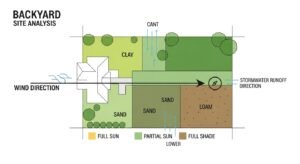
Step 1: Do a Quick Site Analysis (Sun, Soil, Water, Wind)
Before you plant a single thing, spend an afternoon observing your yard. Site analysis landscaping sounds fancy, but it’s just paying attention to what’s already happening.
Walk around and note:
- Sun exposure mapping: Which areas get full sun (6+ hours)? Where’s the shade? Mark it on paper or your phone.
- Soil testing for landscaping: Dig a hole or two. Is the soil clay, sand, or loam? Does water drain fast or pool? You can grab a $15 test kit to check pH if you want.
- Stormwater flow patterns: Where does water go when it rains? Look for puddles, erosion spots, or places where runoff rushes downhill.
- Wind and microclimate gardening: Is there a windy corner? A heat pocket near pavement? A cool, shady area under trees?
This info guides everything else. You’ll know where to put drought-tolerant plants, where you need better drainage, and where to position shade trees.
Quick checklist:
- Map sun/shade zones
- Test soil drainage
- Identify runoff paths
- Note wind patterns and microclimates
Understanding your landscape master plan starts here. You’re setting yourself up for a garden layout planning process that actually makes sense.
Step 2: Divide Your Yard Into Zones (Hydrozones + Use Zones)
Now group your landscape into zones. This is sustainable landscape planning 101.
Hydrozone planting means grouping plants by water needs. Put thirsty plants (like vegetables) in one zone with drip irrigation. Put drought-tolerant natives in another zone with minimal watering. Don’t scatter high-water and low-water plants all over the place; you’ll waste water and confuse yourself.
Use zones are about function:
- Front yard: curb appeal, low maintenance
- Backyard entertaining area: patio, seating, maybe a fire pit
- Edible zone: raised beds, fruit trees, herbs
- Wild habitat zone: let native plants do their thing
This kind of sustainable yard design makes maintenance easier. You know exactly what each area needs. Your sustainable front yard landscaping might focus on hardy perennials and groundcovers, while your sustainable backyard landscaping could include a mix of edible plants and pollinator gardens.
Reduce Lawn Area (Biggest Sustainability Upgrade)
Step 3: Reduce Turf Grass and Replace It With Lawn Alternatives
Here’s the truth: lawns are expensive, thirsty, and demanding. Traditional turf needs constant irrigation, regular mowing (hello, emissions), and fertiliser that often runs off into waterways. If you want one big sustainability win, reduce lawn area.
You don’t have to go completely lawn-free. Just shrink it to the space you actually use. Replace the rest with eco lawn replacement options that need way less water and maintenance.
Lawn alternatives to consider:
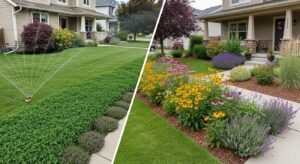
- Clover lawn / microclover lawn: Stays green with little water. Fixes nitrogen in the soil. Soft underfoot.
- Native grass lawn: Deeper roots, drought-tolerant, mow just a few times a year.
- Meadow lawn: Mix of native grasses and wildflowers. Gorgeous and supports pollinators.
- Moss lawn: Perfect for shady, acidic soil. Zero mowing.
- Creeping thyme lawn: Fragrant, handles light foot traffic, loves sun.
- Groundcover lawn replacement: Sedges, low-growing perennials, or native groundcovers.
Choose based on:
- Shade vs sun: Moss for shade, thyme for sun
- Foot traffic level: Clover handles traffic; meadows don’t
- Budget: Seed is cheap; plugs cost more but establish faster
- Maintenance expectations: Meadows need seasonal mowing; moss needs nothing
Start small. Replace one section this year. See how it goes. No lawn landscaping or low lawn landscaping doesn’t mean your yard looks neglected; it means you’ve replaced grass with something better.
Choose Native Plants for Landscaping (The Core of Green Landscaping)
Step 4: Use Native Plant Landscaping for a Low-Maintenance, Resilient Yard
Native plants are the backbone of any sustainable landscape. These are the local plant species that evolved in your region. They’re already adapted to your climate, soil, and rainfall patterns.
Benefits of native garden design:
- Climate-adapted plants: They handle your summers, winters, droughts, and storms.
- Drought-tolerant natives: Deep roots mean less watering once established.
- Fewer pests: Local insects evolved alongside these plants, so there’s a natural balance. Less need for pesticides.
- Supports wildlife corridors: Birds, bees, butterflies, and beneficial insects depend on regionally appropriate plants.
Plant categories to explore:
- Hardy perennials: Come back year after year with zero replanting.
- Low maintenance shrubs: Structure and year-round interest.
- Groundcover alternatives: Replace lawn or fill gaps between plants.
- Ornamental grasses landscaping: Texture, movement, drought tolerance.
- Native meadow garden/wildflower meadow landscaping: Seasonal colour and pollinator heaven.
Before you plant, do a quick check for invasive species removal. If you’ve got invasive plants like English ivy, Japanese knotweed, or Bradford pear, pull them out. They crowd out natives and wreck local ecosystems.
Step 5: Design for Pollinators + Wildlife Habitat Landscaping
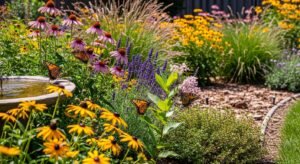
A biodiversity garden isn’t just pretty; it’s functional. You’re creating layers of habitat: trees, shrubs, perennials, and groundcover. Each layer supports different species.
What pollinators and wildlife need:
- Continuous bloom seasons: Plant something’s flowering spring through fall.
- Nesting sites: Dense shrubs for birds, bare ground patches for ground-nesting bees.
- Water features for wildlife: A shallow birdbath or small pond.
- Food sources: Berries, seeds, nectar.
Think of your yard as a bird habitat garden, a beneficial insects garden, and a butterfly garden all rolled into one. A monarch butterfly garden, for example, needs milkweed. A bee habitat landscaping plan includes early bloomers like crocuses and late bloomers like asters.
Pollinator-friendly landscaping checklist:
- Mix of pollinator plants (bee-friendly plants, butterfly garden plants)
- Native host plants for caterpillars
- Water source
- No pesticides
- Leave some leaf litter and dead stems for overwintering insects
When you’re building planting beds or gravel paths, installing a weed barrier correctly can reduce weeds without relying on herbicides. See our step-by-step guide on How to Lay Landscape Fabric.
This is wildlife-friendly garden design at its best. You’re not just growing plants, you’re creating habitat features that support entire ecosystems.
Build Healthy Soil (Sustainable Soil Management)
Step 6: Improve Soil Naturally (No-Dig, Compost, Mulch, Biochar)
Healthy soil is the foundation of sustainable home landscaping. If your soil is compacted, low in organic matter, or eroded, your plants will struggle no matter what you do.
How to build soil health landscaping:
- Compost for gardens: Add a 2-3 inch layer of compost every year. It feeds soil microbes, improves structure, and holds moisture. Compost is the ultimate organic matter in soil.
- Mulching landscaping: Top beds with wood chip mulch, leaf mulch, or straw. Mulch suppresses weeds, retains moisture, and breaks down into topsoil over time.
- No-dig gardening: Stop tilling. It destroys soil structure and kills beneficial fungi. Just add layers of compost and mulch on top.
- Mycorrhizal fungi benefits: These root fungi help plants access water and nutrients. They thrive in undisturbed, organic-rich soil.
- Biochar landscaping (advanced tip): Biochar is charcoal that holds nutrients and water. Mix it into new beds if you want to level up.
What NOT to do:
- Over-tilling every spring
- Removing topsoil during grading
- Using synthetic fertiliser as your only solution, it feeds plants but starves the soil.
Focus on soil regeneration. You’re not just feeding this year’s plants, you’re building topsoil preservation for decades. Reduce soil erosion by keeping the ground covered with plants or mulch year-round.
Water-Wise Landscaping + Efficient Irrigation
Step 7: Cut Outdoor Water Use With Smart, Low Water Landscape Design
Xeriscaping and drought-tolerant landscaping aren’t just for deserts. These principles work anywhere you want to reduce outdoor water use.
Water-wise landscaping strategies:
- Mulch for water retention: 3-4 inches of mulch can cut evaporation by 50% or more.
- Drought-resistant plants: Choose plants that thrive on natural rainfall once established.
- Hydrozones: Group high-water plants together so you’re not overwatering everything.
- Shade tree placement: Trees reduce evaporation and cool the soil. Plant them strategically near beds and patios.
This is low water landscape design that still looks lush. You’re working with your climate, not against it. A water-saving garden doesn’t mean cactus and gravel; it means choosing the right plants and designing smartly.
Step 8: Install Efficient Irrigation (Drip + Smart Controller)
If you need to irrigate, do it right. Efficient irrigation saves water and money.
Best irrigation for sustainable landscaping:
- Drip irrigation: Delivers water directly to plant roots. Use it for garden beds, shrubs, and trees. Way more efficient than sprinklers.
- Irrigation scheduling: Water early in the morning to reduce evaporation. Adjust seasonally, don’t water the same amount in spring and August.
- Smart irrigation controller: These adjust watering based on weather data. Some pay for themselves in water savings within a year.
Rainwater harvesting:
- Rain barrel landscaping: Collect roof runoff in barrels. Use it for hand-watering or connect to drip lines.
Best setup by area:
- Veggie beds: Drip lines or soaker hoses
- Shrubs/perennials: Drip emitters at the base
- Lawn alternative zones: Minimal irrigation once established, or none at all
Reduce outdoor water use without sacrificing plant health. That’s the goal.
Stormwater Management + Sustainable Drainage Systems
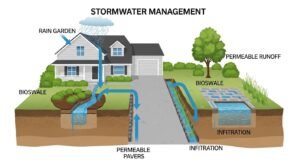
Step 9: Prevent Runoff With Rain Gardens, Bioswales, and Permeable Design
Stormwater management isn’t just for developers. When rain hits pavement or compacted soil, it rushes off, carrying pollution and eroding soil. You can fix this.
Why runoff matters:
- Erosion washes away topsoil
- Pollutants (fertiliser, oil, pesticides) end up in streams
- Your yard doesn’t get the benefit of that water
Sustainable drainage systems (SUDS landscaping) solutions:
- Rain garden design: A shallow depression planted with water-loving natives. It captures runoff and lets it soak in slowly.
- Bioswale landscaping: A planted channel that slows and filters stormwater.
- Swales and berms: Earthworks that redirect water where you want it.
- Infiltration basin: A sunken area that holds water temporarily and lets it seep into the ground.
- Permeable paving / permeable pavers / porous concrete: Lets water soak through instead of running off.
- Gravel pathways: Simple, cheap, and permeable.
Common drainage mistakes:
- Directing all runoff to the street instead of capturing it
- Compacting soil so water can’t infiltrate
- Ignoring natural drainage patterns during design
Runoff reduction landscaping and watershed-friendly landscaping sound technical, but they’re really just about being smart with water. Manage yard drainage naturally, and you’ll prevent erosion, recharge groundwater, and keep your plants happier.
Sustainable Hardscaping + Materials
Step 10: Choose Eco-Friendly Hardscape Materials That Last
Sustainable hardscaping means choosing materials that are durable, low-impact, and ideally local or reclaimed.
Eco-friendly options:
- Reclaimed stone landscaping: Salvaged pavers or flagstone. Gorgeous and reduces demand for new quarrying.
- Reclaimed wood landscaping: Old barn wood for fences, arbours, or edging.
- Recycled materials landscaping: Recycled plastic lumber, crushed glass mulch, recycled concrete.
- Locally sourced stone: Cuts transportation emissions and supports local businesses.
- Low-carbon concrete alternatives: Permeable concrete, rammed earth, or avoid concrete altogether.
Heat reduction tips:
- Reduce heat island effect: Light-colored pavers reflect heat instead of absorbing it.
- Passive cooling landscaping: Use shade tree placement near patios and walkways to keep things cooler.
- Energy-efficient landscaping: Strategic planting reduces cooling costs for your home.
Choose materials for your sustainable patio design or eco-friendly decking that will last 20+ years. Cheap stuff that needs replacing every few years isn’t sustainable; it’s wasteful.
Chemical-Free, Low Impact Maintenance
Step 11: Maintain Your Yard With Organic, Pesticide-Free Practices
Chemical-free landscaping protects pollinators, pets, kids, and water quality. A pesticide-free lawn and herbicide-free landscaping approach is healthier for everyone.
Alternatives to chemicals:
- Integrated pest management (IPM): Monitor pests, use thresholds, and intervene only when necessary.
- Biological pest control: Ladybugs eat aphids. Nematodes kill grubs. Let nature do the work.
- Companion planting: Marigolds repel pests. Basil protects tomatoes. Planting strategically reduces problems.
- Mulch for weed suppression: A thick layer of mulch blocks most weeds before they start.
- Natural weed control: Hand-pull, use a hoe, or spot-treat with vinegar-based weed killers.
Seasonal maintenance sustainable yard schedule:
- Spring: Refresh compost and mulch. Prune dead wood.
- Summer: Adjust irrigation. Monitor for pests. Deadhead flowers.
- Fall: Apply leaf mulch. Feed the soil with compost. Plant fall bulbs.
- Winter: Prune dormant plants. Plan next year’s garden.
This is sustainable garden maintenance that’s low-input landscaping at its best. You’re not dumping chemicals every month. You reduce mowing and landscaping by choosing groundcovers and meadows. And you’re using organic lawn care practices that build soil instead of depleting it.
If you want a professional, sustainable landscape plan, grading, drainage, or native plant installation, working with experienced Landscapers in Charlotte, NC, can save time and prevent costly mistakes.
Regenerative Landscaping Ideas
Step 12: Go Beyond Sustainable With Regenerative Landscaping Practices
Regenerative landscaping goes beyond “doing less harm.” It actively improves the land. You’re building soil, increasing biodiversity, and creating closed-loop systems.
Examples of regenerative garden design:
- Permaculture landscaping: Design based on natural ecosystems. Stack functions, create guilds, and observe patterns.
- Food forest design: Layers of edible plants, fruit trees, berry bushes, perennial vegetables, herbs, and groundcovers.
- Guild planting: Group plants that support each other (nitrogen-fixers, pest repellents, nutrient accumulators).
- Polyculture garden: Multiple species growing together instead of monoculture rows.
- Edible landscaping ideas: Replace ornamentals with productive plants, fruit trees, perennial herbs, and nut trees.
Start small approach:
Don’t try to convert your entire yard into a food forest this weekend. Start with a small edible zone, maybe a guild around one fruit tree. Add herbs under your shrubs. Plant perennial vegetables like asparagus or rhubarb in a corner bed.
This is a sustainable food garden design that feeds you while regenerating the land. It’s permaculture design made practical.
Conclusion: Your Sustainable Landscape Checklist
Sustainable Landscaping Tips to Remember
Here’s the recap:
- Reduce lawn area: Replace turf with native groundcovers, clover, or meadow plantings.
- Native plant landscaping: Choose climate-adapted, regionally appropriate plants that support local wildlife.
- Soil health landscaping: Build soil with compost, mulch, and no-dig methods.
- Water-wise irrigation: Install drip systems, use smart controllers, and harvest rainwater.
- Stormwater management: Capture runoff with rain gardens, bioswales, and permeable surfaces.
- Sustainable hardscaping: Choose reclaimed, recycled, or locally sourced materials.
- Chemical-free maintenance: Use organic practices, IPM, and natural weed control.
You don’t have to do everything at once. Phased landscape installation is the smart way to go. Pick one zone this season. Maybe it’s converting part of your lawn to a native meadow. Or building a rain garden. Or setting up drip irrigation in your veggie beds.
Start with one zone this weekend. See what works. Build from there.
Your yard can be beautiful, functional, and regenerative all at once. That’s what sustainable landscaping is all about.