
How to Landscape Your Front Yard: A Complete Guide for Homeowners
Where to Start Landscaping a Front Yard
Most people get overwhelmed because they skip the assessment phase and jump straight to buying plants. Don’t do that. Start by walking around your yard at different times of day. Notice where the sun hits hardest, where water pools after rain, and what kind of slope you’re dealing with. These factors determine everything else.
Check your drainage situation; standing water kills plants and damages foundations. If you have significant slope issues, you might need retaining walls or terracing before you plant anything. Look at your climate zone and seasonal patterns. What thrives in Arizona will die in Minnesota, and vice versa. Your local garden centre can tell you which plants are native or well-adapted to your area.
Identify your natural focal points. For most homes, that’s the entryway or front door. Your walkway and driveway are secondary focus areas. Everything you design should guide the eye toward these spots, creating clear pathways and visual flow.
How to Landscape Your Front Yard: Plan & Layout Tips
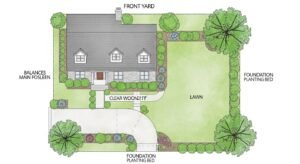
Grab some graph paper or use a free online tool to sketch your front yard landscaping plan. Measure your space and draw it to scale; this prevents expensive mistakes like ordering too much material or planting trees that’ll eventually block windows.
- Front yard landscaping planning, layout, and design basics
• Front yard landscaping plan, blueprint, scale, and proportion
• Symmetry, balance, and focal point (entryway) planning
Divide your yard into functional zones. Most front yards include a lawn area, garden beds along the foundation and borders, pathways from the driveway and sidewalk to your door, and hardscape elements like edging or decorative stones.
Think about symmetry and balance, especially if your home has a traditional design. Matching plantings on either side of your entryway creates a formal, polished look. For contemporary or cottage styles, you can get away with asymmetrical layouts that feel more relaxed.
Scale and proportion matter more than people realise. A tiny shrub next to a massive porch looks lost. A huge tree in a small yard overwhelms everything. Your landscaping blueprint should show how plants will look at mature size, not just when you plant them.
Mark your focal point, usually the front door, and design everything to lead there. Use pathways, lighting, and layered plantings to create that visual journey.
Why Front Yard Landscaping Matters
Your front yard is the first thing everyone sees, neighbours, visitors, potential buyers, and a well-designed landscape can boost your home’s curb appeal and value by 5% to 15%. That’s serious money just from making your yard look good.
Beyond the financial payoff, front yard landscaping creates a welcoming entryway that reflects your personal style and makes coming home feel special. Whether you’re planning to tackle this as a DIY project or hire professional help, understanding the basics will save you time, money, and headaches.
The truth is, improving curb appeal through landscaping doesn’t have to be complicated or expensive. You just need a solid plan and realistic expectations about what works for your space and budget.
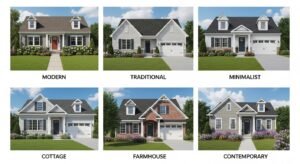
Front Yard Landscaping Styles & Ideas
Modern Front Yard Landscaping
Clean lines, minimal plant varieties, lots of hardscape. Think concrete pavers, ornamental grasses, and geometric patterns. This style works great for small front yards because it doesn’t require much lawn or maintenance.
Traditional Front Yard Landscaping
Symmetrical design with classic elements like boxwood hedges, brick walkways, and flowering shrubs. Lawns are typically central, framed by well-defined garden beds. Perfect for colonial or craftsman homes.
Minimalist Front Yard Landscaping
Less is more. Choose three to five plant types max, use gravel or mulch for texture, and keep colour palettes neutral. Low maintenance and surprisingly elegant.
Cottage Front Yard Design
Overflowing with colour and texture, think wildflowers, climbing roses, picket fences, and winding pathways. This style embraces a slightly wild, romantic feel that works beautifully for small yards.
Farmhouse Front Yard Landscaping
Combines rustic charm with functional beauty. Native plants, wooden fences, wildflower beds, and practical elements like vegetable gardens or herb borders near the entryway.
Contemporary Front Yard Design
Bold, artistic, unexpected. Mix materials like steel edging with river rocks, incorporate sculptural plants like agave or yucca, and use dramatic lighting. Best suited for larger front yards with room for statement pieces.
Choosing the Best Plants for Front Yard Landscaping
Creating a beautiful front yard doesn’t have to be complicated. The key is layering your plants like you’re building a living wall, tallest in back, shortest in front. This gives you depth, structure, and that polished look that makes your home stand out. Start with trees for shade and height, add shrubs and bushes in the middle, then finish with flowers and groundcover up front.
- Dogwoods, Japanese maples, and crape myrtles for smaller yards; oaks and maples if you have space.
- Evergreens like boxwood and holly for structure; hydrangeas and azaleas for seasonal colour.
- Native plants use less water, need less care, and support local wildlife.
- Perennials like sedum, lavender, and ornamental grasses come back every year.
- Groundcover like creeping thyme and vinca fills gaps and prevents weeds.
The right plant choices make all the difference between a yard that’s constantly demanding attention and one that looks great with minimal effort. Native and drought-tolerant plants not only save you time and money, but they also create a healthier, more sustainable landscape that thrives in your specific conditions.
Start planning your front yard today and watch it transform into the welcoming space you’ve always wanted.
Lawn Ideas & Grass Alternatives
A traditional natural grass front yard looks classic, but it demands regular mowing, watering, and fertilising. If you’re in a rainy climate with good soil, grass can work beautifully. Install quality sod for instant results or seed for a budget option.
Artificial grass front yard installations are booming in drought-prone areas. Initial costs run higher, but you save on water bills and Lawn Care and Maintenance. Modern turf looks surprisingly realistic.
Front yard landscaping without grass opens up creative possibilities. Replace lawn with gravel, decomposed granite, or crushed stone. Add stepping stones for pathways and plant beds throughout.
Grass alternatives for front yard spaces include clover (stays green, feeds pollinated bees), creeping thyme (smells amazing when walked on), or buffalo grass (native, drought-tolerant, low-growing).
Xeriscape front yard landscaping uses rocks, gravel, and drought-resistant plants to create beautiful, water-saving designs. Popular in the Southwest, but it works anywhere you want to cut water usage.
Hardscape Elements That Elevate Front Yard Design
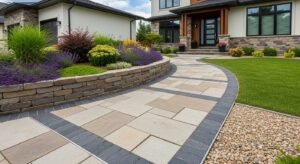
Hardscape is what holds your front yard together when everything else takes a break. While plants come and go with the seasons, your walkways, edging, and retaining walls stay put and keep things looking sharp all year long. It cuts down on maintenance, too, which is always a win.
- Walkways can be concrete, brick pavers, flagstone, or gravel, depending on your style and budget.
- Retaining walls stop erosion on slopes and create level planting beds.
- Edging keeps mulch in place. Choose plastic, metal, stone, or brick.
- Mix materials like concrete with stone or brick with metal for visual contrast.
The texture and patterns you create with hardscape matter just as much as the plants you choose. It’s not just about function, it’s about making your yard feel put together, even in the middle of winter when nothing’s blooming. Good hardscape design means less work for you and more curb appeal that lasts.
Get creative with your materials and watch how much character they bring to your space.
Mulch, Landscape Fabric & Weed Control
Mulch does more than look pretty. It regulates soil temperature, retains moisture, prevents weeds, and breaks down to improve your soil over time. Organic mulches like wood chips, shredded bark, or pine straw are popular for front yard beds.
Before you spread mulch, consider laying landscape fabric underneath. This fabric blocks weeds while letting water and air reach plant roots. If you’ve never done this before, here’s how to lay landscape fabric properly to avoid common mistakes.
Apply mulch two to three inches deep around plants, keeping it pulled back from stems and trunks to prevent rot. Refresh it annually as it decomposes.
For borders and edging, mulch creates clean lines that make your whole yard look more polished. It also prevents erosion on slopes and protects plant roots during temperature extremes.
Weed control starts with proper soil preparation. Remove existing weeds completely before planting, use fabric barriers where appropriate, and stay on top of new growth before it spreads.
Budget-Friendly & DIY Front Yard Landscaping Tips
Front yard landscaping on a budget is totally doable if you’re willing to phase the work and do some tasks yourself. You don’t need to drop thousands all at once to get a yard that looks great. Start small, focus on one area at a time, and let your space come together naturally. DIY front yard landscaping saves you 40-60% on labour costs right off the bat. Handle the planning, soil prep, planting, and mulching yourself, then hire pros only for the heavy-duty stuff like grading or major hardscape installation.
Smart Ways to Cut Costs Without Cutting Quality
- Start plants from seed or small containers instead of buying mature specimens to save serious cash.
- Use free materials like stones from your property or broken concrete for pathways and dry creek beds.
- Shop end-of-season sales at nurseries for deep discounts on perennials and shrubs.
Low-cost landscaping doesn’t mean boring. It just means being strategic about where you spend and where you save. Invest in plants that’ll grow and spread, skip the fancy stuff that doesn’t add real value, and watch your yard transform without emptying your wallet. Phase your project over a few months instead of trying to do everything at once.
Front Yard Landscaping Steps: From Start to Finish
Here’s your front yard landscaping checklist broken into manageable phases:
- Planning & Layout
Sketch your design, mark utility lines, choose your style, and create a plant list. Measure twice, order once. - Grading & Drainage
Fix slope issues and ensure water flows away from your foundation. This prevents expensive problems later. - Hardscape Installation
Build walkways, retaining walls, and edging before planting. It’s easier to work around empty beds than finished ones. - Soil Preparation
Test your soil, amend with compost if needed, and create planting beds. Good soil is the foundation of healthy plants. - Plant Installation
Start with trees and large shrubs, then add smaller plants and groundcover. Water everything thoroughly after planting. - Mulching
Apply mulch to all beds, keeping it away from plant stems. This locks in moisture and suppresses weeds. - Lighting Installation
Add front yard landscape lighting along pathways and to highlight focal points. Solar lights work great for budget projects. - Irrigation Setup
Install drip irrigation for beds or set up a watering schedule. Consistent watering during the first growing season is critical. - Maintenance Plan
Schedule seasonal tasks like pruning, fertilising, and mulch refreshing so your landscape stays beautiful long-term.
Common Front Yard Landscaping Mistakes to Avoid
Overcrowding plants is the number one mistake. Give everything room to reach its mature size. Those tiny shrubs at the garden centre will triple in width. Ignoring drainage creates soggy spots where plants rot and foundations crack. Always design with water flow in mind.
Poor scale throws off your whole design. Match plant sizes to your home’s proportions: big house, bigger plants; small house, appropriately-sized plantings. Forgetting about maintenance leads to buyer’s remorse. If you hate pruning, don’t plant fast-growing hedges. Be honest about the upkeep you’re willing to do.
Planting the wrong things for your climate wastes money. Stick with native and adapted plants that thrive in your conditions. Skipping the plan and winging it results in awkward layouts and expensive do-overs. Spend time upfront designing, and execution goes smoothly.
Seasonal & Climate-Specific Landscaping Tips
Every climate throws different challenges at your front yard, and what works in Arizona won’t cut it in Maine. The trick is working with your weather instead of fighting it. Hot climates need drought-tolerant plants, smart irrigation, and thick mulch to keep roots from baking. Cold climates require hardy plants that can handle the freeze and evergreens that keep things looking alive all winter. Understanding your zone and rainfall patterns makes all the difference between a yard that thrives and one that barely survives.
- Hot climates benefit from shade trees, succulents, and desert-adapted plants that handle the heat.
- Cold regions need zone-hardy plants, evergreens for winter interest, and extra mulch for root protection.
- Dry areas work best with xeriscape design, native plants, and grouping plants by water needs.
Rainy areas come with their own headaches; you need plants that don’t mind wet feet and smart drainage solutions like rain gardens or French drains to keep your yard from turning into a mudpit. Seasonal planning matters too. Spring bulbs kick things off, summer perennials take over, fall foliage puts on a show, and winter evergreens keep your yard from looking dead. Spring is your time for cleanup and new plantings, while fall is actually better for trees and shrubs since they get to establish roots before summer stress hits.
Match your plants to your climate, and you’ll spend way less time babysitting your yard.
When to Hire a Professional Front Yard Landscaper
Some projects just make sense to outsource. If you’re dealing with major grading, retaining walls over three feet, large tree installation, or complex irrigation systems, professional front yard landscaping services save you time and potential disasters. Residential front yard landscaping pros bring design expertise, proper equipment, and warranties on their work. They can also spot drainage and structural issues you might miss.
Looking for front yard landscaping near me? Local landscapers understand your climate, soil, and which plants thrive in your specific area. If you’re in the Charlotte area, check out Landscapers in Charlotte, NC for professional options.
Professional help also makes sense if you’re short on time, physically unable to do heavy work, or want the job done right before a major event like selling your home.
Get multiple quotes, check reviews, and ask for photos of completed projects similar to what you want. A good contractor should listen to your vision and offer practical suggestions, not just push their standard package.
Transform Your Front Yard with Confidence
Learning how to landscape your front yard comes down to good planning, choosing the right plants for your climate and style, and being realistic about your budget and maintenance commitment.
What is the best way to landscape a front yard? Start with a solid plan that addresses drainage and sunlight, layer your plants for visual interest, incorporate hardscape for structure, and choose a style that complements your home.
Whether you DIY the whole project or hire professional help for parts of it, you now know to make smart decisions and avoid costly mistakes.
Your front yard should make you smile every time you pull into the driveway. With the right approach, you can create that welcoming, beautiful space that boosts your curb appeal and your home’s value for years to come.