Make an Appointment

Edit Template
Charlotte, North Carolina

Lawn Care & Maintenance in Charlotte, NC Mowing, Turf Care, Aeration, Overseeding & Seasonal Maintenance

A healthy-looking lawn takes more than cutting the grass on the same day every week. Turf type, growth rate, mowing height, soil condition, compaction, water availability, weeds, shade, seasonal weather and property use can all affect the right maintenance plan.

Charlotte properties may need routine mowing and edging, seasonal cleanup, aeration, overseeding, fertilization or help evaluating thin, compacted or stressed turf.

Mowing & EdgingAerationOverseedingTurf CareSeasonal Cleanup

Landscapers in Charlotte NC is an independent landscaping information and service-request website. Lawn care and maintenance work is performed by independent providers where available.

Quick Answer

What Can Lawn Care and Maintenance Include?

Lawn care can include routine mowing, edging, trimming around lawn boundaries, cleanup, seasonal leaf removal, fertilization where offered, weed-control treatments where appropriately licensed, core aeration, overseeding and evaluation of lawn problems.

Not every lawn needs every service. A useful maintenance plan should consider turf type, season, soil condition, lawn health, watering limitations and whether the goal is simple upkeep, ongoing turf care or recovery from a larger problem.

Homeowners comparing residential lawn care in Charlotte, NC may need anything from routine mowing and edging to seasonal aeration, overseeding or turf-care support.

Mowing & edgingRecurring maintenanceAerationOverseedingFertilizationWeed managementSeasonal cleanupLawn recovery
Service Selection

Which Lawn Service Do You Need?

Not every property needs a full lawn-care program. Start with the problem you are trying to solve.

Your SituationBetter Starting Point
Lawn needs regular mowing and edge controlRecurring lawn maintenance
Grass is thin or compactedTurf-condition review
Tall fescue is thinning before fallAeration and overseeding may be worth evaluating
Warm-season turf is weak during active growthTurf-specific care may be needed
Lawn contains persistent weedsWeed-management assessment
Lawn has nutrient or color problemsSoil/turf evaluation before fertilization
Leaves and seasonal debris are building upSeasonal cleanup
Lawn is badly damaged or mostly bareRecovery, seeding or replacement assessment
Yard stays wet or drains poorlyDrainage/grading evaluation rather than routine lawn care
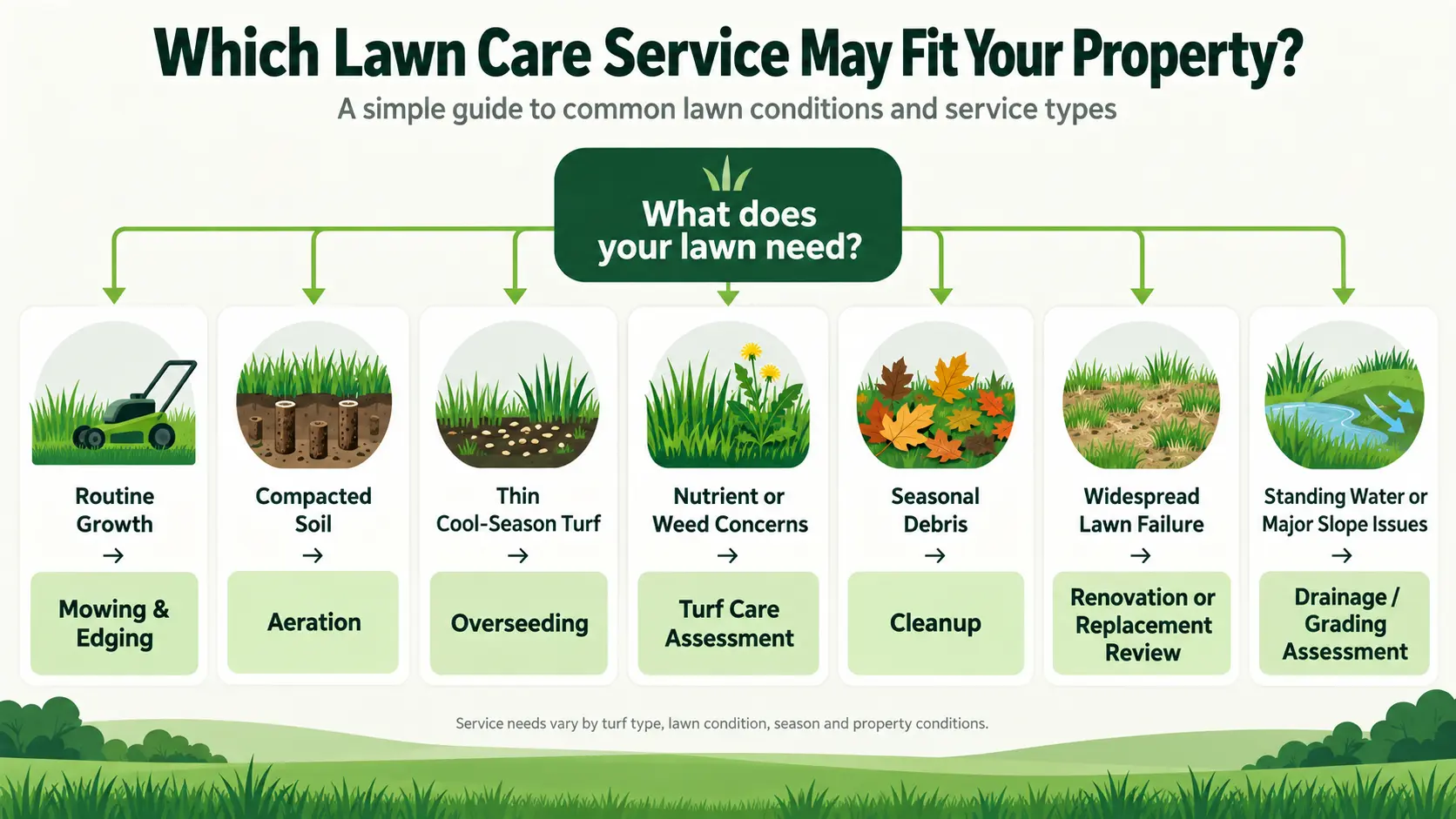
Lawn care service guide comparing mowing, aeration, overseeding, turf care and lawn recovery
Service needs vary by turf type, lawn condition, season and property conditions.

Not Sure What the Lawn Needs?

Send lawn photos, the ZIP code, grass type if known, current maintenance schedule and the main problem you are trying to solve.

Request Lawn Care Help
Service Scope

Routine Lawn Maintenance vs Turf Care

These services can overlap, but they are not the same.

Routine Lawn Maintenance

Routine maintenance focuses on keeping the lawn and surrounding turf edges managed on an ongoing basis.

Depending on the provider and agreed scope, this can include mowing, edging, trimming, blowing hard surfaces and basic cleanup.

Frequency should respond to actual grass growth rather than an arbitrary calendar alone.

Turf Care

Turf care focuses more on the condition of the grass and soil.

Services may include fertilization, weed management, aeration, overseeding, soil testing, lawn recovery and turf-problem evaluation.

Not every mowing provider offers turf treatments, and a turf-treatment provider may not provide routine mowing.

Routine Maintenance

Lawn Mowing and Edging

Mowing should follow turf growth and grass type rather than a universal “once a week” rule.

NC State Extension recommends avoiding removal of more than roughly one-third of the grass blade in one mowing. Different turf species also perform best at different mowing heights. Tall fescue, for example, is normally maintained higher than bermudagrass.

Grass TypeTemperatureRainfallIrrigationSeasonGrowth Rate

What Should a Mowing Visit Include?

A proposal should make clear whether the visit includes mowing, edging, trimming, clipping management, blowing hard surfaces and cleanup.

Also confirm how gates, slopes, narrow access, wet areas, obstacles and unusually overgrown turf are handled.

Read: How Often Should You Mow Your Lawn? →

NC State turf-maintenance guidance →

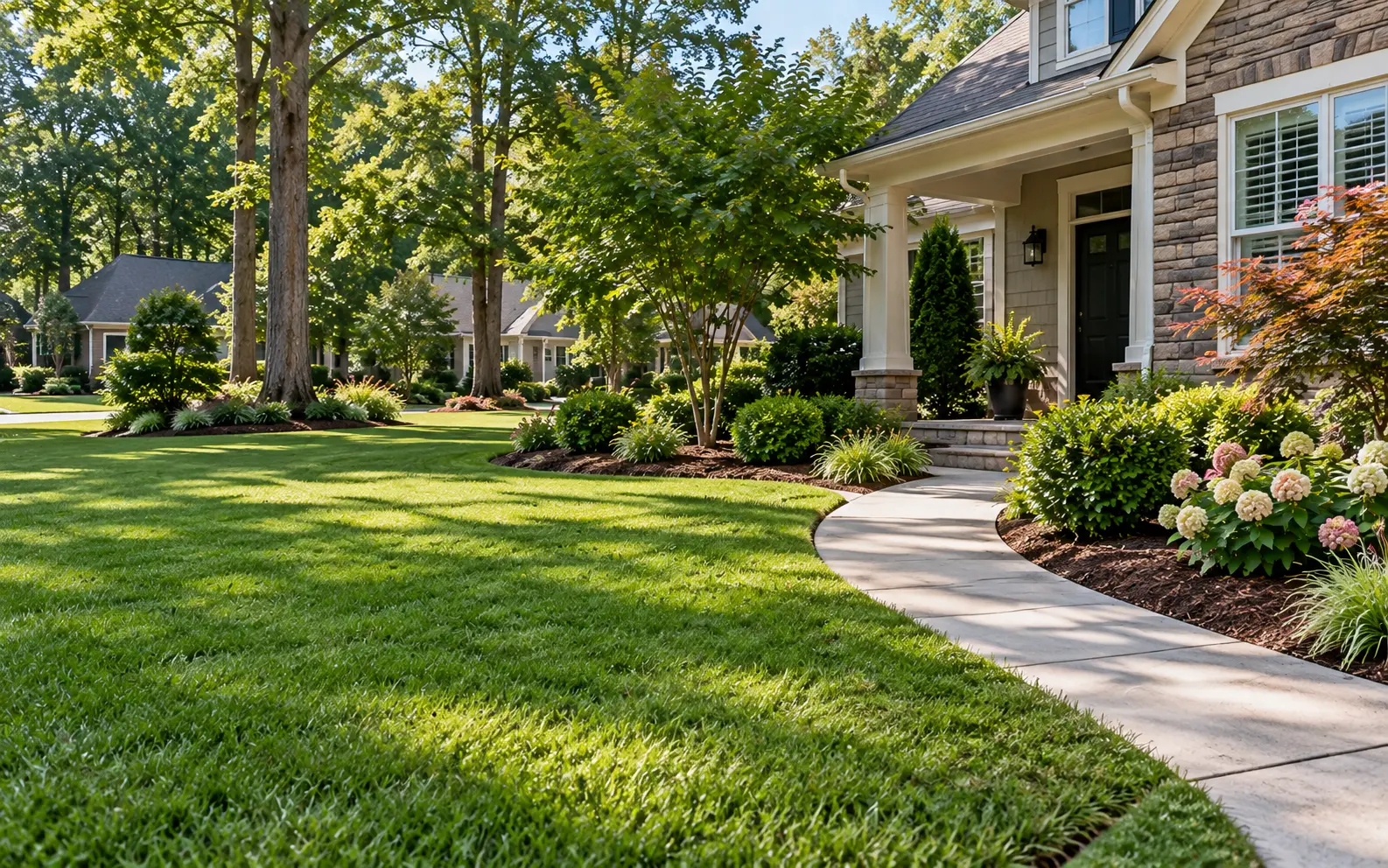
Freshly mowed and edged residential lawn beside a walkway in Charlotte NC
Illustrative image showing routine mowing and edging results.
Detail Work

Lawn Edging and Detail Work

Edging can help define boundaries between turf and driveways, walkways, patios or other hard surfaces. Trimming may also be needed where a mower cannot safely or cleanly reach.

Before hiring, clarify whether edging is included every visit, periodically or as a separate service. Two estimates described as “mowing” can include very different levels of work.

Turf Health

Fertilization and Turf Nutrition

Fertilization should not follow the same schedule for every Charlotte lawn.

Identify the Turf

Cool-season grass such as tall fescue follows a different growth cycle from warm-season grasses such as bermudagrass.

Review Lawn Condition

Color problems, weak growth and thin turf can have causes other than low fertility.

Consider Soil Information

Soil testing can be useful when repeated treatments or long-term turf problems are involved.

Choose Timing Carefully

Product and timing decisions should follow the turf type, season and actual lawn needs.

?

If a provider recommends fertilization, ask what turf type the recommendation is based on, what problem the treatment is intended to address, and whether soil testing would improve the recommendation.

Read: When to Fertilize Your Lawn →

Treatments & Licensing

Weed Control, Insects and Lawn Treatments

Weed pressure or brown patches do not automatically mean the lawn needs the same chemical treatment.

Identify the Problem First

Discoloration, thinning or dead patches can be associated with weeds, disease, insects, drought stress, excessive moisture, soil problems, mowing damage or shade.

Diagnosis and treatment may require a different service from routine mowing.

Confirm Applicable Credentials

North Carolina regulates commercial pesticide applications made for compensation on another person’s property, including applicable Ornamental & Turf work.

Confirm that any provider applying regulated herbicides, insecticides, fungicides or other pesticides has the applicable North Carolina credentials where required.

North Carolina pesticide licensing information →

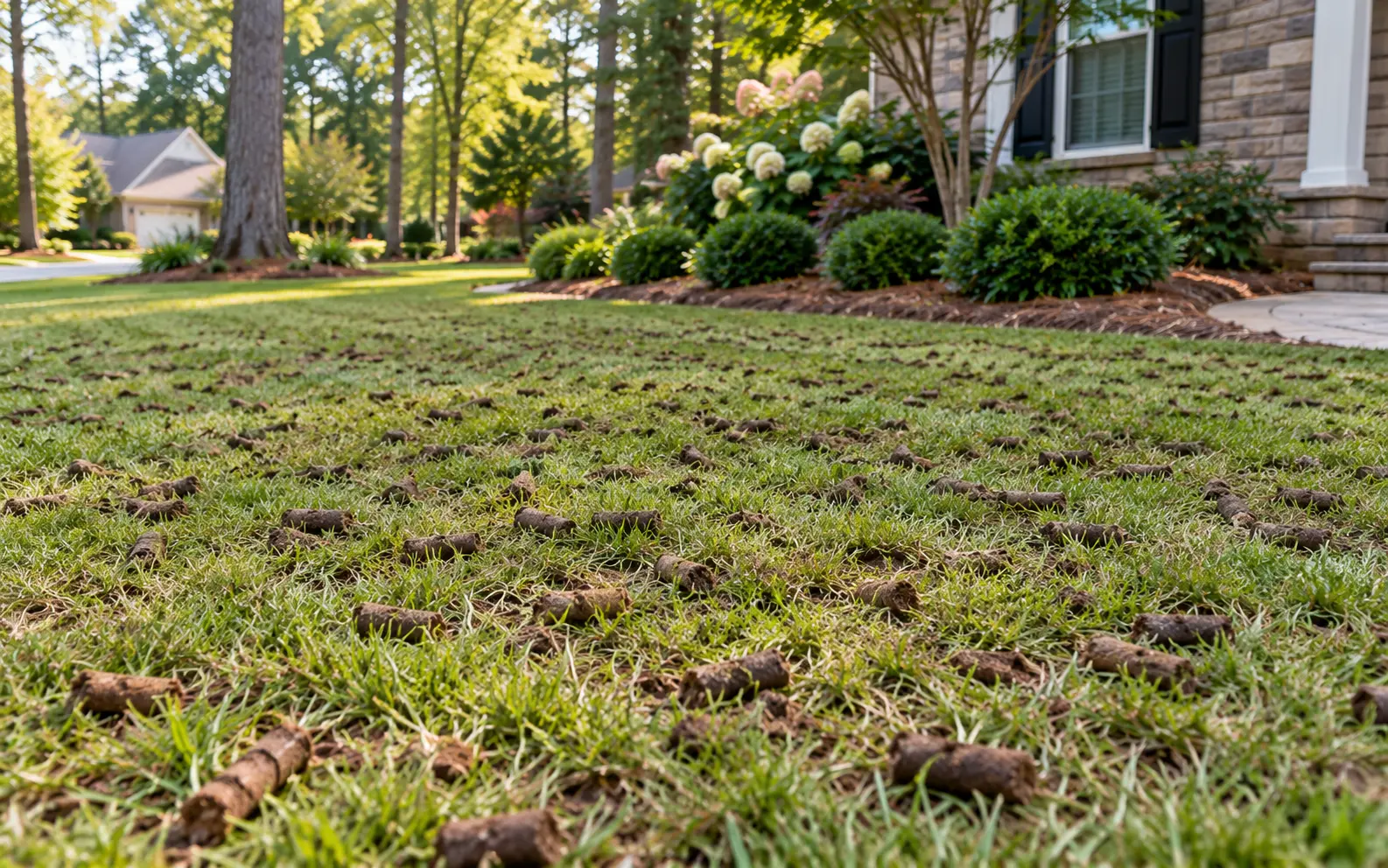
Core aeration and overseeding preparation on a residential Charlotte lawn
Illustrative image of lawn aeration and renovation preparation.
Compaction & Renovation

Core Aeration in Charlotte

Core aeration can help where turf is growing in compacted soil or areas affected by repeated traffic.

Timing matters. Tall fescue generally fits a fall aeration schedule, while warm-season grasses such as bermudagrass are typically aerated during active growth.

When Is the Best Time to Aerate a Lawn in Charlotte?

It depends on the turf type.

Soil condition, drought, heat and lawn condition should also be considered before scheduling the work.

NC State tall-fescue maintenance guidance →

Thin Turf

Overseeding and Thin Lawn Recovery

Overseeding can help improve thin cool-season turf when the existing lawn is suitable for renovation. For Piedmont tall-fescue lawns, early fall is commonly the main renovation and overseeding period.

Seed-to-Soil Contact

Seed needs good contact with prepared soil to establish effectively.

Temperature

Seasonal conditions can affect germination and early growth.

Water Availability

New seed needs reliable establishment moisture, subject to current restrictions.

Existing Competition

Existing turf density and weeds can affect renovation results.

Current Conditions

Check Current Charlotte Water Restrictions Before Seeding or Lawn Recovery

Charlotte Water can change outdoor-watering restrictions as drought conditions change. Before scheduling aeration, overseeding, reseeding or other work that depends on establishment watering, check the current Charlotte Water drought guidance.

Make sure the watering needed for the project is both allowed and practical before work begins.

i

New seed can require more consistent moisture than an established lawn. Avoid relying on an old seasonal watering recommendation without checking current conditions.

Check current Charlotte Water drought guidance →

Turf Identification

Why Turf Type Matters Before Choosing a Lawn Care Schedule

Charlotte lawns do not all contain the same grass. Cool-season and warm-season turf respond differently to heat, mowing, fertilization, aeration and renovation.

Tall Fescue

Tall fescue is a cool-season turf. It performs much of its active growth during cooler periods and can experience summer stress. Fall is often an important period for renovation and overseeding where appropriate.

Bermudagrass

Bermudagrass is a warm-season turf. It becomes actively growing during warmer weather and can enter dormancy during colder periods. Its mowing height, fertilization schedule and aeration timing differ from tall fescue.

NC State bermudagrass maintenance guidance →

Zoysiagrass or Mixed Turf

Charlotte-area lawns may also contain zoysiagrass or mixed turf. Before accepting a seasonal program, ask whether the grass type has been identified.

Why Identification Matters

A schedule that works for one lawn may be poorly timed for another. Turf identification should come before detailed seasonal treatment recommendations.

Charlotte Conditions

Charlotte Soil, Clay and Lawn Compaction

Many Piedmont properties contain clay-rich soil. Clay is not automatically a problem, but compaction and slow water movement can limit turf rooting and lawn performance.

Heavy foot traffic, repeated equipment use, construction activity and naturally dense soil can increase compaction.

Hard SoilShallow RootingThin TurfTraffic WearSurface Water

Core aeration may help some compacted lawns. But if the lawn stays wet because runoff is entering the area or the property has a larger grading problem, aeration alone will not solve the cause.

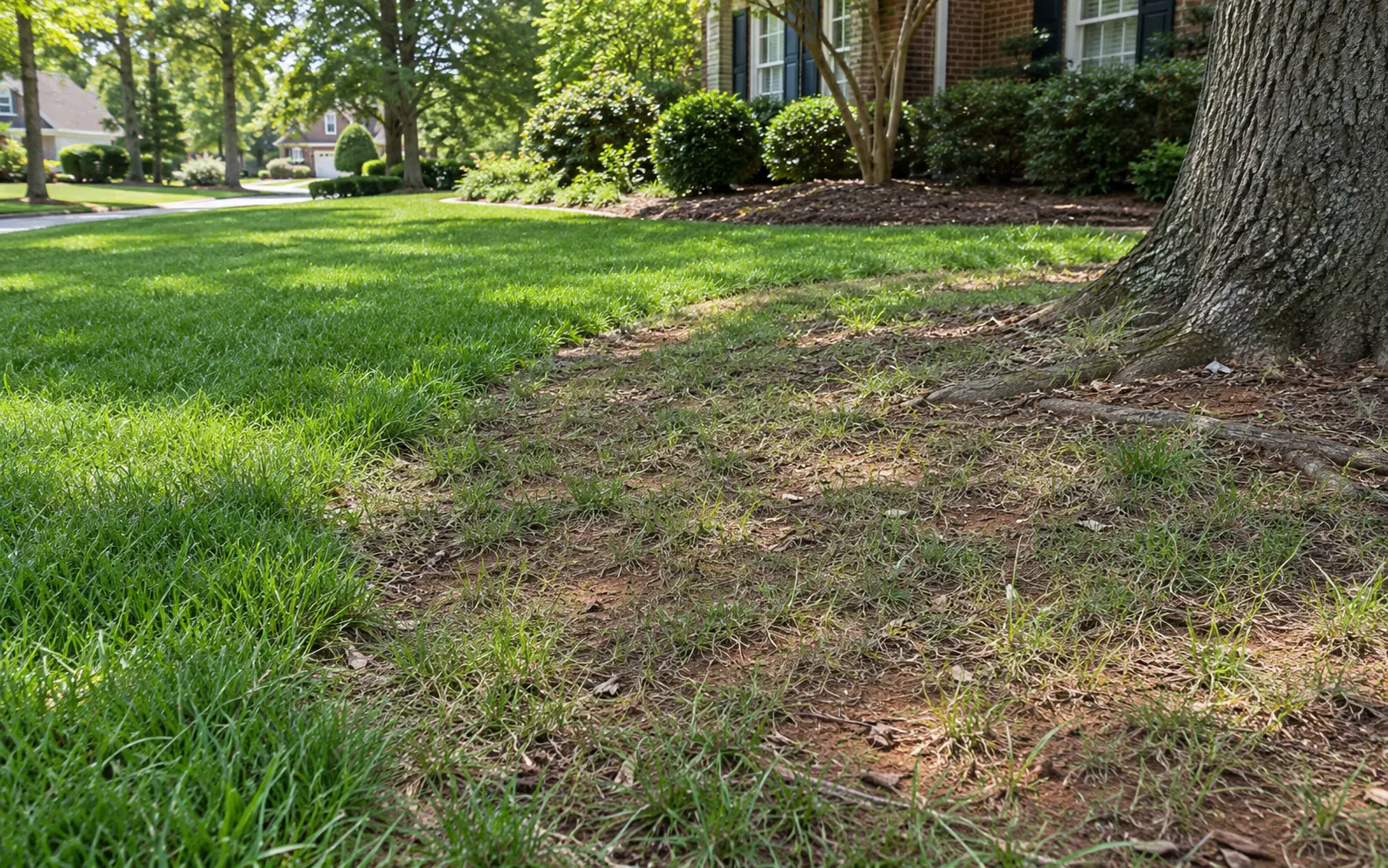
Thin and compacted lawn area being evaluated in a Charlotte residential yard
Illustrative image of thin turf and possible compaction conditions.
Problem Diagnosis

What May Be Causing a Thin or Unhealthy Lawn?

A thin, discolored or patchy lawn does not always need more fertilizer.

Thin Turf Under Trees

Shade, root competition and reduced air movement may limit turf growth. Repeatedly adding fertilizer may not solve the problem.

Constantly Wet Turf

Standing water may point to drainage or grading issues rather than a routine turf-care problem.

Thin High-Traffic Areas

Compaction may be part of the problem, especially where foot or equipment traffic is concentrated.

Dead or Discolored Patches

Disease, insects, irrigation problems, heat stress or other causes may need to be considered before choosing a treatment.

!

Possible causes can include incorrect mowing, compacted soil, insufficient sunlight, drought stress, excess moisture, poor drainage, unsuitable turf, nutrient imbalance, weed pressure, insect damage, disease symptoms and heavy traffic.

Before paying for repeated treatments, identify what is most likely limiting the turf.

Leveling & Drainage

Lawn Leveling: Turf Repair or Grading Problem?

Small uneven areas may sometimes be addressed through localized turf repair or topdressing. That is different from changing the overall slope of a property.

If the yard has large low spots, standing water, runoff toward structures, severe slope problems or widespread settling, the project may require drainage or grading work rather than routine lawn maintenance.

Minor lawn leveling and major site grading should not be treated as the same service.

Soil Information

Soil Testing Before Major Turf Treatments

When a lawn has persistent soil or nutrient problems, soil testing can provide better information than guessing.

A soil test can help identify soil pH, nutrient conditions and potential amendment needs.

That does not mean every mowing customer needs a soil test. But when repeated fertilizer applications, major renovation or long-term turf problems are involved, ask whether soil information would improve the recommendation.

Seasonal Work

Seasonal Lawn Cleanup

Seasonal maintenance can include leaf removal and removal of accumulated debris from lawn areas. Heavy leaf cover can reduce light and interfere with turf if it remains on the lawn for long periods.

The scope should still be clearly defined. “Yard cleanup” may or may not include leaf removal, debris collection, hauling, shrub pruning, branches, bed cleanup or landscape installation.

Confirm exactly what material will be removed and whether disposal is included.

Service Frequency

Recurring Lawn Maintenance or One-Time Lawn Work?

Lawn NeedLikely Service Type
Regular mowing and edgingRecurring
Routine property appearanceRecurring
Fertilization programSeasonal or recurring
Weed managementSeasonal or recurring
Core aerationSeasonal
Aeration and overseedingSeasonal
Fall leaf cleanupOne-time or seasonal
Thin or damaged lawnProject-based evaluation
Lawn recoveryProject-based or seasonal
New sod or full lawn replacementLandscape Installation
Major drainage or grade correctionSeparate drainage/grading scope
Repair or Replace

Existing Lawn Care or Full Lawn Replacement?

Existing Lawn Care May Be Worth Evaluating When

The lawn still contains useful turf, problems are localized, compaction may be addressed, weeds appear manageable or thin areas may respond to renovation.

More Extensive Renovation May Be Needed When

Large areas are bare, the turf type does not suit the site, severe soil problems exist, construction has damaged the lawn or repeated repairs have failed.

For major lawn replacement, use Landscape Installation. For choosing between new sod and seed, use Sod vs Seeding in Charlotte.

Cost Factors

Lawn Care Cost in Charlotte

There is no single lawn-care price that applies to every Charlotte property. Cost depends on the property and the service scope.

Cost FactorWhy It Matters
Lawn areaLarger turf areas require more work
Mowing frequencyMore visits change recurring cost
Turf growthOvergrown lawns may require more time
Edging and trimmingDetail work increases scope
SlopeSteep areas can affect equipment and access
Gates and accessRestricted access can affect equipment choice
Turf typeMaintenance and treatment needs differ
Aeration areaLarger areas require more aeration work
OverseedingSeed quantity and preparation affect scope
FertilizationProduct and application plan can vary
Weed treatmentsTreatment type and licensing can affect scope
Leaf/debris volumeSeasonal cleanup can vary greatly
Existing conditionRecovery work may require additional visits
DisposalHauling can be separate
One-time vs recurringPricing structure can differ
$

Instead of asking only “How much does lawn care cost?”, ask: What exactly is included in each visit or seasonal treatment?

Estimate Comparison

What Should a Lawn Care Estimate Include?

A useful lawn-care proposal should make the scope easy to understand.

Mowing Frequency

Weekly, biweekly, growth-based, seasonal or another schedule. Ask what happens during slow growth, drought or weather delays.

Lawn Areas

Confirm whether front, side and backyard turf areas are included.

Edging & Trimming

Identify which hard surfaces, borders and difficult areas are included.

Cleanup

Clarify clipping management, blowing, debris collection and disposal.

Aeration

Confirm which turf areas will be aerated and whether timing matches the grass type.

Overseeding

Confirm seed type, preparation, watering responsibilities and establishment expectations.

Fertilization & Treatments

Ask what is being applied, why, when and who is responsible for regulated pesticide applications.

Recurring Terms & Pricing

Check skipped visits, weather delays, cancellation terms, renewal terms and whether pricing is per visit, monthly, seasonal or project-based.

Compare Lawn Care Proposals by Scope, Not Price Alone

Two quotes with similar prices can include very different mowing, edging, cleanup, treatment and seasonal-work scopes.

Request Lawn Care Help
Service Boundaries

What Lawn Care May Not Include

Depending on the provider and project, separate services may be required for irrigation repair, major drainage correction, grading, new sod installation, full lawn replacement, tree removal, extensive shrub pruning, hardscaping, landscape-bed installation or major erosion repair.

Do not assume these are part of a lawn-maintenance quote. Define where lawn care ends and another service begins.

Prepare Your Request

What Should You Send With a Lawn Care Request?

ZIP CodeLawn PhotosApprox. Lawn SizeGrass Type if KnownCurrent Mowing FrequencyMain Lawn ProblemAccess / GatesSlopesIrrigation if PresentAeration / OverseedingCleanup NeedsBudget if Known

Photos should show the wider lawn rather than only close-ups of individual grass blades. If the problem is localized, include one close photo and one wider property photo. If standing water is involved, show nearby slopes, hard surfaces, downspouts and surrounding lawn.

What to Expect

How Does the Lawn Care Request Process Work?

01

Describe the Property

Provide the ZIP code and whether the project involves the front lawn, backyard or entire property.

02

Explain What You Need

State whether you want mowing, recurring maintenance, aeration, overseeding, fertilization, weed management, seasonal cleanup or help with an existing lawn problem.

03

Add Photos

Photos can help show lawn size, condition, slope, access and problem areas.

04

Identify the Turf if Known

If you know whether the lawn contains tall fescue, bermudagrass, zoysiagrass or another turf type, include that information.

05

Provider Availability May Be Checked

The request may be shared where an independent provider is available for the service type and location.

06

Compare the Proposed Scope

Confirm visit frequency, mowing and edging details, treatments, seasonal work, applicable credentials, cleanup, pricing and cancellation terms.

Submit Your Lawn Care Request

Include enough detail to make the first project discussion useful.

Submit Project Details
Avoidable Problems

Common Lawn Care Mistakes to Avoid

!

One Schedule for Every Grass

Tall fescue and warm-season turf do not follow identical maintenance calendars.

!

Mowing Too Much at Once

Removing too much leaf tissue in one mowing can stress turf.

!

Aerating at the Wrong Time

Aeration timing should match the turf type and growing cycle.

!

Overseeding Without Water Planning

New seed needs practical establishment watering within current restrictions.

!

Assuming Every Brown Patch Needs Fertilizer

Shade, disease, insects, moisture, compaction or mowing problems may be involved.

!

Ignoring Drainage

Standing water may require drainage or grading work rather than routine turf care.

!

Skipping Credential Checks

Regulated pesticide applications should be handled by appropriately credentialed providers where required.

!

Comparing Only Monthly Price

Visit frequency, edging, cleanup and treatment scope can differ significantly.

Seasonal Context

Lawn Care Through the Charlotte Growing Cycle

Charlotte lawns can experience rapid spring growth, summer heat, drought stress, fall renovation periods and winter dormancy depending on turf type. That does not mean every lawn should follow the same four-season checklist.

✓

A better approach is: grass type + current growth + soil condition + weather + water availability + lawn goals.

Tall fescue may place more emphasis on fall renovation, while bermudagrass care centers more heavily on its warm-season growth cycle.

Charlotte-Area Coverage

Lawn Care Requests Around Charlotte

The location section stays focused instead of turning the page into a long list of neighborhoods and ZIP codes.

Charlotte Neighborhoods

Lawn care requests may come from areas such as Dilworth, Myers Park, Plaza Midwood, SouthPark and Steele Creek.

Nearby Charlotte Communities

Depending on service type and independent provider availability, requests may also be considered from Matthews, Pineville, Huntersville and Concord.

Include the property ZIP code when requesting help so availability can be checked more accurately.

Note: Location names describe the geographic focus of this website. They do not represent offices, employees, lawn crews or completed projects in those areas.

Charlotte Area

Neighborhoods
DilworthMyers ParkPlaza MidwoodSouthParkSteele Creek
Nearby Communities
MatthewsPinevilleHuntersvilleConcord
Request Lawn Care Help
Related Resources

Continue Planning Your Lawn or Landscape Project

When to Fertilize Your Lawn

Use this guide for detailed fertilizer-timing questions rather than turning the service page into a full seasonal calendar.

Read the fertilization guide →

Sod vs Seeding in Charlotte

Use this article if the lawn may need new turf establishment rather than maintenance alone.

Compare sod and seeding →

Landscape Planning and Design

Use this page when lawn size, planting beds or other property features are being reconsidered as part of a wider plan.

Explore landscape planning →
Frequently Asked Questions

Frequently Asked Questions About Lawn Care in Charlotte

What does lawn care include?

Lawn care can include mowing, edging, trimming, cleanup, aeration, overseeding, fertilization, weed management and seasonal maintenance depending on the provider and property.

What is the difference between lawn care and lawn maintenance?

Lawn maintenance usually refers to recurring work such as mowing, edging, trimming and cleanup. Lawn care is broader and can also include turf-focused services such as fertilization, weed management, aeration, overseeding and lawn-recovery work.

How often should a Charlotte lawn be mowed?

Frequency should depend on turf type and growth rate rather than a fixed weekly schedule. A common turf-management guideline is to avoid removing more than roughly one-third of the grass blade at a single mowing.

How often should lawn care service be scheduled?

Lawn-care frequency depends on the service. Mowing may be recurring during active growth, while aeration, overseeding, fertilization and seasonal cleanup follow different schedules. Turf type, weather, growth rate and the agreed service scope should determine timing.

What is the best mowing height?

The correct mowing height depends on grass type. Tall fescue is generally maintained higher than bermudagrass, so turf identification matters.

When should tall fescue be aerated in Charlotte?

Fall is generally the preferred period for tall-fescue aeration in the Piedmont when lawn conditions are suitable.

When should bermudagrass be aerated?

Bermudagrass is generally aerated while actively growing during the warm season rather than following the fall schedule commonly used for tall fescue.

Is aeration always necessary?

No. Aeration is most useful where soil compaction or traffic is limiting turf performance.

When should tall fescue be overseeded in Charlotte?

Early fall is generally the main renovation and overseeding period for Piedmont tall-fescue lawns, assuming weather and watering conditions support establishment.

Should I check watering restrictions before overseeding?

Yes. Water restrictions can change. Check current Charlotte Water guidance before scheduling seeding or lawn renovation that depends on establishment watering.

Does every lawn use the same fertilizer schedule?

No. Fertilization timing differs by turf type, lawn condition and soil needs.

Do lawn-care providers need a pesticide license in North Carolina?

Commercial pesticide applications performed for compensation can require North Carolina licensing. Confirm applicable credentials before hiring a provider for regulated herbicide, insecticide, fungicide or other pesticide treatments.

Can lawn disease or insects cause brown patches?

Yes. Brown or thinning turf can be associated with disease, insects, drought, excessive moisture, mowing problems or other causes. The underlying issue should be evaluated before choosing a treatment.

Can lawn care fix standing water?

Not always. Standing water caused by runoff, drainage or grading problems may require a separate drainage or grading scope.

Is lawn leveling part of lawn care?

Minor surface correction may fall within lawn repair. Larger slope or drainage changes should be treated as grading work.

Should I repair my lawn or replace it?

Localized thinning may respond to turf care. Widespread turf failure, severe soil problems or unsuitable turf may require renovation or replacement.

How much does lawn care cost in Charlotte?

Cost depends on lawn size, visit frequency, access, slope, edging, cleanup, treatments, aeration, overseeding, lawn condition and whether service is recurring or project-based.

Is weekly mowing always necessary?

No. Grass growth changes with turf type, season, temperature, rainfall and irrigation.

Does lawn care include leaf removal?

Sometimes, but not automatically. Seasonal cleanup should be clearly listed in the service scope.

Can a lawn stay green all year in Charlotte?

Not necessarily. Turf appearance changes with grass type and season. Warm-season grasses can naturally enter dormancy and lose green color during colder weather.

What should I verify before hiring a lawn-care provider?

Confirm the service scope, visit frequency, pricing, cleanup responsibilities, cancellation terms and any applicable pesticide credentials.

Start Your Request

Ready to Request Lawn Care in Charlotte?

Start by identifying what the lawn actually needs: routine mowing, better edging, seasonal cleanup, aeration, overseeding, turf treatment or lawn recovery.

If there is a larger issue such as compaction, drainage, shade, widespread turf failure or complete lawn replacement, define that before comparing quotes.

Then compare providers using the same scope: turf areas, visit frequency, mowing and edging details, cleanup, treatments, aeration, overseeding, current watering conditions, applicable pesticide credentials, pricing structure and cancellation terms.

Landscapers in Charlotte NC is an independent landscaping information and service-request website. Lawn care and maintenance work is performed by independent providers where available. Provider availability, qualifications, pesticide licensing where required, insurance, pricing, products, warranties and service terms should be confirmed directly before hiring.

Better outdoor spaces start with the right plan—from landscape design and installation to hardscaping, lawn care, drainage, grading, and outdoor lighting.

© 2026 Landscapers in Charlotte, NC. All Rights Reserved.