When it’s time to build a patio, most homeowners land on the same fork in the road: patio pavers vs concrete. Both can turn a plain backyard into a real outdoor living space, but they get there in very different ways. The right pick comes down to your budget, how much upkeep you want to deal with, your local climate, and the look you’re going for.
If you’re planning a new outdoor patio or replacing a tired old slab, this guide will walk you through everything that matters. We’ll cover cost, durability, maintenance, and how each material holds up depending on where you live. By the end, you’ll have a clear answer for your own backyard, whether that’s a full hardscaping project or a simple landscaping refresh.
Let’s start with the basics before we get into the comparison.
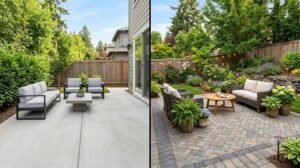
A concrete patio is poured as one big slab. A crew builds a form, mixes and pours the concrete, then smooths and finishes it while it’s still wet. Once it cures, you’re left with a solid, seamless surface. Concrete can also be stamped, stained, or textured to look like stone or brick, which gives it more personality than the plain grey slabs people picture.
A paver patio, on the other hand, is built from individual pieces laid over a prepared base. Instead of one solid pour, you get dozens or hundreds of small units fitted together like a puzzle. Popular materials include concrete pavers, brick, and natural stone pavers like flagstone, travertine, granite, and slate. Each piece can shift slightly on its own, which actually helps the patio handle ground movement better than a solid slab.
So when people search “concrete vs patio pavers” or “pavers vs concrete patio,” they’re really asking which patio flooring option fits their home best. As a quick patio material comparison: concrete tends to work well for clean, modern, budget-friendly spaces, while pavers shine when you want more texture, color options, and a custom, upscale look.
This is where pavers usually pull ahead. Because they come in so many shapes, sizes, and colors, interlocking pavers let you create patterns you just can’t get from a single concrete pour. You can mix brick with natural stone, create a herringbone pattern, or add a contrasting border. The design options are close to endless.
That said, concrete has come a long way too. Decorative concrete techniques like a stamped concrete patio can mimic the look of brick, slate, or cobblestone at a lower price. You can also add color through staining, or create texture with a broom finish or exposed aggregate look. It won’t have the same dimensional feel as real stone, but it gets you most of the way there.
If appearance and pattern matter more than anything else, pavers usually win. If you want a clean, simple style without a lot of fuss, plain or stamped concrete can still look great.
Both materials are tough, but they fail in different ways. So which patio lasts longer? It depends on your climate and how the patio was installed.
Concrete is strong and rigid, which is great until the ground beneath it shifts. Because it’s one solid piece, any settling or frost heave can cause visible cracking. Once concrete cracks, that crack is there for good unless you patch or replace the section. Concrete also handles heat and sun exposure well, but harsh freeze-thaw cycles are its biggest enemy. Water gets into tiny pores, freezes, expands, and slowly breaks the surface down over the years.
Pavers handle ground movement better because each unit can flex independently. If the soil shifts a little from frost or moisture, individual pavers may tilt slightly, but they won’t crack the way a solid slab does. That flexibility gives pavers an edge in areas with heavy rainfall, snow, or big temperature swings. High-quality concrete pavers or natural stone can easily last 25 to 50 years with good care, often outlasting a standard concrete slab.
In terms of strength and stability, concrete wins on rigidity, but pavers win on long-term durability in tough weather. If you’re weighing pavers vs concrete durability for a place with real winters, pavers usually have the advantage.
Nobody wants a patio that becomes a weekend chore. So let’s talk about pavers vs concrete maintenance.
Concrete is fairly low-maintenance day to day. You sweep it, hose it off, and that’s about it. But it does need occasional sealing to protect against staining and moisture damage, and if it cracks, repair options are limited. You can patch a crack, but it’ll likely still show. Full replacement is often the only way to make a cracked patio look new again.
Pavers need a bit more routine care. Joints between pavers can grow weeds or moss over time, so occasional cleaning and resanding helps keep things tidy. Some pavers benefit from resealing every few years to protect their color and finish. The upside is repair: if one paver cracks or stains badly, you just pop it out and swap in a new one. No patch marks, no full replacement, no headache.
So which patio requires less maintenance? Concrete needs less routine attention. Which patio is easier to repair? Pavers, hands down.
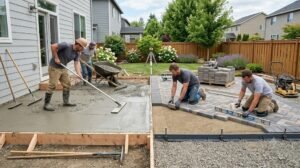
Cost is usually the first question homeowners ask, and it’s a fair one. When comparing patio pavers vs concrete cost, concrete is typically the more affordable option upfront. A basic poured concrete patio costs less per square foot than most paver installations, mainly because it requires less labor. A contractor sets up a form, pours the concrete, and finishes the surface in a fairly quick process.
Paver patio cost vs concrete tends to run higher because of the extra labor involved. Installation includes excavation, laying and compacting a solid subbase, adding a layer of base material, then placing each individual paver by hand. It’s a more detailed process, and that shows up in the price. Decorative options like stamped concrete or natural stone pavers will also push costs higher than basic materials on either side.
If you’re looking for the cheapest patio option, plain poured concrete is usually your answer. If you want a strong middle ground, concrete pavers offer a nice balance between affordable patio materials and long-term performance. Whichever direction you go, hiring an experienced builder matters. Skipping proper excavation, compaction, or a solid foundation is the number one reason patios fail early, regardless of material.
Upfront cost only tells part of the story. When you’re thinking about pavers vs concrete value, it helps to look at the full lifespan of the investment.
Concrete costs less to install but can be pricier to fix later, since cracks often mean patching a visible section or replacing the whole slab. Pavers cost more initially, but their repair-friendly design usually saves money down the road. Swapping a damaged paver costs a fraction of a full patio replacement.
As for which patio adds more home value, pavers often have a slight edge in buyers’ eyes because of their custom look and durability. That said, a well-installed concrete patio, especially a stamped or stained design, can still boost property value nicely for a lower budget. Either way, get a clear estimate and ask about warranty coverage before signing off on any patio project. A little research now protects your investment later.
Your local weather plays a bigger role in this decision than most people realize.
In hot climates, both materials handle sun exposure reasonably well, but light-colored pavers or concrete stay cooler underfoot than darker finishes. UV exposure can fade stained concrete over time, so a good sealant helps protect the color.
In cold climates, freeze-thaw resistance becomes the deciding factor. Water that seeps into concrete and freezes will expand and crack the surface over repeated winters. Pavers handle this better since gaps between units give water somewhere to go, and the joints flex instead of splitting apart.
In rainy or wet areas, drainage and permeability matter a lot. Traditional concrete is solid, so water runs off the surface, which can lead to pooling or runoff issues if the patio isn’t sloped correctly. Permeable pavers let water filter down through the joints and into the ground below, cutting down on runoff and erosion. That’s a big plus if your yard already struggles with drainage.
So if you’re asking about the best patio material for hot climate, cold weather, or rainy areas, permeable or standard pavers generally offer more flexibility across the board, while concrete still performs fine in moderate, dry climates.
For a paver patio vs concrete patio for backyard use, pavers often make more sense if you’re building an entertainment space with curves, fire pits, or multiple zones. Their flexibility makes it easier to work around trees, garden beds, or pool areas. If your backyard patio installation is more straightforward and budget-focused, concrete gets the job done without breaking the bank. Either way, a good backyard patio idea starts with knowing how you’ll actually use the space.
When it comes to concrete vs pavers for front yard patio spaces, curb appeal usually takes priority. Pavers tend to look more polished and can match walkways, driveways, or landscape design elements around your entryway. A well-finished concrete walkway can still look sharp, especially with a stamped or colored finish, but pavers generally have the visual edge for front-facing outdoor living space.
Modern homes tend to favor clean lines and minimal detail, which plays right into concrete’s strengths. Concrete vs pavers for modern homes often comes down to simplicity. A best concrete patio design for a modern build usually means large format slabs, a smooth or lightly textured finish, and a neutral color palette. Pavers can also work in modern spaces if you choose large-format, low-texture units in a simple grid pattern.
It’s worth knowing how these two stack up against other popular patio choices too.
Each of these materials has its place. But for most backyard and front yard projects, patio pavers and concrete remain the two most practical, cost-effective choices.
No matter which material you choose, good installation makes or breaks the final result. Here’s what should happen behind the scenes:
Skimping on any of these steps is where most patio failures start. Whether it’s using the wrong mix of cement and sand, or pouring a concrete slab without enough compaction underneath, shortcuts always show up later as cracks, sinking, or drainage problems.
Professional Affordable Hardscaping Services ensure proper installation, drainage, and long-lasting patio performance, which is honestly the best money you can spend on a project like this. A patio is only as good as the ground it’s built on.
If you’re comparing patio pavers vs concrete in Charlotte, NC, local climate is worth factoring in. Charlotte sees hot, humid summers and the occasional freeze in winter, so both materials can work well when installed correctly with good drainage and a solid base.
For a straightforward, budget-friendly option, concrete patio installation in Charlotte, NC is a solid choice, especially for smaller spaces or simpler layouts. If you want more design flexibility and long-term durability, a paver patio might be worth the extra investment.
Either way, working with experienced patio builders near you makes a real difference. Local patio contractors understand the soil, drainage patterns, and weather quirks specific to the area, which helps your patio hold up for decades instead of years. Whether you’re searching for outdoor patio contractors, patio installation services, or paver patio contractors near me, look for a team with real experience and solid reviews before signing a contract.
If you’re planning a complete backyard upgrade, explore our Landscaping Services in Charlotte, NC for expert patio and landscape solutions.

A great patio doesn’t exist in a bubble. It needs a healthy, well-planned lawn and landscape around it to really shine. Think of your patio as the hardscape anchor and your lawn, garden beds, and plantings as the softscape that ties everything together.
Before or after installing a new patio, it’s worth thinking about the rest of your yard too. Healthy grass around a new paver or concrete patio makes the whole space feel finished, not just functional. After installing your patio, choosing between Sod vs. Seeding in Charlotte, NC can help complete a beautiful, healthy landscape that matches the quality of your new outdoor space.
So, which is better, patio pavers or concrete? Honestly, there’s no single right answer. It comes down to what matters most to you. If you want the cheapest option with simple upkeep, concrete is a great starting point. If you’re after more design flexibility, easier repairs, and better long-term durability, pavers are usually worth the extra cost.
Should you choose pavers or concrete for your own backyard? Think about your budget, how much maintenance you’re willing to do, your local weather, and how long you want the patio to last. Are pavers worth it? For many homeowners, yes, especially in areas with harsh winters or heavy rain. Is concrete good for patios? Absolutely, particularly for simple designs and tighter budgets.
There’s no single best patio material for every home. There’s just the best fit for your space, your goals, and your budget. Once you’ve got a good idea of what you want, the smartest next step is talking to a professional. Reach out to a trusted local patio contractor to get expert advice, an accurate quote, and a patio that’s built to last.