Make an Appointment

Edit Template
Project Overview

From a Defined Plan to Physical Installation

For projects moving from an approved plan into physical work, landscape design and installation in Charlotte may require several elements to be completed in the correct order so finished areas are not damaged by later work.

Whether you are renovating one section of a front yard, replacing an unsuccessful lawn, refreshing planting beds, or implementing several parts of a larger landscape plan, understanding the installation process can help you define a clearer scope and compare providers more effectively.

Quick Answer

What Does Landscape Installation Include?

Landscape installation turns a defined landscaping plan or improvement scope into physical changes around the property.

Depending on the project, installation may include:

The exact scope varies by property and provider.

Before work begins, confirm what will be removed, what will remain, how the site will be prepared, which plants and materials are included, how drainage or grading concerns will be handled, and what establishment or aftercare instructions apply after installation.

You can also explore all landscaping services in Charlotte before deciding which type of project best fits your property.


  • Removing unwanted plants or materials
  • Preparing soil and planting areas
  • Correcting grades within the work area
  • Creating or renovating landscape beds
  • Installing trees and shrubs
  • Adding groundcover
  • Installing sod
  • Applying mulch or decorative stone
  • Defining bed edges
  • Coordinating landscape lighting locations
  • Restoring disturbed lawn areas
  • Completing cleanup
Installation Options

Types of Landscape Installation for Charlotte Properties

Landscape installation can range from one focused improvement to a larger residential yard renovation.

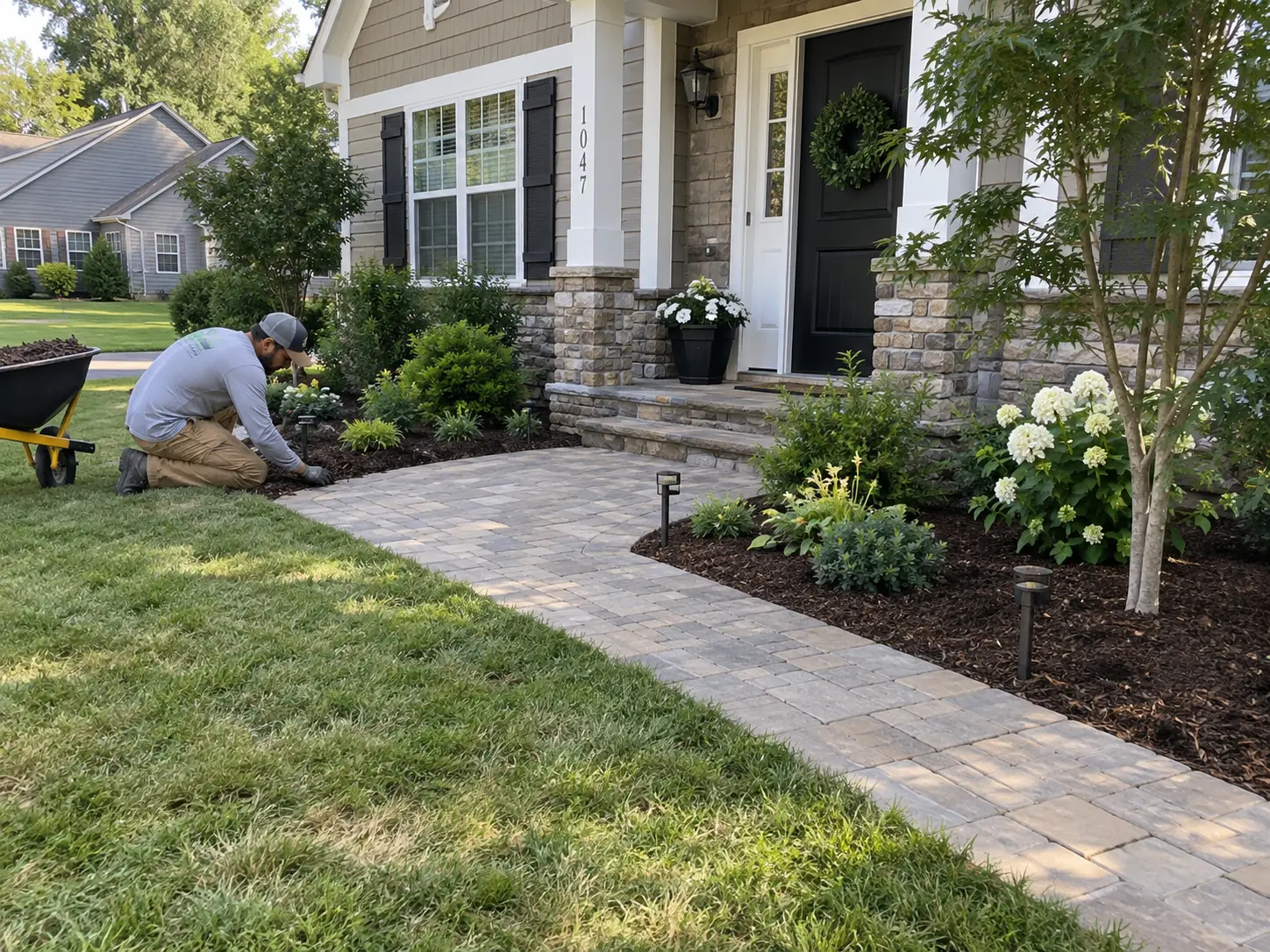
Tree and shrub installation in a residential landscape
Illustrative image.

Tree and Shrub Installation

Trees and shrubs can provide structure and long-term character to an outdoor space.

They may be used for privacy, screening, shade, foundation planting, seasonal interest, property definition, focal points, or transitions between lawn and hardscape.

Installation should consider more than how a plant looks immediately after planting.

Important factors include mature height and width, sun exposure, available root space, soil moisture, distance from structures, nearby walkways, existing trees, lawn areas, and long-term maintenance.

Plant types, quantities, and installed sizes should be identified clearly in the proposal so you understand what is actually being supplied and installed.
New and Renovated Landscape Beds

Landscape beds can organize planting areas and create clearer separation between lawn, buildings, walkways, and outdoor living spaces.

Installation may involve removing unwanted vegetation, reshaping existing beds, creating new bed lines, preparing soil, adding shrubs and perennials, installing groundcover, applying mulch or decorative stone, adding edging, and integrating existing plants or mature trees.

Bed shape is only one consideration.

Plant spacing, accessibility, mature growth, maintenance requirements, sunlight, water movement, and the relationship between beds and surrounding lawn should also influence the installation.


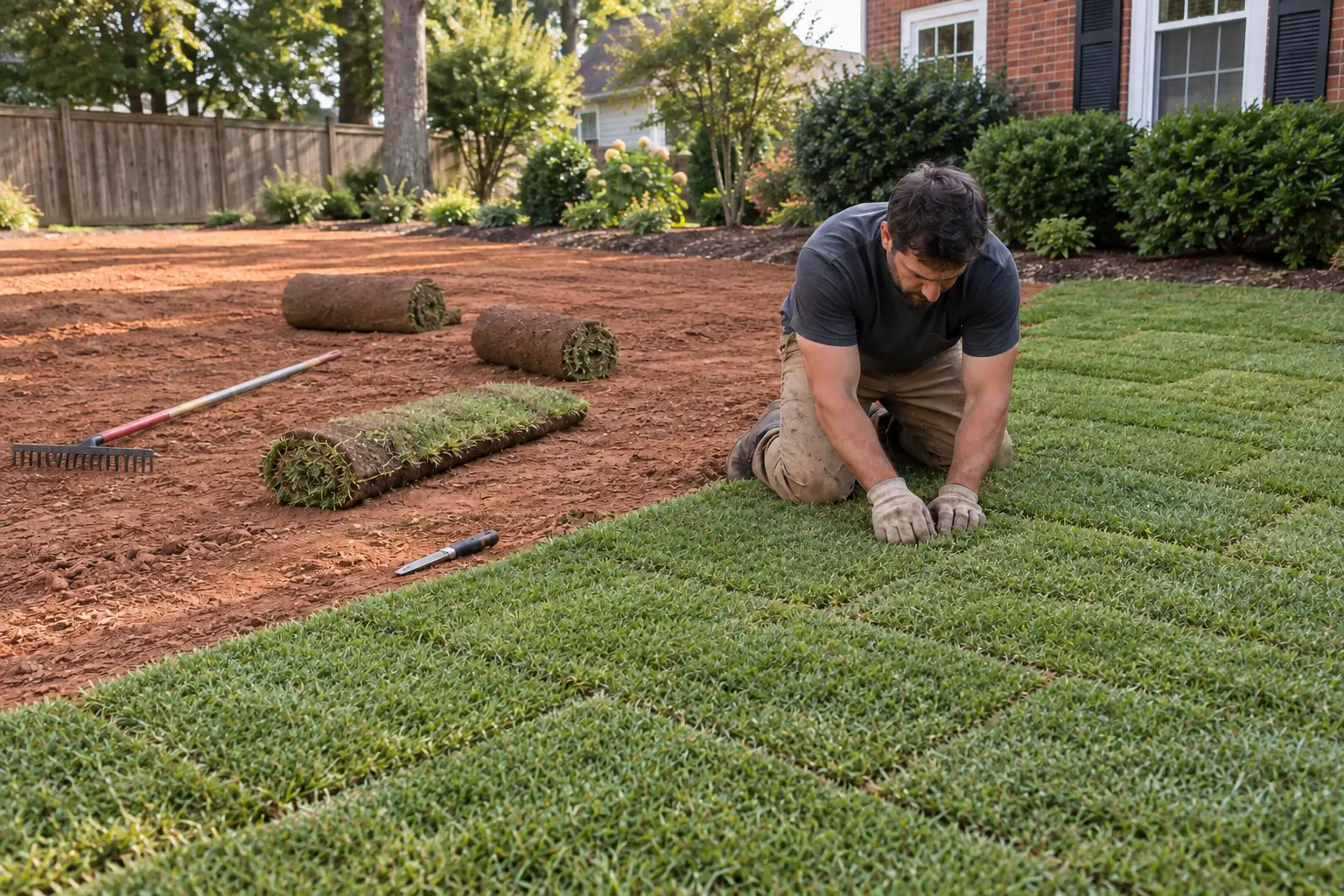
Fresh sod installation on a prepared residential lawn
Illustrative image.

Sod Installation and Lawn Replacement

Sod installation in Charlotte can provide much faster coverage than waiting for seed to establish, but preparation plays a major role in the finished result.

A sod project may involve removing failed turf, clearing debris, correcting uneven areas, preparing the soil surface, selecting an appropriate turfgrass, laying the sod, fitting seams correctly, creating good sod-to-soil contact, watering after installation, and protecting the area during establishment.

Installing sod over unresolved compaction, poor grading, or drainage problems may provide only a temporary visual improvement.

NC State Extension notes that turfgrass establishment timing varies considerably by grass type in the North Carolina Piedmont. Warm-season grasses such as bermudagrass and zoysiagrass have different establishment periods from cool-season turf such as tall fescue.

If you are deciding between establishment methods, read the Sod vs. Seeding in Charlotte NC guide.

If the property also requires ongoing turf recovery or routine maintenance, review Lawn Care and Maintenance in Charlotte.


Mulch, Decorative Stone and Groundcover Installation

Finishing materials can influence appearance, maintenance, moisture behavior, and how planting areas function over time.

Common options include hardwood mulch, pine-based materials, decorative rock, river rock, groundcover plants, and different types of edging.

Mulch and stone are not automatically interchangeable.

They differ in appearance, initial cost, maintenance, heat retention, moisture behavior, weed-management needs, and how easy it is to modify planting later.

Before choosing a material, consider existing plants, sunlight, slope, drainage, maintenance preferences, and how the area will be used.

For a deeper comparison, see Mulch vs. Rock Landscaping.


Softscape Installation

Trees, shrubs, flowers, groundcovers, sod, mulch, and similar living or soil-cover elements are commonly grouped under softscape installation.

Softscape differs from hardscape, which generally includes constructed features such as patios, walkways, retaining walls, steps, and paver areas.

A larger landscape project may include both softscape and hardscape, but each should have a clearly defined scope.


General Yard Renovation

Not every property needs to be completely redesigned.

Some yards may benefit from improving several existing areas together.

A landscape renovation can include removing overgrown plants, reworking existing beds, replacing unsuccessful plants, adding shrubs, installing sod, applying mulch or stone, improving edging, correcting selected grading problems, reorganizing lawn and planting areas, and working around useful existing trees or hardscape.

The goal can be to improve the parts of the property that are no longer working while preserving features that still provide value.

Ready to Plan?

Have a Yard Improvement Project in Mind?

Describe what you want installed, the current condition of the property, and the areas you would like to improve.

Request Landscape Installation Help


Request Installation Help
Before Installation

What Should Happen Before Landscape Installation?

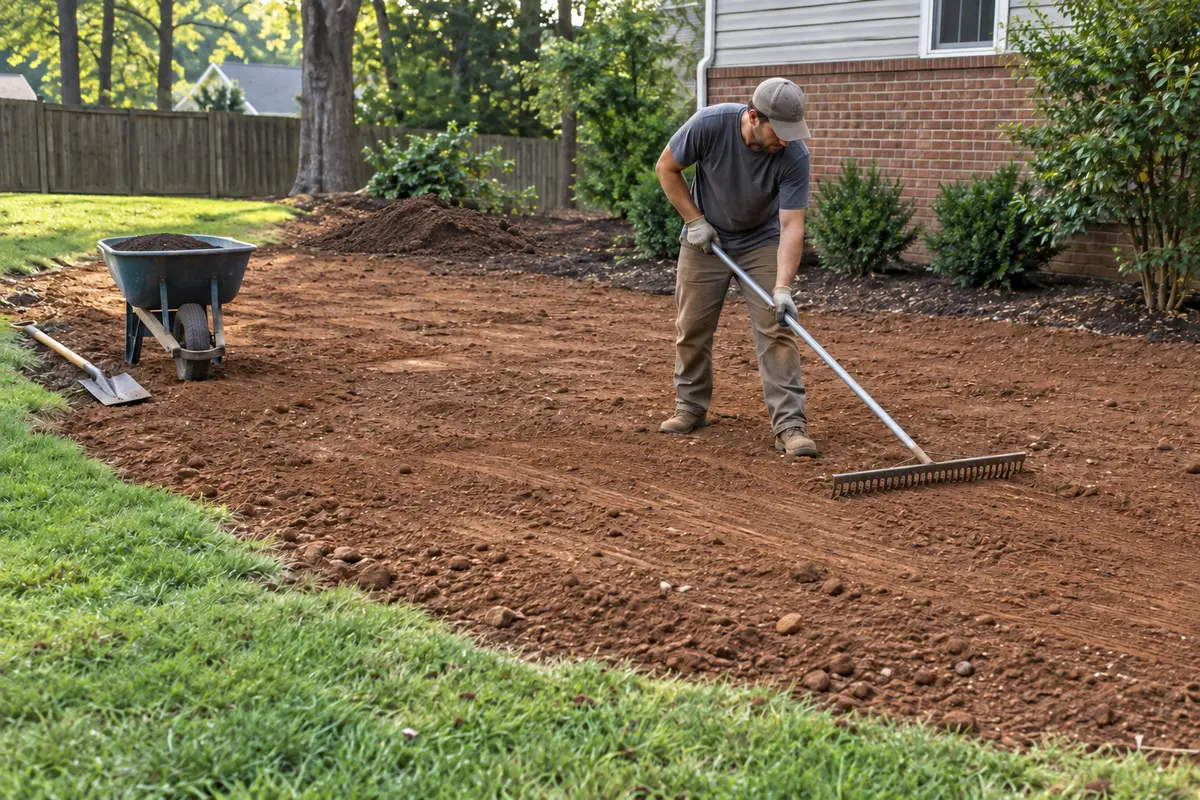
Site preparation can influence the result just as much as the visible materials installed afterward.

Before new trees, shrubs, sod, mulch, stone, or other landscape materials are added, the work area should be evaluated.

Landscape site preparation and grading in a Charlotte residential yard
Illustrative image.

Decide What Stays and What Goes

Identify which existing features will remain, be protected, be relocated, or be removed.

These may include mature trees, shrubs, lawn areas, patios, walkways, retaining walls, irrigation components, lighting, fencing, and drainage features.

Removing everything is not automatically the best option.

Healthy features that suit the new project may sometimes be incorporated into the installation.


Check Soil Conditions

Soil influences how successfully lawn and plants establish.

Charlotte-area properties may contain clay-heavy soil, compacted areas, construction-disturbed ground, poorly draining sections, or limited usable topsoil.

Simply installing new plants or sod does not necessarily correct the underlying soil condition.

Depending on the site, preparation may involve evaluating compaction, drainage, organic matter, rooting depth, and the condition of the existing soil.


Evaluate Sun and Shade

Different parts of one property can receive very different amounts of sunlight.

Consider full sun, partial shade, dense tree shade, morning versus afternoon exposure, and seasonal changes created by deciduous trees.

Sun exposure can influence plant selection, turfgrass performance, moisture requirements, establishment, and long-term maintenance.

A planting area beneath mature trees may require a very different approach from an open front lawn.


Check Slope and Surface Water

Before installation, look for standing water, low areas, washed soil, erosion, soggy lawn, water moving through beds, downspout discharge, or water accumulating near structures.

Fresh sod or mulch should not simply cover an unresolved drainage or grading problem.

Where significant water-management work is necessary, it is normally better to understand that scope before expensive planting or lawn installation is completed.


Consider Property Access

Landscape installation may require delivery of soil, sod, plants, mulch, stone, or equipment.

Access considerations can include gate width, narrow side yards, steep slopes, backyard access, existing paving, driveways, and surfaces that need protection.

Limited access can change how materials are transported and may influence labor requirements and project cost.


Utilities & Approvals

Check Utilities, Permits and Site Restrictions Before Installation

Some landscaping work involves excavation, grade changes, tree planting, drainage work, retaining walls, or other activities that can affect buried utilities or regulated areas.

Before digging begins, underground utilities should be considered.

North Carolina 811 advises homeowners and excavators to contact 811 before digging. North Carolina’s process requires three full working days’ notice before excavation so participating utility operators have time to locate affected underground facilities.

This can be relevant even for apparently straightforward landscaping projects involving tree or shrub planting, grading, posts, drainage work, or other digging.

Before excavation starts, clarify who is responsible for requesting the utility locate.

Does Landscaping Require a Permit in Charlotte?

Not every landscaping improvement requires a City permit or residential review.

However, the City of Charlotte identifies certain residential projects, including some retaining-wall projects, as requiring Individual Residential Lot review. Depending on the project, City review can involve stormwater, urban forestry, zoning, drainage, setbacks, tree preservation, and other applicable requirements.

Before approving a larger installation project, check whether the proposed work may affect:

  • Buried utilities
  • Public or private drainage features
  • Stormwater easements
  • Property setbacks
  • Existing protected or significant trees
  • Retaining walls
  • Substantial grading
  • Flood-prone areas
  • Required City or County approvals

Permit requirements depend on the actual project rather than simply whether the work is described as “landscaping.”

Responsibility for utility-location requests, permits, inspections, and applicable approvals should be clarified before work begins.


Project Order

Why Landscape Installation Sequence Matters

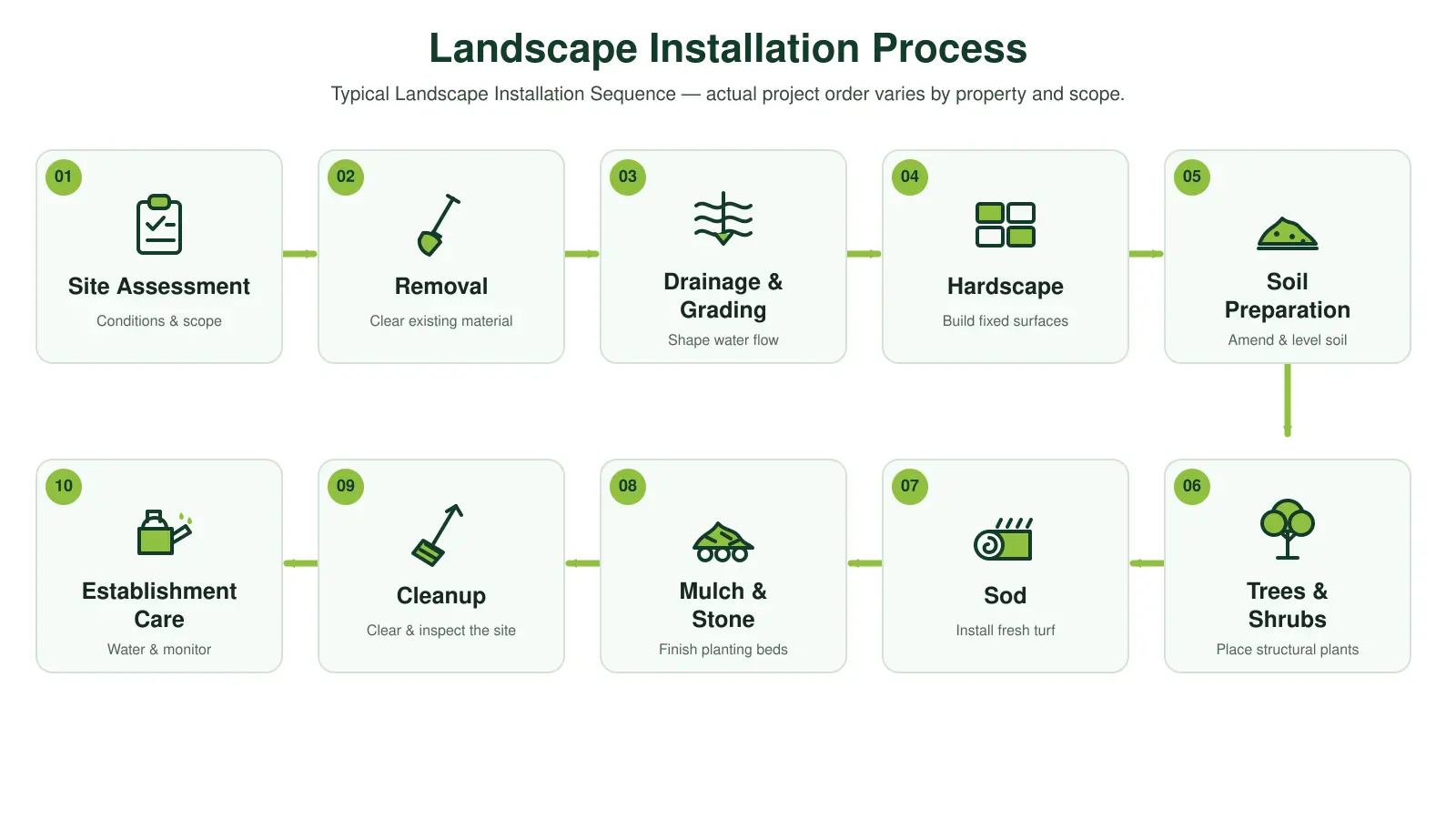
When several types of work are included, the sequence should be planned so grading, structural work, planting, lawn installation, and finishing materials do not interfere with work that has already been completed.

For example, installing new sod before heavy grading or hardscape construction is finished may result in equipment damaging the new lawn.

A typical project may move through the following stages:

The actual order depends on the project.

The important point is that later work should not unnecessarily damage materials or areas completed earlier.


Landscape installation process infographic showing a typical project sequence
Typical sequence — actual project order varies by property and scope.
01

Removal and demolition

02

Site-access preparation

03

Major drainage or grading work

04

Hardscape or structural work

05

Soil and planting-bed preparation

06

Trees and larger shrubs

07

Smaller plants and groundcovers

08

Sod or other lawn establishment

09

Mulch or decorative stone

10

Lighting coordination where appropriate

11

Cleanup

12

Establishment and aftercare

Planning vs. Doing

Landscape Planning vs. Landscape Installation

Landscape planning and landscape installation are closely related, but they serve different purposes.

Landscape Planning & Design Landscape Installation
Determines what should go where Implements the agreed project
Establishes the overall layout Prepares the physical site
Defines priorities and relationships Installs approved materials
Helps select and organize planting Places trees, shrubs and groundcover
Coordinates concepts for lawn, hardscape and lighting Installs sod, plants, mulch and other elements
Can divide work into phases Completes the agreed installation phases

If you are still deciding how the yard should be organized, which features belong where, or how several improvements should work together, start with Landscape Planning and Design in Charlotte.

If the project direction is already defined, installation becomes the next stage.


Project Coordination

What Landscape Improvements Can Be Installed Together?

Combining related work can sometimes make installation more efficient because preparation, delivery, access, and cleanup can be coordinated.

Project Combination Why It Can Make Sense
Trees + shrubs + mulch Beds can be prepared, planted and finished together
Sod + grading correction Lawn areas can be prepared before turf is installed
Bed renovation + edging + mulch Creates a more complete planting-bed improvement
Planting + lighting planning Fixture locations can avoid conflicts with mature plant growth
Hardscape + surrounding planting Transitions between paving and beds can be coordinated
Drainage work + lawn restoration Disturbed lawn can be restored after site work is finished

Not every provider performs every service.

Confirm the exact capabilities, project sequence, and responsibilities before approving the work.


Related Installation Work

How Hardscaping Fits Into Landscape Installation

Hardscaping may form part of a larger yard renovation, but constructed features require their own scope.

Hardscape can include patios, walkways, retaining walls, steps, pavers, and other built outdoor surfaces.

These features can affect finished grade, lawn area, drainage, planting-bed locations, access, lighting, and transitions between different parts of the property.

Hardscape work may need to be completed before nearby plants or new sod are installed.

For projects involving significant constructed features, review Hardscaping Services in Charlotte.


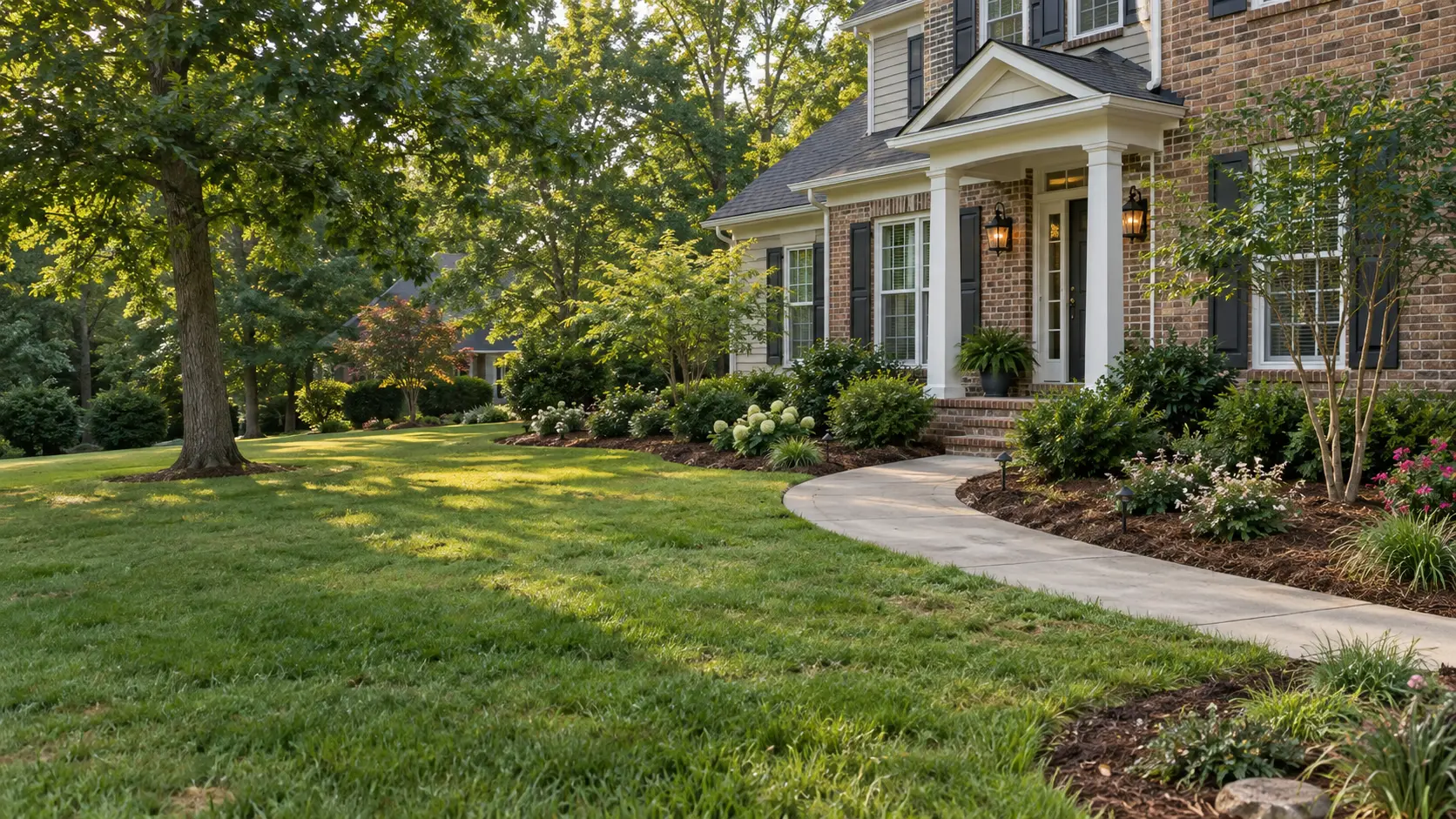
Hardscape and softscape elements coordinated within one residential landscape
Illustrative image.
Coordination Detail

How Landscape Lighting Fits Into Installation

✦

Outdoor lighting can often be coordinated more effectively when fixture locations are considered before landscaping is completely finished.

Planning ahead can help reduce conflicts involving fixtures, wiring, tree roots, shrubs, mature plant growth, walkways, lawn edges, patios, and planting beds.

Lighting-specific decisions should remain part of the dedicated Landscape Lighting in Charlotte page, while this page focuses on how lighting can interact with a broader installation project.


Charlotte-Specific Factors

Charlotte Conditions That Can Affect Landscape Installation

Landscape installation should respond to the property rather than treating every Charlotte yard the same way.

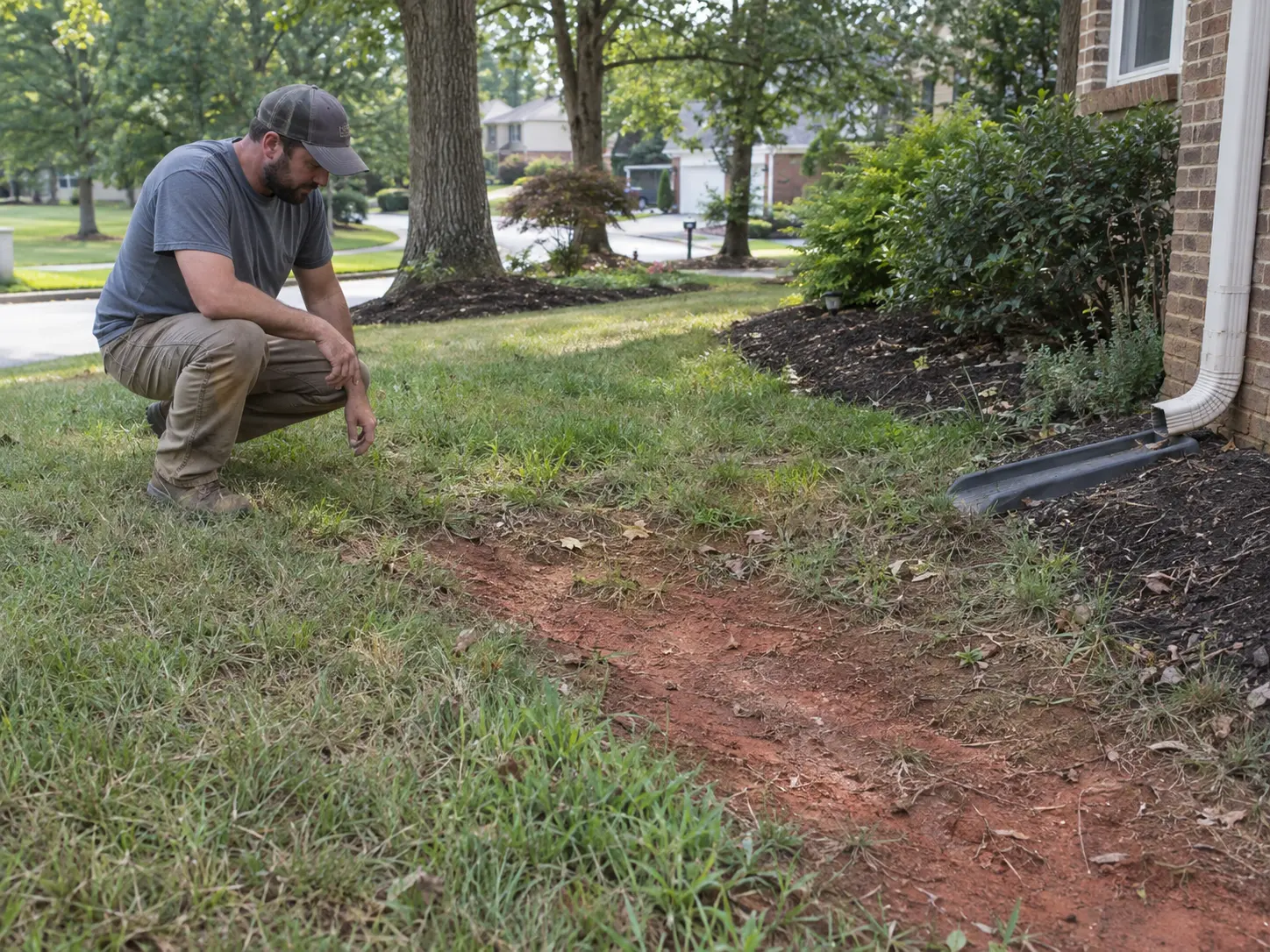
Charlotte landscape soil and drainage assessment in a residential yard
Illustrative image.

Clay and Compacted Soil

Clay-heavy or compacted soil can influence root development, drainage, lawn establishment, water infiltration, and overall plant performance.

Areas disturbed during construction may also have different soil conditions from long-established sections of the property.

Before installation, it may be useful to consider compaction, existing topsoil, soil depth, organic matter, water movement, and rooting conditions.

Fresh mulch or sod can improve appearance, but it does not automatically correct problems below the surface.


Rainfall and Water Movement

New plants and turf require moisture during establishment, but persistently wet conditions can also create problems.

Check for low areas, water moving across beds, downspout discharge, runoff from paving, erosion, soggy lawn, and compacted sections.

Major drainage or grading concerns should be understood before new planting is installed.


Mature Trees

Existing trees can influence shade, root competition, turfgrass performance, available planting space, equipment access, and how much the surrounding grade can safely be changed.

Installation near established trees should account for existing root systems and site conditions rather than treating the surrounding area as unused ground.


Seasonal Timing

What Is the Best Time for Landscape Installation in Charlotte?

There is no single best month for every type of landscape installation.

The appropriate timing depends on what is being installed.

Trees, Shrubs and Other Landscape Plants

Cooler periods can often reduce heat stress during establishment compared with installing sensitive plant material during the hottest part of summer.

Fall is commonly useful for many landscape plants because root development can continue while above-ground growth slows, although suitability depends on the plant species and weather conditions.

Spring can also provide favorable planting conditions when temperatures and moisture are appropriate.

Installation timing should therefore be based on the actual plants being used rather than a general statement that every landscape should be installed in spring.


Sod and Turfgrass

Lawn timing depends heavily on grass type.

NC State Extension‘s Piedmont guidance shows different optimum establishment windows for cool-season and warm-season grasses. For example, tall fescue is typically established during a different period from bermudagrass or zoysiagrass. It also notes that cool-season sod can be installed while the ground is not frozen, while warm-season sod depends on adequate soil temperature.

That means a date that works well for one type of lawn may not be ideal for another.


Can Landscaping Be Installed in Summer?

Some installation can take place during warmer weather, but high temperatures can increase stress and watering demands for newly installed plants and turf.

If summer installation is proposed, ask how the material will be watered and monitored during establishment.


Can Landscaping Be Installed in Winter?

Some types of work may still be possible during winter, while others depend on plant type, soil condition, weather, and whether the ground is suitable for installation.

Hardscape, preparation, drainage, and planting schedules do not necessarily follow the same seasonal restrictions.

For this reason, homeowners should ask whether the proposed materials are appropriate for the planned installation date rather than assuming every part of the project should be completed at the same time.


Renovation Decision

Should Existing Landscaping Be Kept or Replaced?

↔

Landscape installation does not always mean starting over.

Existing features may be worth preserving when they are healthy, fit the new layout, continue to serve a useful purpose, do not interfere with drainage or access, and match the property’s future maintenance goals.

Possible features to retain include mature trees, established shrubs, healthy lawn sections, patios, walkways, retaining walls, fencing, lighting, and irrigation components.

A selective renovation can direct more of the budget toward the areas that actually need improvement rather than removing useful features unnecessarily.


Budgeting

Landscape Installation Cost in Charlotte

There is no single landscape installation price that applies to every Charlotte property.

Cost can vary based on project size, current site condition, preparation requirements, access, soil work, grading, plant quantities and sizes, sod area, materials, cleanup, and the number of services being coordinated.

Cost Factor Why It Matters
Project size Larger areas generally require more labor and material
Existing condition Removal, demolition or cleanup may be needed first
Property access Restricted access can affect equipment and material handling
Soil preparation Compacted or unsuitable soil can expand preparation
Grading Sloped or uneven areas may require additional work
Plant sizes Larger trees and shrubs usually cost more to supply and handle
Plant quantities Higher quantities increase material and installation needs
Sod area Turf quantity and surface preparation affect cost
Mulch or stone Material type, quantity and delivery affect pricing
Cleanup Debris removal and disposal may be included separately
Multiple services Coordinating different phases can increase project complexity

Avoid comparing estimates only by their final total.

One proposal may include significantly more preparation, higher-grade materials, cleanup, or establishment work than another.

For broader budgeting information, see the Charlotte Landscaping Cost Guide.


Compare Estimates Better

Landscape Installation Estimate and Specification Checklist

A good installation proposal should tell you more than the total price.

Before approving an estimate, check whether the scope identifies:

Site Preparation

  • Existing features being removed
  • Existing features being retained
  • Vegetation removal
  • Soil preparation
  • Compaction correction where included
  • Grading work
  • Drainage-related work
  • Disposal of removed material

Plant Specifications

  • Common plant name
  • Botanical name where provided
  • Number of each plant
  • Container size or installed size
  • Tree caliper or height where relevant
  • Proposed planting locations
  • Plant substitutions and how they will be approved

For example, a proposal that simply says “install shrubs” provides much less information than one specifying the variety, quantity, and installed size.

Lawn and Sod Specifications

  • Turfgrass species or cultivar where relevant
  • Approximate sod area
  • Existing turf removal
  • Soil preparation
  • Final grading
  • Initial watering responsibility
  • Establishment instructions

Mulch, Stone and Bed Materials

  • Material type
  • Approximate area
  • Material quantity
  • Proposed depth where specified
  • Edging type
  • Groundcover where included

Hardscape or Related Work

  • Specific hardscape elements
  • Base preparation
  • Materials
  • Drainage responsibilities
  • Transitions to lawn and planting areas

Detailed hardscape construction should be covered in the project’s specific hardscape scope rather than described vaguely as part of “landscaping.”

Project Responsibilities

Confirm whether the proposal identifies:

  • Utility-locate responsibility
  • Permit responsibility where applicable
  • Material delivery
  • Equipment
  • Labor
  • Cleanup
  • Disposal
  • Irrigation adjustments if applicable
  • Watering responsibility
  • Estimated project timing
  • Payment schedule
  • Establishment instructions
  • Plant replacement policy where offered
  • Warranty terms where offered

Specific material and installation descriptions make competing proposals easier to compare.

“Install shrubs, sod and mulch” is far less useful than an estimate that identifies plant varieties and sizes, turf type and area, preparation work, finishing materials, cleanup, and establishment responsibilities.

Compare the Scope, Not Just the Price

When reviewing multiple estimates, ask:

Are these providers actually quoting the same project?

A lower estimate may exclude soil preparation, removal, cleanup, larger plants, drainage work, or establishment support included in another proposal.

Request Landscape Installation Help


Before You Submit

What Should You Prepare Before Requesting Installation Help?

Providing useful information from the beginning can make the initial project discussion more productive.

Share your ZIP code, whether the work involves the front yard, backyard, or both, the approximate project area, access limitations, and any noticeable slopes.

Photos can include wide views of the property, close-ups of problem areas, existing planting beds, lawn condition, areas to be removed, patios or walkways, and features you want to preserve.

Explain whether the main goal is new planting, tree and shrub installation, sod, lawn replacement, bed renovation, privacy, lower-maintenance landscaping, mulch or stone, or a broader yard improvement.

Also mention known problems such as standing water, erosion, bare lawn, heavy shade, compacted soil, overgrown planting, uneven grade, or limited access.

If known, include your preferred timeline and approximate budget range.


What to Expect

How Does the Landscape Installation Request Process Work?

01

1. Describe the Property

Provide the location, approximate project size, existing condition, and areas you want improved.

02

2. Explain What You Want Installed

This may include sod, trees, shrubs, landscape beds, groundcover, mulch, decorative stone, edging, or several coordinated improvements.

03

3. Add Photos

Photos can help explain current conditions, access, and the extent of the project.

04

4. Provider Availability May Be Checked

Your request may be shared where an independent provider is available for the project type and location.

05

5. Review the Scope Before Hiring

Before agreeing to work, confirm preparation, materials, quantities, plant sizes, installation methods, schedule, cleanup, payment terms, establishment care, insurance where applicable, permits where applicable, and warranty terms where offered.

Submit Your Landscape Installation Project

Call (704) 368-3756


Common Mistakes

Common Landscape Installation Mistakes to Avoid

!

Installing Before Solving Existing Site Problems

Fresh sod and plants may struggle if poor drainage, erosion, compaction, or grading problems remain unresolved.

!

Choosing Plants Only by Appearance

Plant selection should also consider mature size, available space, sunlight, soil moisture, and maintenance requirements.

!

Skipping Soil Preparation

Plants establish in the soil surrounding their roots. A finished layer of mulch cannot compensate for every underlying soil problem.

!

Installing Sod on a Poorly Prepared Surface

Uneven ground, poor soil contact, compaction, or unresolved drainage may affect both rooting and finished appearance.

!

Installing Finishing Materials Too Early

Heavy equipment used for grading, drainage, or hardscaping can damage newly installed planting and lawn areas.

!

Ignoring Utilities or Site Restrictions

Digging without checking utilities, easements, drainage features, or applicable project requirements can create avoidable problems.

!

Ignoring Establishment Requirements

New plants and turf generally require different care from established landscaping.


After Installation

What Happens After Landscape Installation?

Installation is not necessarily the end of the project for living landscape materials.

New sod, trees, shrubs, perennials, and groundcover generally require an establishment period.

Care during this period may involve following watering instructions, limiting unnecessary traffic on new turf, monitoring plants for stress, adjusting irrigation where appropriate, checking mulch placement, waiting until new turf is ready before normal mowing, monitoring disturbed soil for settlement, and watching for erosion after heavy rain.

Ask the provider:

  • How should newly installed materials be watered?
  • Who is responsible for the initial watering period?
  • When can new sod be walked on?
  • When should mowing begin?
  • Does staking need to be removed later?
  • What signs of plant stress should be reported?
  • Is plant replacement included under any stated conditions?
  • Is any written warranty offered?

Aftercare varies by plant type, turfgrass, season, weather, soil conditions, and installation method.

Follow instructions for the actual materials installed rather than assuming one watering or maintenance schedule applies to every landscape.


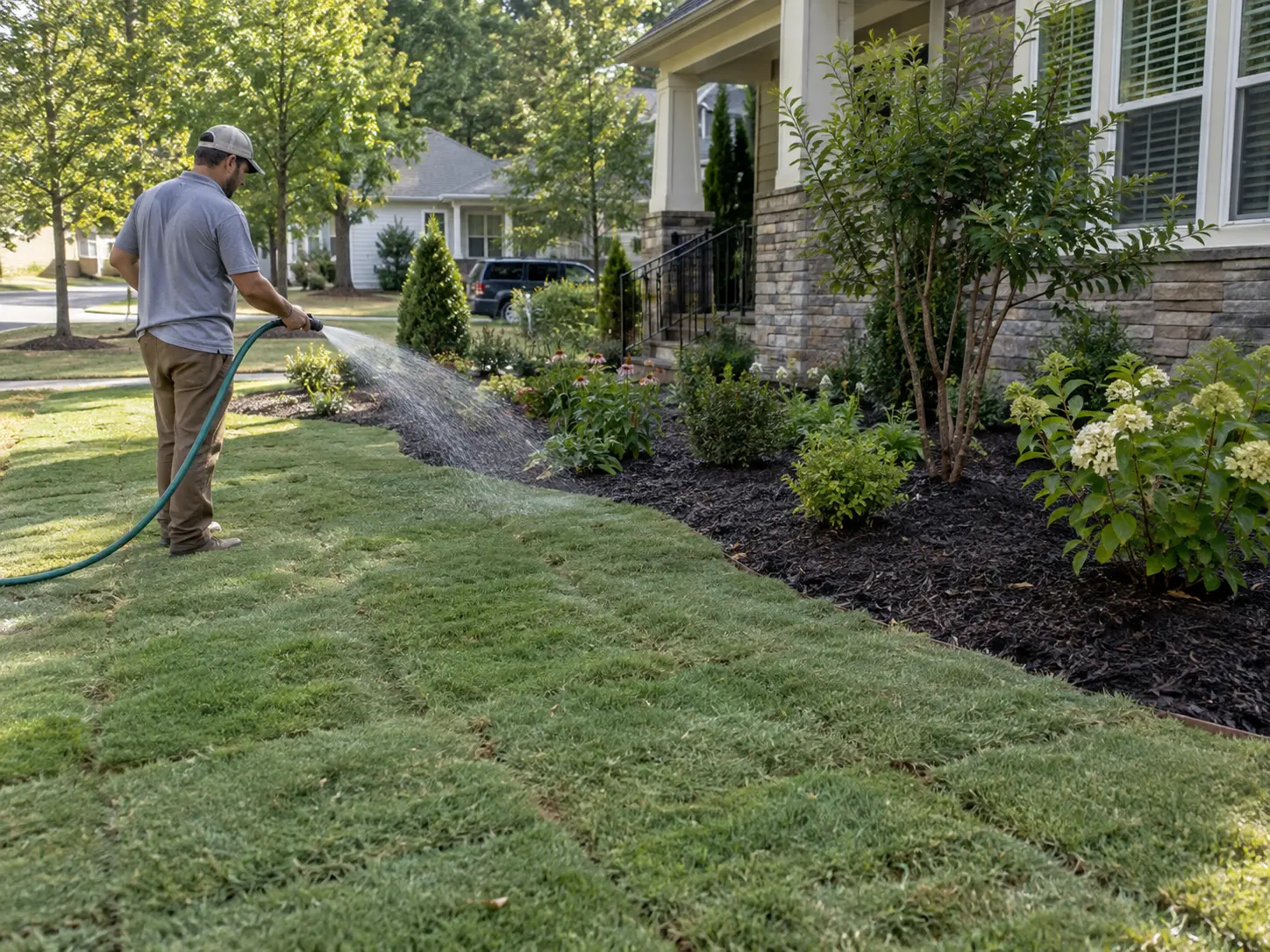
Watering and establishment care for newly installed sod and landscape plants
Illustrative image.
Charlotte-Area Coverage

Landscape Installation Requests Around Charlotte

Landscape installation requests may come from homeowners across Charlotte and nearby communities. The geographic focus below is intentionally selective so the page stays useful for local searches without becoming a long list of place names.

Charlotte Neighborhoods

Within Charlotte, landscape installation requests may come from areas such as Dilworth, Myers Park, Plaza Midwood, SouthPark, and Steele Creek.

Nearby Charlotte Communities

Depending on the project type and independent provider availability, requests may also be considered from nearby communities including Matthews, Pineville, Huntersville, and Concord.

For the strongest project match, include your ZIP code, the part of the property involved, approximate project size, access conditions, photos, and the type of installation you are considering.

Note: Location names are used to clarify the Charlotte-area focus of this page. Provider availability, pricing, qualifications, and service terms should still be confirmed for the specific project.

Charlotte Neighborhoods
Dilworth Myers Park Plaza Midwood SouthPark Steele Creek
Nearby Communities
Matthews Pineville Huntersville Concord
Explore Charlotte Landscaping Services →
Keep Planning

Related Landscape Installation Resources

Sod vs. Seeding in Charlotte

Compare common lawn-establishment methods, preparation requirements, timing, and establishment considerations.

Read the Sod vs. Seeding Guide

Mulch vs. Rock Landscaping

Compare appearance, maintenance, moisture considerations, and long-term use.

Compare Mulch vs. Rock

Frequently Asked Questions

Frequently Asked Questions About Landscape Installation in Charlotte

What does landscape installation include?

Landscape installation may include site preparation, planting beds, trees, shrubs, groundcover, sod, mulch, decorative stone, edging, lawn replacement, and related yard improvements. The exact scope depends on the project and provider.

Do I need landscape design before installation?

Not always. A straightforward sod replacement or planting-bed refresh may not require a detailed design. Planning becomes more valuable when multiple improvements need to work together or the overall property layout is changing.

How much does landscape installation cost in Charlotte?

Cost depends on project size, existing site conditions, access, preparation requirements, plant quantities and sizes, sod area, materials, grading, cleanup, and project complexity. Compare proposals using equivalent scopes rather than the final price alone.

What is the best time for landscape installation in Charlotte?

It depends on what is being installed. Trees and shrubs, cool-season lawns, warm-season turf, and hardscape do not necessarily share the same ideal installation period. The plant species, turf type, weather, soil conditions, and establishment requirements should determine timing.

Can trees, shrubs, sod and mulch be installed during the same project?

They often can, depending on the provider and site. When several elements are included, work should be sequenced so later activities do not unnecessarily damage completed areas.

Do I need to contact 811 before landscape installation?

Projects that involve digging can affect underground utilities. North Carolina 811 recommends contacting 811 before excavation, and North Carolina’s notice requirements apply to covered excavation work. Responsibility for the utility-locate request should be confirmed before digging begins.

Do I need a permit for landscaping in Charlotte?

Many routine landscaping improvements may not require the same approvals as structural work, but requirements depend on the scope. Certain projects, including qualifying retaining walls and work affecting drainage, trees, zoning, or other regulated conditions, may require review. Check project-specific City and County requirements before work begins.

What should happen before sod is installed?

The site may require failed turf removal, grading corrections, soil preparation, debris removal, and evaluation of drainage or compaction. The exact preparation depends on the property and turfgrass being installed.

Should existing plants be removed during a yard renovation?

Not automatically. Healthy plants and trees may be retained if they fit the new project, remain appropriate for the site, and do not interfere with access, drainage, or other improvements.

What should I ask for in a landscape installation estimate?

Ask for clear details about preparation, removal, plant names, quantities and sizes, turfgrass type where relevant, material specifications, labor, delivery, cleanup, project timing, payment terms, watering responsibilities, establishment care, and warranty terms where offered.

What happens after sod, trees or shrubs are installed?

New landscape materials generally require an establishment period. Watering, traffic, mowing, irrigation adjustments, weather, and other aftercare can affect establishment. Follow instructions for the particular plants and turf installed.


Start Your Project

Ready to Start a Landscape Installation Project in Charlotte?

A successful landscape installation should do more than make a property look finished on installation day.

The work should respond to existing site conditions, use suitable materials, follow a logical installation sequence, account for utilities and applicable project restrictions, and give new plants or lawn a reasonable opportunity to establish.

Whether your project involves tree and shrub installation, new landscape beds, sod and lawn replacement, mulch or decorative stone, softscape installation, yard renovation, or several coordinated improvements, start by clearly describing the property and the result you want.

Include your ZIP code, project type, approximate project size, photos, current site problems, preferred timing, and budget range if known.

Request Landscape Installation Help

Call (704) 368-3756

Landscapers in Charlotte NC is an independent landscaping information and service-request website. Provider availability, qualifications, insurance, pricing, permits, installation methods, warranties, and service terms should be confirmed directly with any provider before hiring.

Better outdoor spaces start with the right plan—from landscape design and installation to hardscaping, lawn care, drainage, grading, and outdoor lighting.

© 2026 Landscapers in Charlotte, NC. All Rights Reserved.